















Over the last 2 days, one big news from Bloomberg Newsweek popped out – and it’s about how China used tiny chips to infiltrate American megacorps and potentially steal data. How did they do it? Well, the story is because of Supermicro’s motherboards that had a chip that was not originally in the schematics.
Bloomberg’s original report is very long and had a few major accusations made. We’re going to summarize it for you to know what’s going on. In a timeline, this happened in somewhere in the year 2015:
- Amazon wants to acquire Elemental Technologies
- Amazon hired a 3rd party company to audit Elemental Technologies’s security
- Elemental Technologies were using Supermicro servers
- Servers were sent to the aforementioned 3rd party company to check
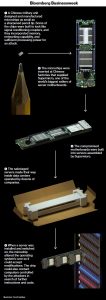
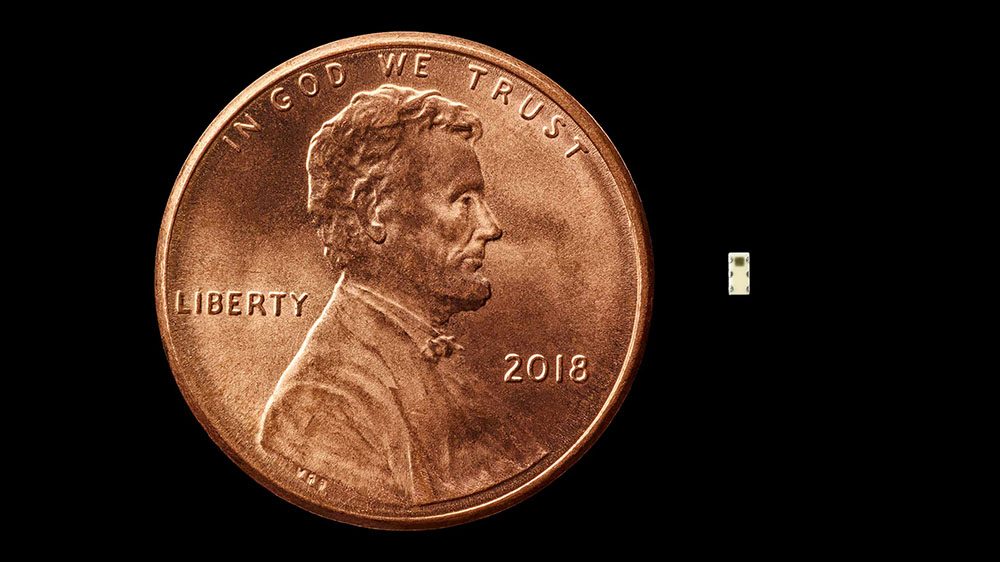
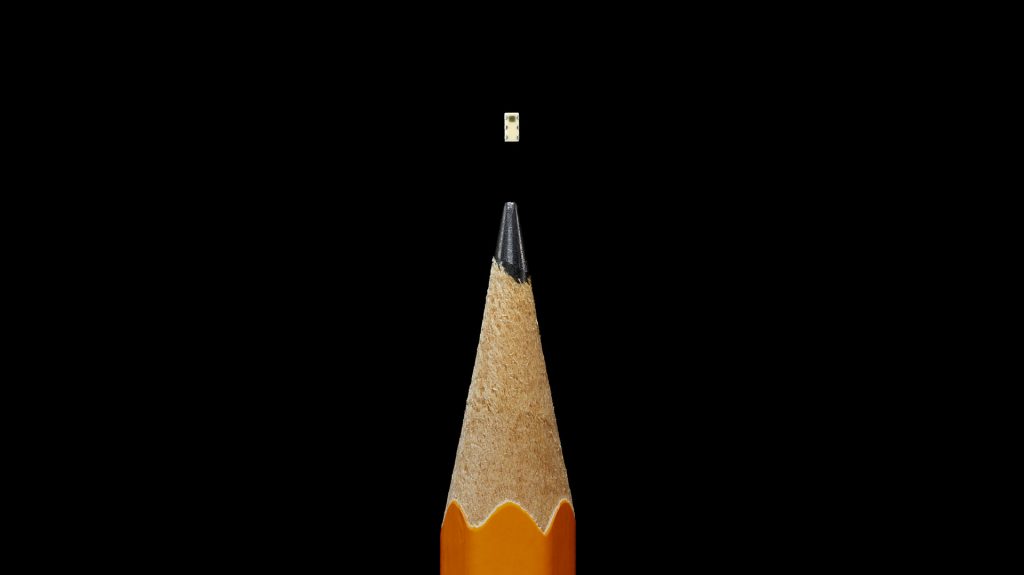
- A tiny microchip that is “not larger than a grain of rice” was found on the motherboard
- Said microchip is not part of the motherboard’s design
- Investigations started since 2015 and has been ongoing for more than 3 years
And that leads us to today. Bloomberg also stated that this microchip is “inserted at factories run by manufacturing subcontractors in China”. With the addition of this little microchip, it was said that it creates a “stealth doorway into any network that included the altered machines”. Bloomberg is pretty much saying that the microchip opened a backdoor but in an unnecessarily fancy way.
But looking back at the timeline, that raised one important question – if Amazon sent the server to be checked, wouldn’t they be aware of this tiny microchip in the first place? That’s a legit question – as Amazon themselves have came up with their own statement.
Amazon stated that Bloomberg’s report has a lot of inaccuracies and claimed that Amazon’s own security team “did a lot of due diligence”. Even the single external security company which Amazon commissioned “did not identify any issues with modified chips or hardware”. It raised my eyebrows when Amazon also stated that Bloomberg has “admittedly never seen our commissioned security report nor any other (and refused to share any details of any purported other report with us).”
Apple also made a statement about this as well, since they’re another affected company. In Apple’s statement, it is once again stated that Bloomberg’s report has a lot of errors – particularly on two things.
First, Apple claimed that they had not been in contact with the FBI or any agency about this incident. Secondly, Apple acquired Topsy Labs to improve Siri, but both Siri and Topsy does not share the same server. According to Apple, Siri is using non-Supermicro servers but Topsy is. Bloomberg also claims that around 7,000 Supermicro-powered servers were running for Topsy’s data – but Apple exclaimed that there are only approximately 2,000 servers, not 7,000. Apple also reiterated that none of those servers were found with malicious chip.
Apple also added that Bloomberg might be confused with another report, as Apple was quoted saying:
We are deeply disappointed that in their dealings with us, Bloomberg’s reporters have not been open to the possibility that they or their sources might be wrong or misinformed. Our best guess is that they are confusing their story with a previously-reported 2016 incident in which we discovered an infected driver on a single Super Micro server in one of our labs. That one-time event was determined to be accidental and not a targeted attack against Apple.
This tiny microchip in Supermicro’s server motherboards is a big deal to us all. That’s because the Supermicro server motherboards are used by many other companies too – Facebook included.
However, the entire tone and language that Bloomberg used to present the facts and data seems to be more towards fear-mongering and – as stated in both disputes by Amazon and Apple – Bloomberg seems to be getting facts wrong left and right. Since Bloomberg isn’t disclosing where or how they got the information, it’s not helping as well.
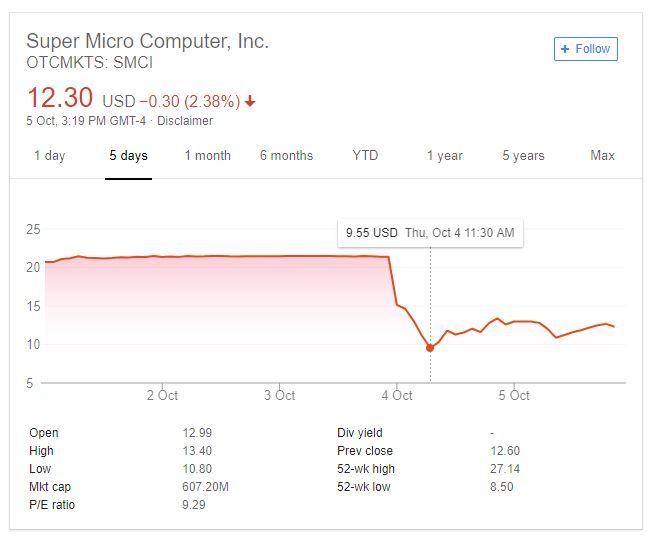
As of now, everyone is playing the pointing game and no one is admitting to anything. Supermicro’s share price dropped by more than 50% and has recovered to about 68 now, which still equates to about 41% drop. Ouch.
Then the next question comes – did the U.S. government already know about this and banned Huawei and ZTE equipment for 5G networks? Does the boycott actually hold any water or is it purely politically motivated to create a distrust in Chinese companies?
Maybe, but we’re not sure. And we don’t know what the end result of this big debacle will be.
Like our Facebook Page here at NasiLemakTech.com for more news and in-depth reviews! Also, join our Facebook Group for insightful information and memes!
Subscribe to our YouTube channel too!