
















What every marketing team wants is one strong idea that works everywhere. In practice, content tends to fracture: the TikTok feels rushed, the Instagram Reel feels cropped, the YouTube Short has lost its hook, and ads are watered-down leftovers.
This is not a problem of creativity. It’s a problem of planning.
By offering Pippit, teams can go upstream in the process and design for content before it splinters. And by starting with one, adaptable visual plan powered by an AI storyboard generator, marketers stop thinking platform-first and start thinking narrative-first. One story. Many shapes. Zero guesswork.
Instead of rewriting concepts four different times, teams storyboard once and let structure do the heavy lifting.

Why platform-first thinking kills narrative flow
Most cross-platform strategies begin with the constraints. TikTok needs speed. Instagram needs polish. YouTube needs clarity. Ads need focus.
That’s when teams treat each platform as a creative brief unto itself and wind up with parallel ideas that never quite align. Hooks drift. The visual logic changes. The brand voice feels inconsistent.
Storyboarding turns all this on its head. Rather than asking how this relates to TikTok or how this works on Reels, teams ask a far more profound question: what is the essential visual story?
After the core is understood, platforms are simply variants and not inventions.
The storyboard as a master blueprint
A storyboard is not a scripted document. A storyboard is an “intent map.”
Each scene defines:
- What the viewer sees
- Where attention goes
- How the moment passes
When it is understood, adapting content is simply mechanical, as opposed to a creative stretch. A wide shot is a crop. A pause is a loop. A caption is an overlay.
The truth remains. The format adapts.
Designing scenes that will remain even if cropped or the pacing altered
Cross-platform success requires the use of scenes that allow for modularity.
Examples of strong storyboard scenes are:
- Visually legible even when cropped vertically
- Emotionally complete within three seconds
- Capable of being reordered without losing meaning
That’s where the brilliance of visual-first planning comes in. Teams can test whether a scene still works as a hook, a mid-scroll moment, or an ending before anything is filmed.
It does not belong in the core storyboard if it cannot survive the rearrangement.
One story, several rhythms
Every platform has its tempo. TikTok rewards immediacy, Instagram favors rhythm and aesthetics, YouTube Shorts reward clarity and payoff, and ads demand compression.
Instead of rebuilding the content for every pace, storyboards let teams visually stretch or compress time.
A single scene may:
- Take the form of a hook when put first
- Act as context when placed second
- Appear in the last position as a payoff
Because the visual intent is defined, pacing changes are made without the narrative collapsing.
Creating one storyboard for adaptation everywhere using Pippit
After teams have adopted narrative-first planning, the next task would be to devise a storyboard that can easily transition from one platform to another. This would prove to be beneficial for Pippit’s workflow process.
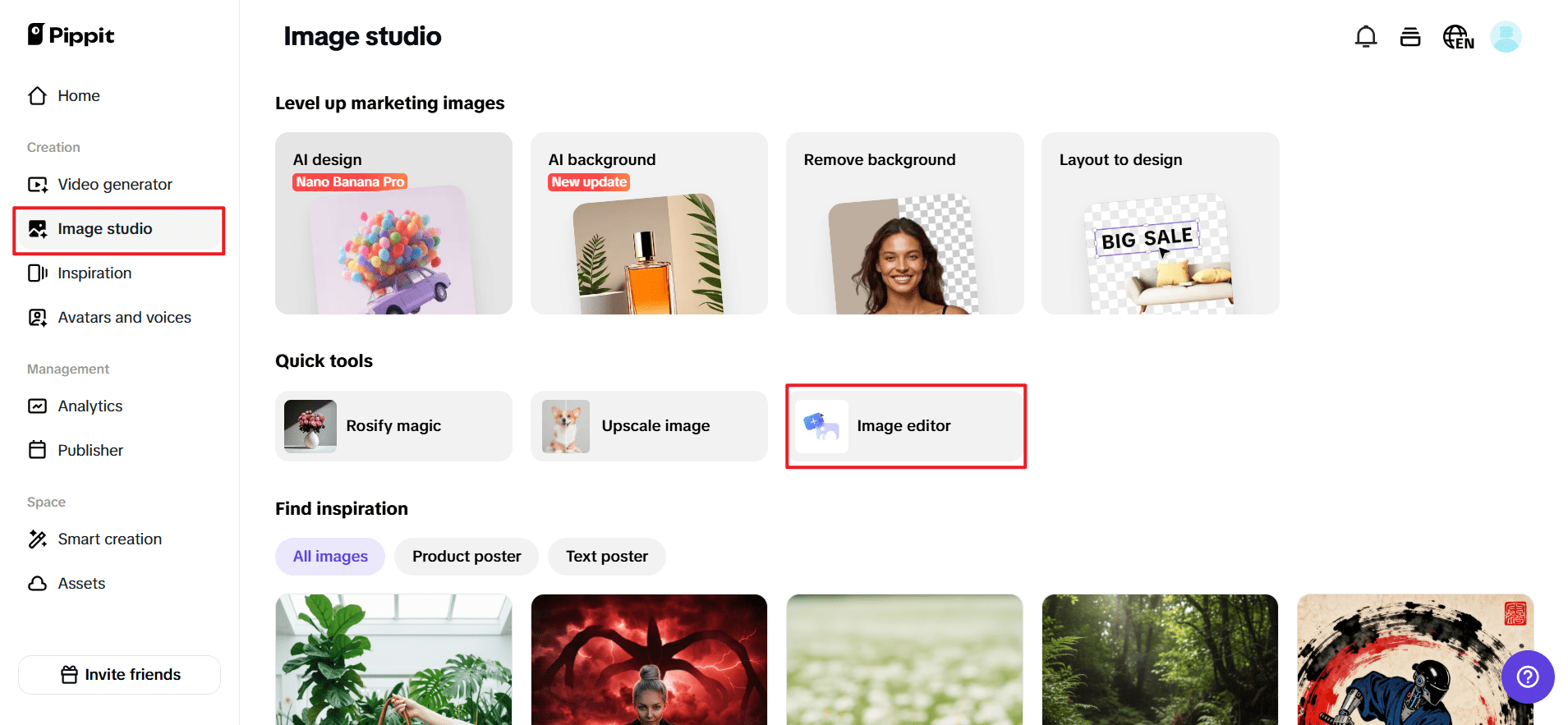
Step 1: Set up your canvas
First, choose the “Image studio” option from the left panel. Next, click “Image editor,” which opens another window for making changes. The default size should be chosen, and then “Create.”
There are ways to resize, rotate, and place the elements as desired to create a clear visual pathway before adding your scenes.
Step 2: Select and edit your collage template
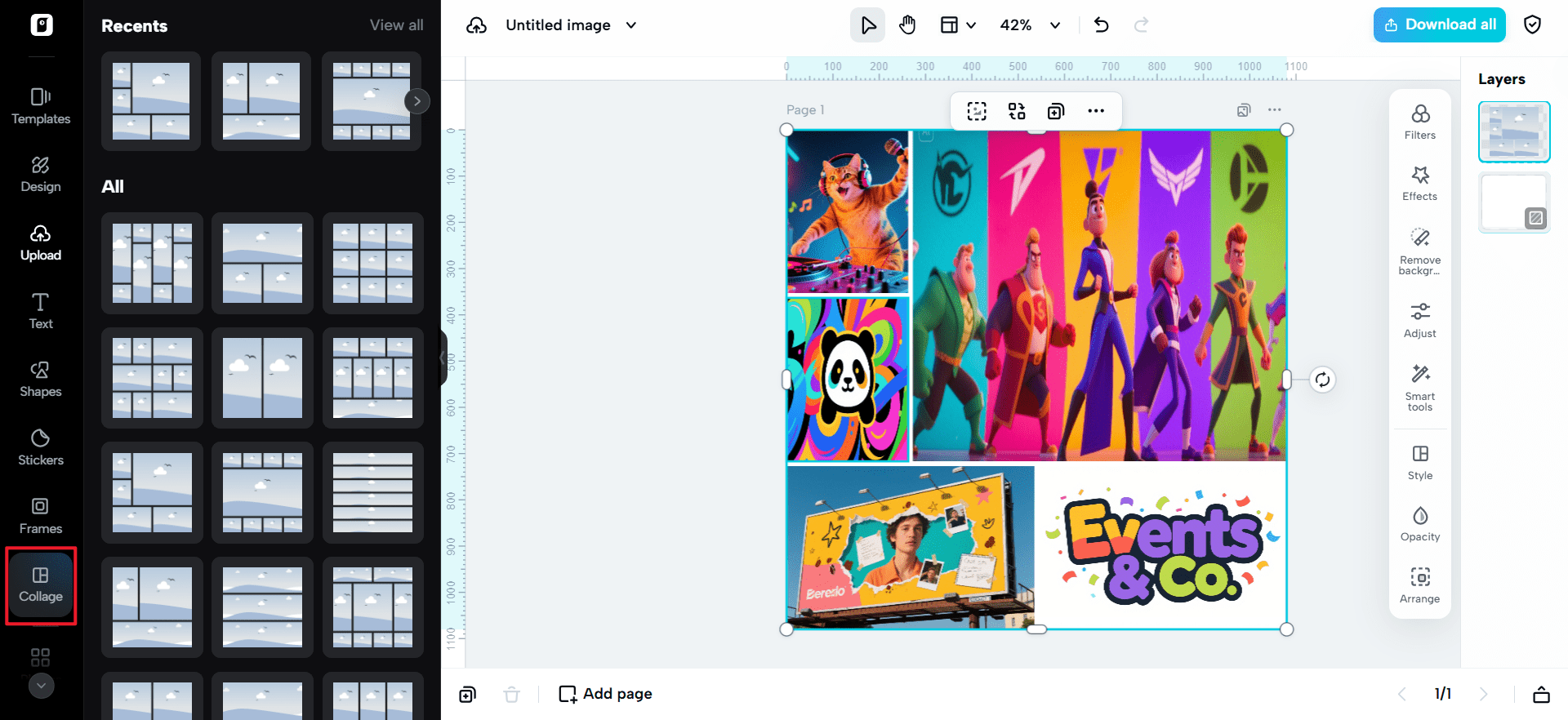
Click on the left side of the screen, “Collage” to open a range of ready-to-use templates. Select the layout that suits your ideas, whether linear storytelling, separating scenes, or using a grid layout to display a series of shots.
Use the right panel to adjust the size, transparency, and spacing of the template. To add images, there is the “Upload” option for uploading your images.
Step 3: Improving and finalizing storyboards
Finally, it is the time to detail and design your storyboard. Use themes, fonts, shapes, stickers, and frames to emphasize the important points of your story.
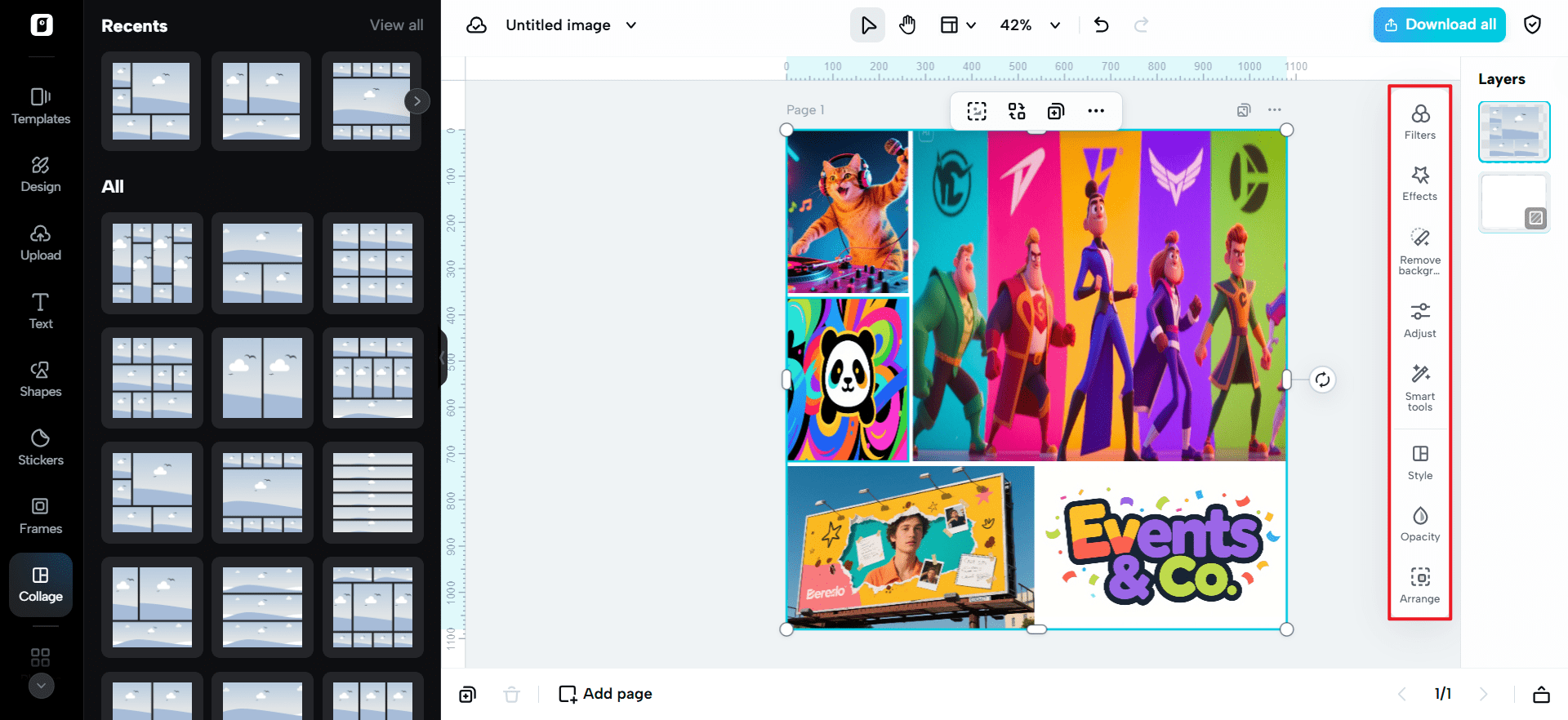
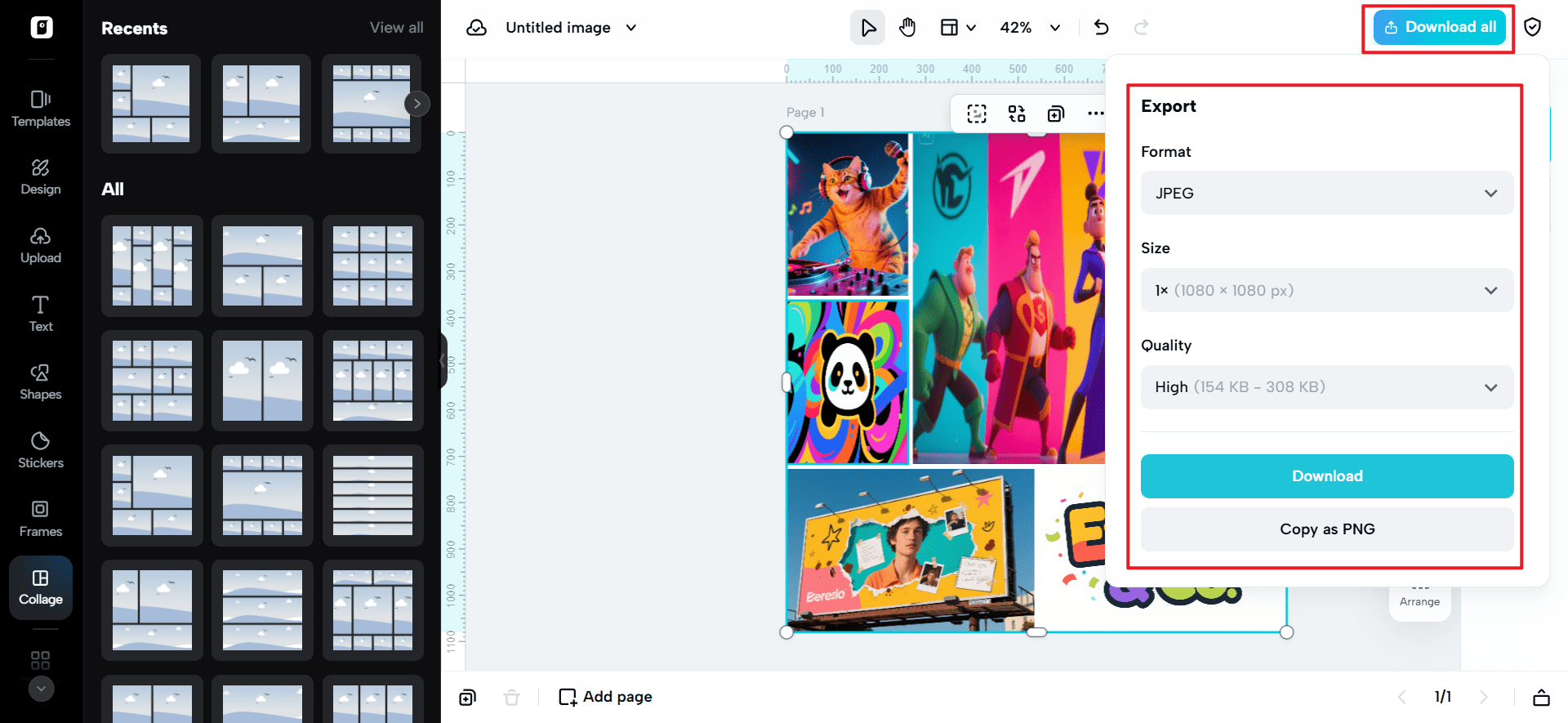
It is possible to add visual effects, transitions, and backgrounds for better story clarity. Once you are satisfied with your final composition, you can click on “Download All” at the top right corner.
Reduce friction between marketing and production teams
- Storyboards are a lingua franca
- Marketers stop overexplaining
- Designers stop guessing
- Editors stop fixing structural problems in post
- Everyone sees the same plan
This also makes revisions faster. If a platform update changes requirements, teams can revisit the storyboard instead of starting over. If messaging shifts, scenes can be swapped instead of reshot. Even late-stage changes like needing to remove text from video assets are easier when visual hierarchy was planned early.
Visual consistency without Visual sameness
Just because you post everywhere doesn’t mean you have to look the same everywhere.
Storyboards help teams identify what must remain consistent:
- Core visual motifs
- Logic of scene order
- Emotional Beats
Everything else can change. Crops shift, text placement changes, backgrounds change. Many teams even pre-plan layers so elements can be reused across formats, sometimes preparing assets with a transparent background maker to let scenes travel cleanly between layouts without redesign. The result is coherence without repetition.
The strategic benefit of storyboarding once
When teams storyboard in one place and share it all around, they achieve more than improved efficiency.
They gain:
- Faster campaign launches
- Better storytelling about brands
- Fewer creative bottlenecks
- Consistency in system
Most importantly, they cease to react to platforms and start to lead with narrative intent.
Your team is sick of reinventing the wheel for each of these channels, so the time comes to look upstream. Develop once. Repurpose infinitely. Embark on the possibilities of visual planning with Pippit. Use the power of one great storyboard to take your message wherever it needs to go.
Great stories don’t fall apart when they change shape
They hold because their structure was intentional from the start.
This is where narrative-led planning becomes a competitive advantage: instead of chasing formats, you build visual systems; instead of recreating content, you reuse meaning; and instead of reacting to algorithms, you guide them with clarity.
If you’re ready to take one idea and turn it into many high-performing outputs without losing coherence, start upstream. Plan visually, think modularly, and let your story travel.
See how Pippit helps teams storyboard smarter, move faster, and post everywhere with confidence!
Like our Facebook Page here at NasiLemakTech.com for more news and in-depth reviews! Also, join our Facebook Group for insightful information and memes!
Subscribe to our YouTube channel too!