












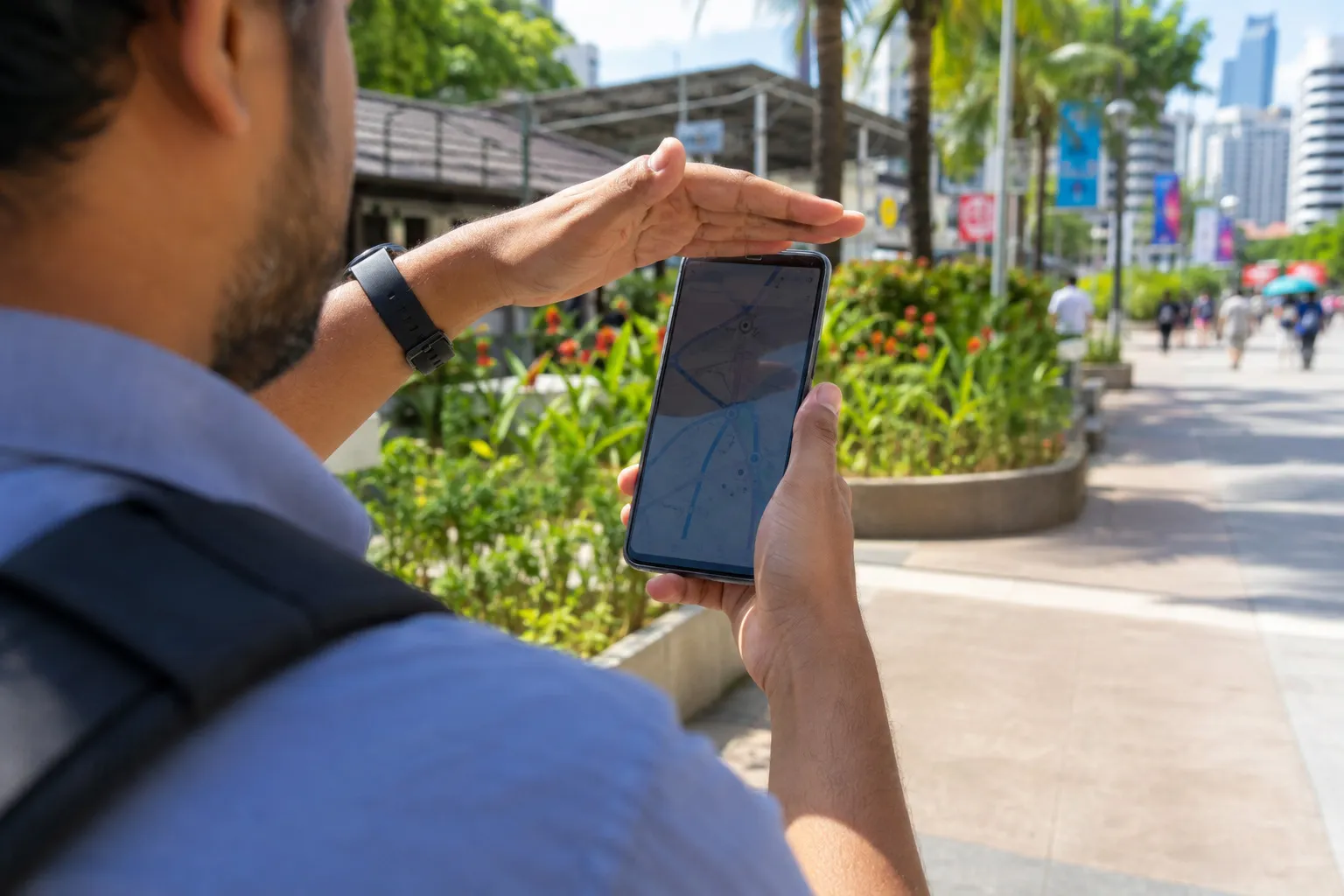

A phone looks dazzling in an air-conditioned shop, then becomes harder to read halfway through an outdoor gaming session. The brightness slider has barely moved. The battery still has plenty of charge. Yet the display no longer looks like the one advertised.
Several different limits can produce that result. Peak brightness, automatic brightness and sustained brightness describe different operating conditions. Heat adds another constraint, particularly when sunshine, charging and a demanding game arrive together. A large number on a specification sheet cannot explain the whole experience.
Brightness Has More Than One Ceiling
Phone manufacturers often publish a peak brightness figure without giving equal prominence to the conditions needed to achieve it. That maximum may apply to a small illuminated area during HDR playback rather than an entire screen showing a white webpage.
A film containing a bright reflection against a dark background creates a different workload from a navigation map covering the display. Both can look impressive, but the advertised peak does not promise identical brightness across every pixel.
For phone testing, the useful question is what remains visible during ordinary use. A brief highlight and a sustained outdoor session deserve separate measurements.
Screen brightness is only one of the tools used to direct visual attention. Games available through online pokies may use contrasting colours, animated symbols, reel-stop timing and highlighted bonus meters to make an active feature or completed winning combination easier to notice. Celebratory motion can emphasise a payout, while a pulsing button can indicate that a free-spins choice is waiting; these cues attract the eye, but the stake, paytable and recorded slot result determine the gambling outcome.
The Slider Does Not Control Everything
Manual brightness is only one part of display management. Some phones reserve their strongest outdoor boost for automatic brightness, which uses an ambient-light sensor to identify bright surroundings.
That explains an apparently contradictory experience: moving the slider to its maximum can produce a dimmer screen than leaving automatic adjustment enabled outdoors. The additional boost is conditional, and its availability varies by device, software and operating temperature.
Three figures are especially useful when comparing displays:
- Manual maximum: the highest brightness available through ordinary manual adjustment.
- High-brightness mode: an additional level activated under specified conditions, commonly strong ambient light.
- Peak HDR brightness: a maximum associated with particular HDR content and measurement conditions.
These labels are not perfectly consistent across manufacturers. A meaningful comparison needs the test conditions beside the number, including the illuminated area and whether automatic brightness was active.
Heat Can Override the Setting
A phone has limited space to release heat. Its processor, display, battery and charging circuitry share a compact enclosure, while direct sunlight adds energy that the cooling system cannot switch off.
When temperature rises, protective controls can reduce performance or display output. Apple explicitly lists display dimming or a black screen among the changes that can occur when an iPhone becomes too warm. Its temperature-management explanation also identifies prolonged gaming in hot conditions or direct sunlight as situations that can make a device warmer.
The brightness slider represents a requested setting. Thermal controls can impose a lower limit without moving that slider, so repeatedly dragging it right may accomplish nothing.
This matters in warm climates because outdoor visibility and thermal protection can pull in opposite directions. Sunshine creates a need for more light output while also making sustained high output harder to maintain.
Gaming Adds Another Source of Heat
A demanding game creates work for the processor and graphics hardware before screen brightness enters the calculation. Higher rendering resolution, more complex effects and a higher frame-rate target can increase that workload, although the result depends on the game and device.
A useful gaming test records brightness throughout the session, alongside frame rate and temperature. If the screen becomes dimmer while the brightness setting remains unchanged, the timing helps distinguish a sustained-load limitation from an ambient-light adjustment. Comparing a cool start with prolonged play reveals behaviour that a brief display measurement can miss.
The example nevertheless explains why a display assessment needs time. A phone that looks strong at the beginning of a session may behave differently after sustained load. A short brightness measurement cannot establish how long the device will maintain that output.
Reflections Change the Result
Brightness is only half of outdoor readability. Sunlight reflected by the cover glass competes with the image underneath, reducing the apparent difference between light and dark areas.
A reflective screen can therefore be difficult to read despite strong light output. Viewing angle, fingerprints and the finish of a screen protector can also change the experience. A matte protector may soften reflections, but its effect on clarity and texture involves a trade-off rather than a universal improvement.
A practical outdoor assessment should consider:
- text readability against reflected surroundings;
- display behaviour after several minutes of use;
- any additional boost produced by automatic brightness;
- changes caused by charging or demanding applications;
- improved visibility after moving into shade.
These observations help separate a display limitation from a temporary thermal response. Shade can improve visibility immediately by reducing competing light, even before the phone has cooled.
Sustained Visibility Deserves More Attention
The most useful display specification would describe both brightness and endurance: how much light the screen produces, over what area and for how long under stated conditions.
Until those details become routine, peak figures need context. Outdoor performance depends on the display, reflective surfaces, software controls and the heat produced by the current task. A phone does not need to reach its largest advertised number constantly to be usable, but it does need to remain readable after the first impressive minute.
Like our Facebook Page here at NasiLemakTech.com for more news and in-depth reviews! Also, join our Facebook Group for insightful information and memes!
Subscribe to our YouTube channel too!