














LONDON Products that resemble Dyson CameraJet can be understood as four different engineering answers to one question: how should a toothbrush move cleaning action beyond direct bristle contact.
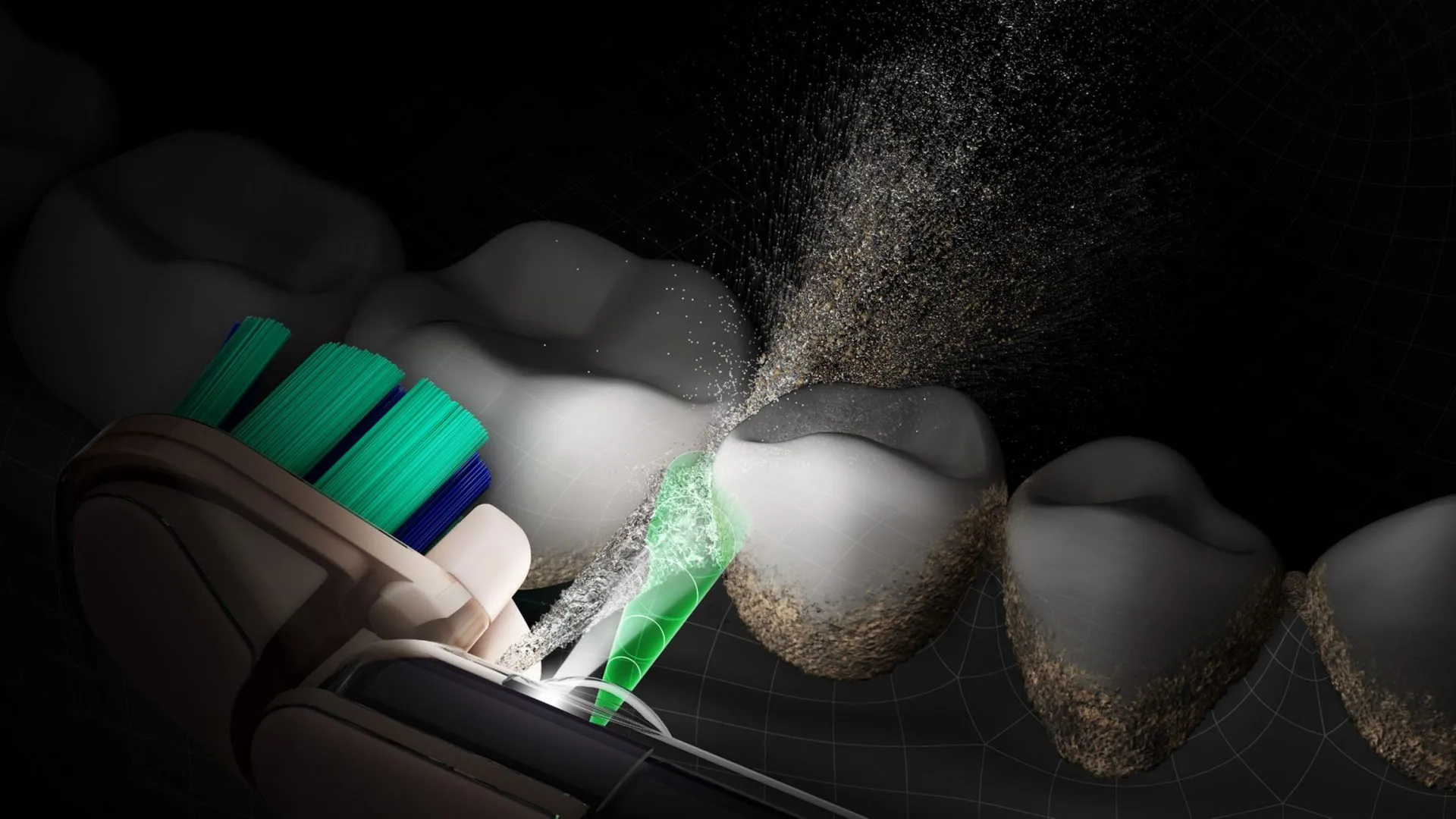
Dyson CameraJet is built as a closed loop. A macro camera and controlled illumination observe the mouth, machine learning identifies gaps, and the system triggers a conical mouthrinse jet at a recognized target. Variable sonic oscillation continues to handle broad surfaces, giving the brush separate contact and liquid roles.
The benefit of this architecture is selectivity. Fluid can be reserved for detected locations, and the same optics can provide a live view through the companion app. Its burden is coordination. Lens visibility, inference speed, nozzle alignment, tank pressure and hand movement must all agree within a fraction of a second for automatic jetting to be useful.
Architecture two mix air at the head
RANVOO AirJet X5 removes the sensing loop and changes the fluid source. Its variable-speed air pump carries pressurized air through a hollow path. A Boosted Bubble Chamber near the head mixes that airflow with toothpaste and oral liquid, while a Coanda-shaped structure guides microbubble-rich flow around tooth contours.
This layout avoids a stored water or mouthrinse tank. The second cleaning pathway remains active with the normal wet environment of brushing, so the product can preserve a relatively self-contained cordless form. Control is embodied in pump speed, chamber geometry and head design instead of optical decisions about individual gaps.
Architecture three carry a small water supply
Soocas NEOS II places the reservoir and diaphragm-driven water system in the handle. The standard version pairs sonic vibration with a one-minute flossing cycle, and its routine can automatically move from brushing to flossing. The Ultra version adds oscillation and extends the stated flossing time.
A handle tank gives the user genuine cordless water flossing, but every milliliter adds size and weight. Designers must balance capacity, pressure, grip diameter, battery demand and splash control. Because there is no camera, placement remains a manual skill: the user guides the head along the gumline and pauses at the interdental spaces.
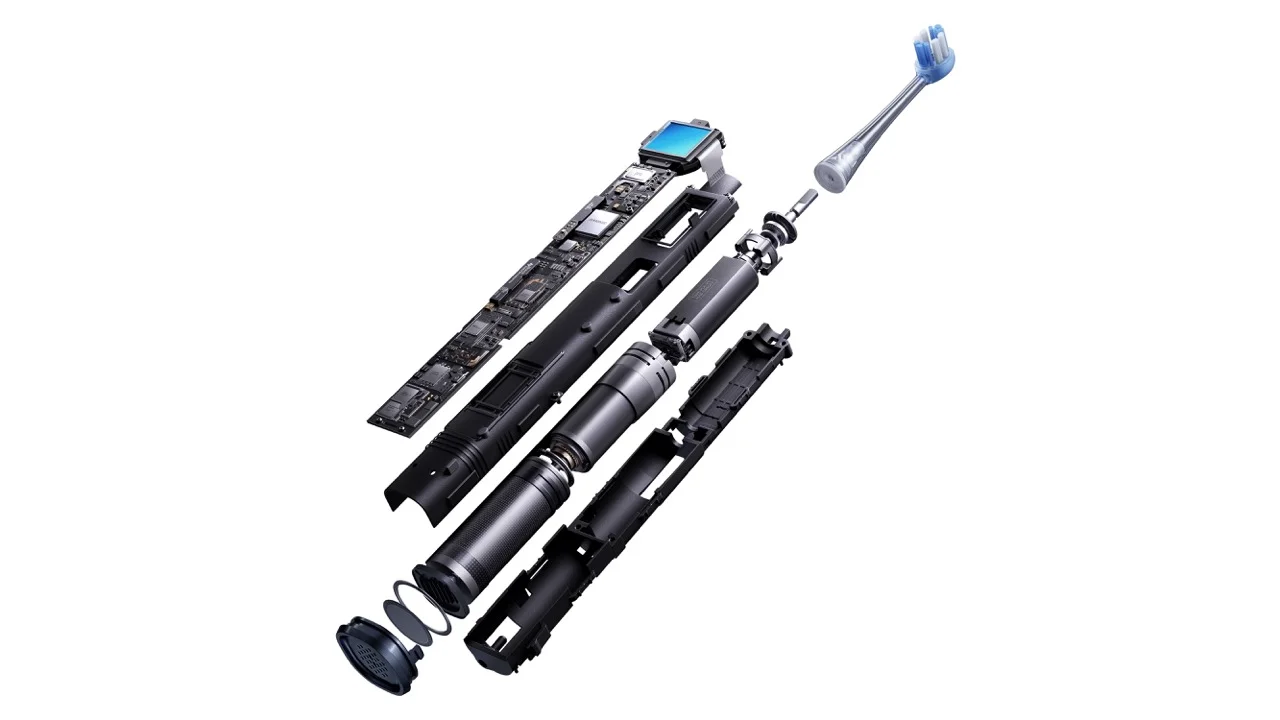
AirJet uses a sealed airflow path and purpose built chamber instead of a liquid reservoir.
Architecture four keep the reservoir on the counter
Waterpik Sonic Fusion 2.0 moves the largest wet components into a countertop base. A hose supplies pulsating water to the central flosser tip in the brush head, while the handle controls brushing and flossing modes. The 473 milliliter reservoir supports more than 60 seconds of flow and ten pressure settings.
Separating the reservoir protects handle maneuverability and supports sustained output, but it ties the full hybrid experience to the sink. The handle can detach for ordinary brushing on the go, yet water flossing depends on the base and hose. This architecture favors capacity and mature pressure control over travel convenience.
The hidden design problem is the wet pathway
Every architecture must manage residue. CameraJet and NEOS II ask users to refill and rinse compact tanks. Sonic Fusion requires reservoir and hose care. AirJet avoids stored liquid, but its airway, bubble chamber and hollow head still need a clear maintenance routine. Small channels can lose performance if toothpaste or mineral deposits are allowed to build up.
Service life also depends on seals, pumps, replacement heads and compatible fluids. A clever cleaning mechanism can become a poor product if upkeep is unclear or parts disappear. Hybrid engineering should therefore be judged through the entire ownership cycle, not only by the force or precision visible in a launch demonstration.
Control location changes the entire experience
The four systems place control in different locations. CameraJet places it in software that interprets optical input. AirJet places it in the pump curve and flow geometry. NEOS II leaves spatial control with the user’s hand but automates the transition between stages. Sonic Fusion combines manual positioning with a countertop pressure dial and mode buttons on the handle.
These choices affect the learning curve. Optical targeting may reduce the need to recognize each gap, but users must learn camera and jet behavior. Continuous bubbles require less deliberate triggering, yet placement still influences where the flow travels. Water-flosser designs demand controlled movement along the gumline and some tolerance for drainage and splash.
A future design may combine these philosophies, but additional subsystems should be added cautiously. More sensing is valuable only when it improves placement or comfort; more pressure is valuable only when it remains controllable. The engineering goal is a stable relationship between the head, the fluid and the moving hand.
The best architecture depends on the intended routine
CameraJet is the strongest expression of automatic targeting. AirJet offers continuous microbubble distribution without optics or a liquid tank. NEOS II packages a guided water-flossing sequence into a travel-ready handle. Sonic Fusion delivers adjustable, longer-duration water flossing from a countertop platform.
These are not minor variations on one design. They are distinct system choices with different consequences for portability, feedback, maintenance and cost. The hybrid toothbrush market will mature when buyers can compare those consequences as easily as they once compared sonic speed or battery life.
Like our Facebook Page here at NasiLemakTech.com for more news and in-depth reviews! Also, join our Facebook Group for insightful information and memes!
Subscribe to our YouTube channel too!