















The days of relying entirely on physical keys and plastic access cards are gradually changing. Today, employees can unlock office doors with smartphones, hotel guests can use digital room keys, and businesses can manage entry permissions without manually distributing hundreds of badges.
This shift is backed by real numbers. According to HID’s 2025 State of Security and Identity Report, 61% of security leaders identified mobile credentials as a major industry trend, while 37% had already deployed mobile access solutions and another 32% planned to adopt them. By 2026, security had become a bigger motivation than convenience, with 50% of respondents citing security improvements as a driver of mobile credential adoption.
Technologies such as Near Field Communication (NFC), Radio Frequency Identification (RFID), and Bluetooth are making this transformation possible. They help organizations reduce dependence on physical keys, simplify employee access, and improve visibility into building activity.
However, these technologies work differently, and choosing the wrong one can create unnecessary costs or security gaps.
In this article, we’ll explore how NFC, RFID, and Bluetooth work, their practical applications, and how businesses can choose the right technology for modern access control.
1. Understanding the Technologies Behind Modern Access Control
NFC, RFID, and Bluetooth all enable wireless communication, but they serve different purposes within a security system.
RFID is commonly used for employee badges and key fobs. NFC enables short-range interactions, often through smartphones or compatible cards. Bluetooth allows supported mobile credentials to communicate with readers over potentially longer distances.
Understanding these differences helps businesses choose the right technology for each entrance.
| Technology | Typical interaction | Common application |
| NFC | Very close-range tap | Smartphone access, digital credentials |
| RFID | Card or fob presented near a reader | Employee badges, building entry |
| Bluetooth Low Energy | Proximity-based, with range depending on configuration | Mobile access, hands-free entry |
Although these technologies can appear interchangeable, their security depends on credential design, encryption, reader configuration, and the software managing access permissions.
For example, a small office may prefer RFID badges because employees are familiar with them. A modern corporate campus may introduce NFC or Bluetooth mobile credentials to simplify onboarding and reduce physical badge distribution.
The right choice depends on the building, its users, and the level of security required.
2. NFC Is Making Smartphone-Based Entry More Practical
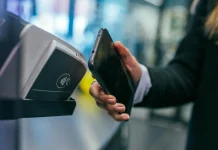
NFC is transforming access control by allowing compatible smartphones and smart cards to communicate with readers at very short distances.
Instead of searching for a physical badge, an employee can present a supported mobile credential near an NFC-enabled reader. The system checks the credential and determines whether entry is permitted.
This is particularly useful in offices, hotels, universities, and residential buildings where people regularly carry smartphones.
NFC adoption is also supported by a growing technology ecosystem. The NFC Forum reported that its membership exceeded 840 companies in 2025, representing 20% annual growth, while more than 640 products had received NFC Forum certification. These figures reflect broader NFC development, not access control installations specifically.
For businesses, NFC offers several practical benefits:
- Convenient entry: Users can present compatible smartphones or credentials instead of carrying separate keys.
- Digital credential management: Administrators can issue or revoke supported mobile credentials without collecting physical badges.
- Controlled interactions: Close-range operation encourages deliberate credential presentation.
- Reduced badge dependence: Organizations may distribute fewer physical cards over time.
However, NFC is not automatically more secure simply because it uses a smartphone. Security still depends on authentication, encryption, credential protection, and the access management platform.
3. RFID Continues to Be Essential for Reliable Building Access
Despite growing interest in mobile credentials, RFID remains widely used because it is familiar, practical, and relatively straightforward to deploy.
Employees present RFID cards or key fobs to compatible readers, which capture credential information and forward it to an access controller. The controller then checks whether the user has permission to enter.
This process can happen quickly without requiring a smartphone or mobile application.
For businesses managing hundreds of employees, RFID can remain a practical choice, especially when some users do not have compatible smartphones.
Modern access control system components also need to work together rather than relying on credential technology alone. For example, Coram’s access control platform supports cards, key fobs, PINs, and mobile app unlocking. Its controllers work with compatible existing Wiegand and OSDP readers, while cloud-managed software allows administrators to manage access and review door activity. Where compatible cameras are installed, door events can also be associated with video footage.
This illustrates an important principle: upgrading access control does not always mean replacing every reader, lock, or credential at once.
Businesses should nevertheless evaluate the security of existing RFID technology. Older, easily cloned credential formats may create risks, while modern encrypted credentials and secure reader communication can offer stronger protection.
4. Bluetooth Is Enabling More Flexible Mobile Access
Bluetooth Low Energy, commonly called BLE, is changing how people interact with secured doors.
Unlike NFC, which typically requires a close tap, Bluetooth can support mobile credential interactions from greater distances, depending on the reader, smartphone, and system configuration.
Imagine an employee arriving at a corporate office carrying a laptop and coffee. With an appropriately configured Bluetooth access system, the employee may be able to unlock the entrance through a smartphone without searching for a badge.
That convenience becomes particularly valuable in workplaces with frequent movement between secured areas.
Bluetooth-based access can support:
- Mobile credentials: Employees use compatible smartphones instead of physical cards.
- Configurable proximity: Some systems allow administrators to adjust how close users must be before access is activated.
- Simplified onboarding: New employees can receive digital credentials without waiting for printed badges.
- Temporary permissions: Contractors and visitors can receive time-limited mobile access where supported.
However, longer wireless range requires careful security configuration. Organizations must consider accidental unlocking, relay attacks, authentication strength, and how proximity is verified.
Bluetooth should therefore be evaluated for both convenience and security rather than selected solely for hands-free functionality.
5. How These Technologies Improve Security and Daily Operations
The biggest transformation is not simply replacing cards with smartphones. It is connecting access credentials to centralized identity management, permissions, and activity records.
Consider a company with 300 employees working across three offices.
With traditional physical keys, employee departures or lost keys can create expensive administrative problems. Digital access systems allow administrators to manage permissions centrally, provided the readers, controllers, and software support the required features.
This can improve operations in several ways.
Faster onboarding and offboarding: New employees can receive credentials based on their roles, while departing employees can have permissions revoked promptly.
Better access visibility: Administrators can review entry attempts, investigate denied access, and identify doors that are frequently left open when suitable sensors are installed.
Flexible access schedules: Businesses can restrict certain areas to authorized personnel during specific hours.
Reduced administrative work: Digital credential management can eliminate some tasks associated with issuing, replacing, and collecting physical badges.
Industry adoption supports this direction. HID’s 2026 report found that 73% of respondents identified identity management as a top strategic priority, reflecting growing interest in connecting physical access with broader identity systems.
Still, organizations need reliable procedures for lost phones, connectivity failures, credential recovery, and emergency access. Technology improves control only when operational policies support it.
6. Choosing the Right Technology for Your Business
There is no single access technology that works best for every organization.
A hospital, warehouse, coworking space, and corporate headquarters may have very different requirements. Some need hands-free convenience, while others prioritize controlled entry, device compatibility, or support for employees without smartphones.
The following considerations can guide a practical decision.
| Business requirement | Technology worth evaluating |
| Existing employee badge infrastructure | Secure RFID |
| Smartphone tap-to-enter experience | NFC |
| Configurable proximity-based entry | Bluetooth |
| Mixed workforce with different credential preferences | Hybrid access system |
| Multiple buildings and centralized administration | Software platform supporting multiple credential types |
A useful starting point is to audit existing readers, controllers, locks, and network infrastructure before choosing new credentials.
Organizations should also evaluate encrypted communication, credential revocation, offline operation, audit logs, fire safety requirements, and compatibility with existing hardware.
Importantly, 84% of end users in HID’s 2026 report continued maintaining physical credentials alongside mobile deployments. That suggests hybrid access remains important even as smartphone-based entry becomes more common.
For many businesses, a gradual transition offers a better experience than forcing every employee to adopt a new credential immediately.
7. What the Future Holds for Wireless Access Control
NFC, RFID, and Bluetooth are likely to remain important because they solve different access problems.
The more significant change is happening in the software and identity systems surrounding them.
Businesses increasingly want to manage physical access alongside employee identities, visitor permissions, security alerts, and other workplace systems.
For example, an organization may eventually connect its employee onboarding process with credential provisioning, allowing approved access permissions to be assigned automatically when a new worker joins.
Other developments include stronger mobile credential protection, greater interoperability between hardware vendors, and more detailed access event reporting.
However, future-ready access control is not necessarily about adopting every emerging feature. It is about building a system that remains secure, manageable, and adaptable as requirements change.
Organizations that prioritize compatibility, strong authentication, and clear access policies will be better positioned to benefit from new technologies without constantly replacing their infrastructure.
Key Takeaways
- NFC simplifies tap-based mobile entry, making compatible smartphones and digital credentials practical alternatives to physical badges.
- RFID remains valuable for everyday access, particularly in organizations that need reliable physical credentials for large or mixed workforces.
- Bluetooth supports flexible mobile entry, including proximity-based access where appropriately configured.
- Mobile credentials are becoming mainstream, with 69% of security leaders in HID’s 2025 research reporting deployment or plans to deploy them.
- Security depends on the complete system, including credentials, readers, controllers, locks, software, and administrative policies.
- Hybrid systems offer flexibility, allowing businesses to combine physical cards and mobile credentials during gradual upgrades.
FAQs
What is the difference between NFC and RFID in access control?
NFC is a short-range wireless technology based on high-frequency RFID principles. RFID is a broader category covering different frequencies, credential formats, and reading distances. NFC is commonly associated with smartphones and close-range interactions.
Is Bluetooth more secure than RFID?
Not inherently. Security depends on encryption, authentication, credential design, reader configuration, and system management. Secure implementations of either technology can provide strong protection.
Can businesses use NFC, RFID, and Bluetooth together?
Yes. Some modern access systems support multiple credential technologies, allowing employees to use compatible cards, key fobs, or smartphones according to organizational requirements.
What are the five main access control system components?
The five core components are credentials, readers, controllers, electronic door hardware, and management software. Together, they authenticate users, enforce permissions, control locks, and record access activity.
Do mobile access systems work without internet connectivity?
Some do. Systems with locally stored permissions may continue making access decisions during internet outages. However, functionality depends on the platform, controller design, and credential technology.
Conclusion
NFC, RFID, and Bluetooth are reshaping building access by making credentials more flexible, entry more convenient, and permissions easier to manage.
Each technology brings different strengths. NFC supports deliberate smartphone-based entry, RFID provides familiar and dependable credential options, and Bluetooth enables flexible proximity-based experiences.
For businesses, the greatest opportunity lies in combining these technologies with secure controllers, reliable door hardware, and centralized management software.
As mobile credentials become more common, the question is no longer simply whether businesses should replace physical keys. It is how they can build an access control system that remains secure, convenient, and adaptable for years to come.
Like our Facebook Page here at NasiLemakTech.com for more news and in-depth reviews! Also, join our Facebook Group for insightful information and memes!
Subscribe to our YouTube channel too!