













As digital literacy peaks across Malaysia in 2026, the demand for transparent, secure software architecture has never been higher. Users scrutinize everything from their local banking applications to their chosen entertainment platforms. In the rapidly expanding iGaming sector, trust is no longer built on flashy graphics or aggressive marketing; it is built entirely on verifiable mathematics. Leading international platforms like Lucky Star operate not just as entertainment hubs, but as highly sophisticated cryptographic engines. At the very heart of this digital trust lies a fascinating piece of computer science: the Random Number Generator (RNG).
For tech enthusiasts and software engineers, understanding how digital platforms simulate probability offers a fascinating glimpse into modern cryptography.
The Paradox of Digital Randomness
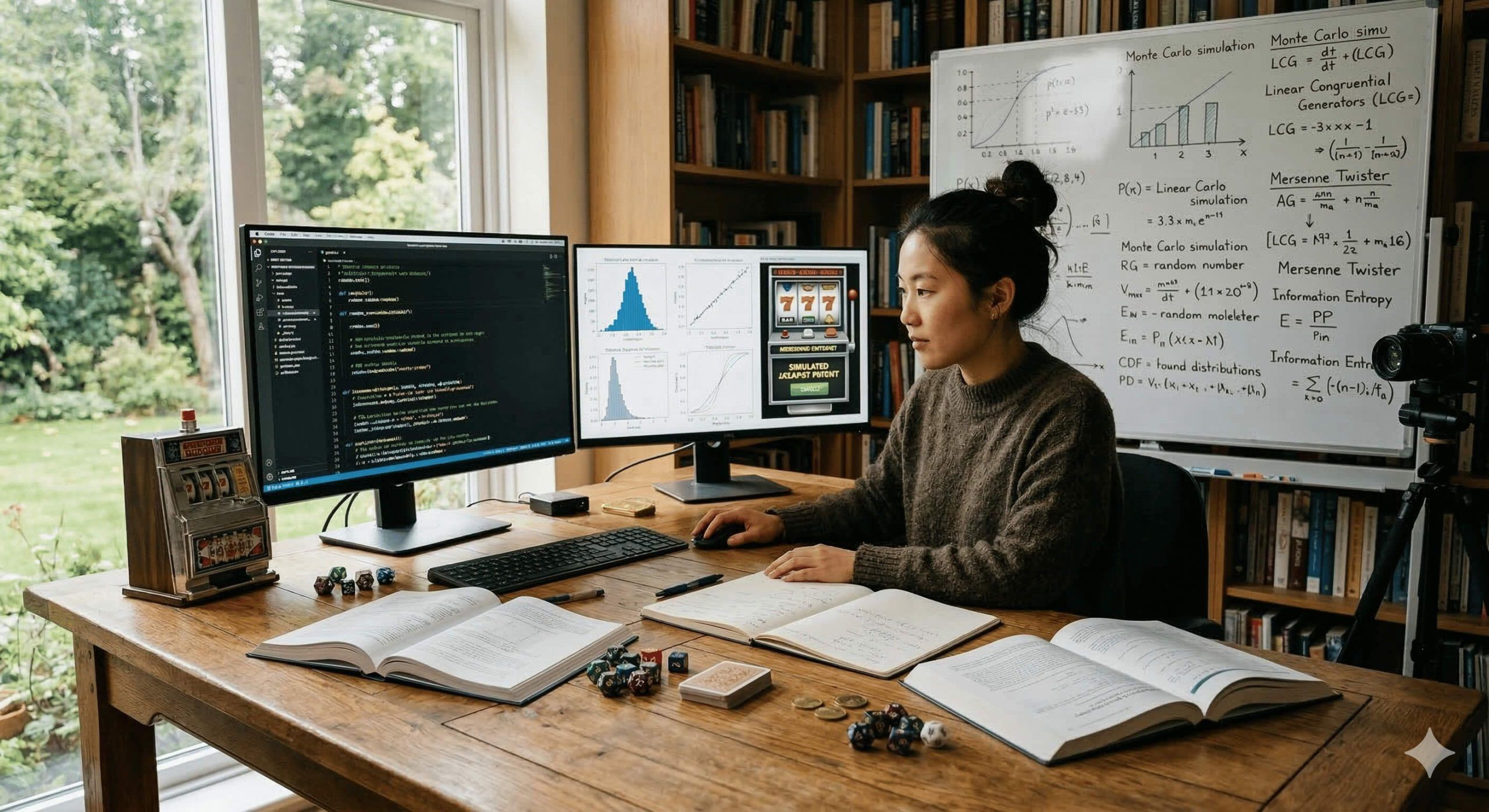
Computers are inherently deterministic machines. They are designed to follow explicit, predictable instructions based on binary logic. Therefore, asking a computer to produce a truly “random” unpredictable result is a mathematical paradox. To solve this, developers rely on Pseudo-Random Number Generators (PRNGs).
While functional for basic programming, this equation is entirely predictable if an attacker discovers the seed values (a, c, and m). In the high-stakes environment of digital casinos, predictability is a fatal flaw.
The Shift to Cryptographically Secure Algorithms
Modern iGaming platforms have abandoned simple equations in favor of Cryptographically Secure Pseudo-Random Number Generators (CSPRNGs). These advanced algorithms rely on “entropy pools” – gathering unpredictable environmental data to generate a starting “seed.” A server might calculate a seed by combining the exact microsecond of the system clock, the thermal noise of the CPU, and the timing of network keystrokes.
Once the seed is generated, it is passed through complex cryptographic hash functions like SHA-256. This ensures an unbreakable one-way mathematical function. Even if a highly sophisticated hacker intercepts the final output number, reverse-engineering the algorithm to discover the initial seed or predict the next output sequence requires an impossible amount of computational power. Every card dealt and every virtual slot machine spin is isolated, independent, and cryptographically secure.
The Ultimate Security Firewall
Another crucial technological pillar ensuring fairness is the strict adherence to server-side execution. When a player taps the spin button on their smartphone in a Kuala Lumpur cafe, the mobile device itself does absolutely no computational math regarding the game’s outcome.
The smartphone application acts purely as a visual rendering engine. The moment the screen is tapped, an encrypted request is sent to the casino’s remote data center. The CSPRNG calculates the outcome in a fraction of a millisecond and sends the result back to the device to display the corresponding animation. This decoupled architecture makes client-side manipulation impossible. No local malware, memory-editing software, or modified APK can alter a cryptographic outcome happening on a fortified offshore server.
Trust But Verify: The Role of Algorithm Auditing
Malaysian players transitioning from traditional physical venues to virtual spaces often question the concept of a “digital dealer.” The tech industry solves this skepticism through rigorous third-party auditing.
Independent tech laboratories, such as eCOGRA or iTech Labs, act as the ultimate quality assurance testers for the iGaming ecosystem. These agencies do not simply look at the source code. They deploy automated bots to run millions of simulated bets on the casino’s servers in a matter of hours. By analyzing these massive data sets, statisticians can verify that the algorithms lack statistical anomalies and that the Return to Player (RTP) percentages align perfectly with theoretical mathematical models.
Like our Facebook Page here at NasiLemakTech.com for more news and in-depth reviews! Also, join our Facebook Group for insightful information and memes!
Subscribe to our YouTube channel too!