











Foldable smartphones remain a niche product. Counterpoint Research estimates 19.6 million units shipped in 2025, up 18% year over year, but they account for only 1.6% of global smartphone shipments. The shift is more practical than dramatic: the familiar objections – bulky bodies, fragile hinges, poor dust resistance, and awkward outer screens – are being reduced generation by generation. Buyers no longer have to accept every compromise just to get a display that bends.
Thinness has stopped feeling experimental
Samsung’s Galaxy Z Fold7 is 8.9 mm thick when folded and 215 g, with a 6.5-inch cover display and 8-inch inner screen. Those figures matter because a book-style foldable has to work as a normal phone while closed. Wider cover screens now handle typing, maps and quick camera use without forcing the owner to unfold the device. The large display becomes a useful option instead of a tax on every small task.
Durability is becoming a measurable specification
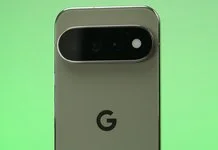
Google’s Pixel 10 Pro Fold added an IP68 water- and dust-resistance rating and a redesigned gearless hinge. Motorola’s Razr 2025 uses an IP48 rating, a 4,500 mAh battery and a 188 g clamshell body. Neither device makes a flexible inner screen indestructible. The improvement is that buyers can now compare concrete protection ratings, dimensions and warranty terms rather than vague claims about an “improved” hinge.
Competition is broadening even while prices stay premium
Counterpoint says North American foldable shipments grew 28% in 2025 as Motorola and Google expanded alongside Samsung. Book-style devices also gained global momentum as hardware and software became more useful for large-screen work. The category still skews expensive, but competition has changed the engineering target. Brands now fight over weight, crease visibility, battery density, cameras and software instead of merely proving that a folding display can ship.
A larger screen changes live sports use in practical ways
Book-style foldables fit second-screen sports behavior unusually well because one device can hold match data and another app without crushing both into narrow panes. More context can stay visible at the same time. During a live match, someone following statistics while using the MelBet app can keep a market open alongside key game data instead of repeatedly switching between screens. That does not improve the underlying bet: live odds still move after goals, cards, injuries and other changes in game state. The gain is simply that more context remains visible before a decision is made. A predetermined stake still matters more than screen size.
The same advantage appears when comparing markets, where extra width can make a noticeable difference. On the inner display, users browsing a 토토사이트 can view more handicap lines, totals and prices simultaneously, making closely related selections easier to tell apart. That additional screen space can reduce visual clutter around adjacent handicaps and totals, but it does not remove the need to check the exact market and settlement conditions. Better information density only helps when the user actually reads what is on screen.
Clamshells solve a different problem by making short sessions easier to start and stop. The outer screen changes the rhythm of checking a live event. Instead of fully opening the phone for every update, someone who already has the 멜벳 앱 in their matchday routine may use the cover display to check a score or market status and unfold the device only when more detail is needed. That can reduce pointless app hopping, although every live-price move still needs context from the match itself. A session cap set before the cover screen lights up is more useful than reacting to each fluctuation. The hinge changes access; it does not change bankroll discipline.
Software finally has a reason to care about the hinge
Early foldables often stretched phone apps badly across a tablet-sized panel. Current Android devices handle adaptive layouts, split-screen work and continuity between cover and inner displays more consistently. Half-folded positions can also separate content from controls or hold a camera preview without a tripod. None of these features is spectacular alone. Mainstream adoption usually happens when dozens of small irritations disappear at the same time.
Price and repairability are the remaining hard limits
Foldables are becoming normal faster than they are becoming cheap. Flexible displays, hinges and dual-screen construction make serviceability a purchase criterion, so accidental-damage coverage, parts availability and local repair options deserve attention before purchase. That is why the 1.6% shipment share is so useful: folding phones are growing enough to force better competition while remaining small enough that each generation still has to justify the form factor. The winning product will be a good phone that happens to fold, not a folding demo users tolerate all day.
Like our Facebook Page here at NasiLemakTech.com for more news and in-depth reviews! Also, join our Facebook Group for insightful information and memes!
Subscribe to our YouTube channel too!