

















In universities, we’ve always been told that academicians will never accept any sort of citations or information quoted from Wikipedia. The main reason – as far as I’ve been told – is because they’re entirely crowd-sourced, and not by “experts”. “It’s a sin to use Wikipedia!”, as what I’ve been told on the first day in university. Sure, not everyone is an expert by profession. Consider this though – there are many non-certified people who are better than most of us when it comes to the subject at hand.
Wikipedia has a really vast library of articles – ranging from history to art, scientific discoveries and even documentation of smartphones! You can literally dive in to Wikipedia to read about Wikipedia itself! Most of the time, when I’m reading through any articles, I’ll get distracted and go on to some other article. This cycle continues for quite a long time too. Even professors are making the switch to use Wikipedia too, because of resources of crowd-funded articles are beyond what a single professor can provide, of course.
I mean, personally, I gone through my bachelor’s degree in engineering majoring in nanotechnology recently, while working here at Nasi Lemak Tech. Most of the efforts on citations I used in projects, assignments, and articles are actually from Wikipedia. Heck, there are people who believes reading through the entire encyclopedia is good for your brain – but I believe reading Wikipedia might be more useful.
There are just way too many tips and tricks on Wikipedia, and we’re going to teach you how to use it.
[nextpage title=”Citations”]First things first. Wikipedia has an amazingly wide range of articles regarding academic studies. I believe most people gripe about not being able to directly cite Wikipedia for their assignments or articles, but there’s another way.
Keep an eye out for which part of the Wikipedia article that you want to cite. Look for the citation number inside or after the sentence of which exact sentence you want to cite. These citation numbers are mostly in blue colour, as they are a link, actually.
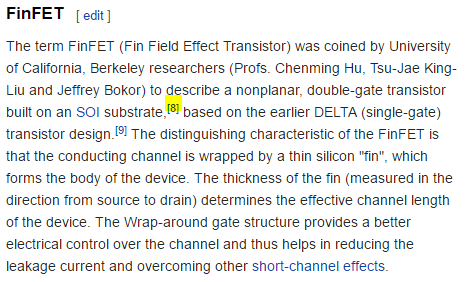
Click on it and it’ll bring you to the References section of the Wikipedia article. For the sake of everyone’s convenience, the full citation with the corresponding citation number will be highlighted.
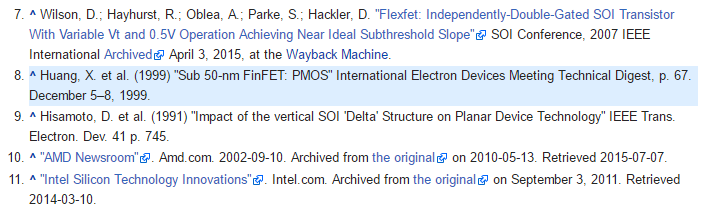
If you’re finding facts on science, most of the time the source of the information is from an academic journal – just like the example shown above. Just copy paste the entire title to Google, and you’ll find the original source of cited information. Use it on your assignment or article!
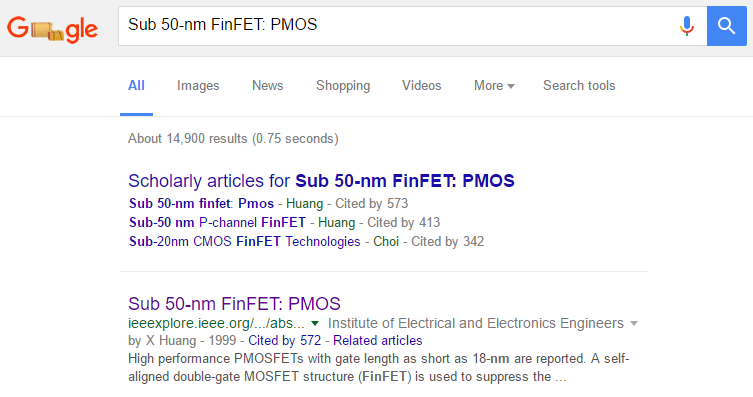
These citations are mostly from peer-reviewed academic papers too, which is why they’re 100% credible – or at least most of the time, presumably. More on this later.
It’s funny to see that when words are cited from Wikipedia, it’s not reputable. However, when the same exact words are cited from Elsevier or IEEE, it’s the best reputable thing in the world. I’m not questioning the legitimacy of Elsevier, IEEE, or any other journal publications – but merely questioning on why we are giving Wikipedia a horrible reputation.
[nextpage title=”One stop center for nearly everything”]I find it quite magnificent to be able to find all sorts of history of a TV show on a single page. For example, the entry on We Bare Bears said who is the creator alongside with a brief summary of the show and its history. Again, these are legit information – just head down to the citations and you’ll see that that the official information is from Cartoon Network themselves.
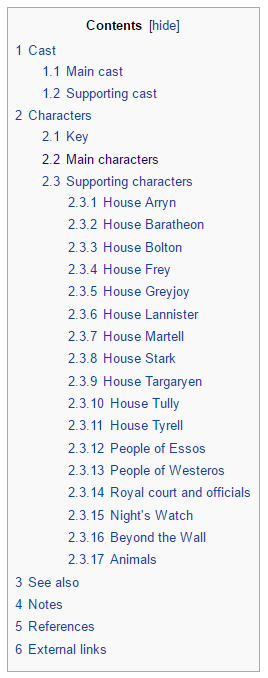
Didn’t know who’s the character in the show that you just watched? Wikipedia has a complete list of characters on the TV show while detailing who’s the actor or voice actor too. Sometimes, they have a brief description of each characters in the show. Sometimes, they have a massive table categorizing and labelling each character in the show too – the perfect example would be Game of Thrones with their amount of actors. Walking Dead too, actually.
Your favourite show just went into a hiatus? Say no more fam, check out the latest updates on each show’s dedicated episodes page, including a summary and airing dates. Also, you’ll get to check out who’s the episode writer too.
In case you’re not into TV shows (pretty much like I am), Wikipedia can be a news hub too, or a quick introduction into any sort of topics. For example, the entire Paris attack that happened on November 2015 was very well documented all around, with a pretty unbiased reporting too. That’s because Wikipedia is open for all to edit.
If you’re into conspiracy theories, you can even check out the Illuminati on Wikipedia too. It can easily take up a day of your life by reading that one page alone. Find out about their history and how it relates to modern society too.
You might want to check out some dank memes on Wikipedia too. They have an entire page on the history and where the word “meme” comes from. Maybe check out the biggest list of internet phenomena if you’re keen on that.
[nextpage title=”Legitimacy”]It should be well-known at this point that Wikipedia is a crowd-funded project with crowd-sourced knowledge. It’s literally by the community, for the community. The only double-edged characteristic is the fact that it can be edited by anyone. That means anyone can go in and edit, either to improve or to spread misinformation. In a way, it can be a form of “peer review” too… assuming no one sent their Reptilian Army or 4chan army to sabotage you. There’s a list of misinformation found on Wikipedia, which is published on Wikipedia itself! Ironic!
In a study done by John Bohannon, he purposely submitted fake scientific papers to 304 journals in the world. The fake scientific paper was designed in such a way that it is full of “scientific flaws” and should have been rejected for multiple reasons, but never did.
Even prestigious journals like Elsevier that has a paywall, accepted the fake paper that Bohannon submitted. Doesn’t this make you question their credibility too? This is just one of the few publicly published information that we have on Elsevier’s so-called “peer review”. There is another time that Elsevier has been called out for publishing fake journals too.
In a way, you have to think about it this way – Elsevier’s “business model” is by acquiring money through their paywall so that they can hire peer reviewers and profit. Knowing this, having more journals published after peer reviews – to achieve higher “efficiency”, per se. However if they did neglect the sole purpose of peer reviews, then it’s quite pointless to have the paywall at all.
Wikipedia on the other hand is much more instant – albeit that peer review is pretty much up to the entire society. Also, there’s no filtering of any sort of information too. You can again, read up about its reliability, on Wikipedia itself.
You can find out about everything good and bad about a company like Intel – all on a single page. It literally ranges from their CSR all the way to their controversies, together with their latest products and technological breakthroughs throughout its lifespan.
[nextpage title=”Conclusion”]Wikipedia has a REALLY big library of articles. You can learn a lot at just about any topic at all. Do I recommend anyone using it? Definitely – but not as their main source of information. There are lots of cases where false information was spread through Wikipedia, which is the one main reason why Wikipedia is unreliable.
It has opened my eyes into many different aspects within common topics too, like weird art and its history. Even superbly controversial topics and people like Edward Snowden is very well documented on Wikipedia. If you think that the article about Company A might have been edited by a Company A themselves in their favour, there’s a tool called WikiWatchDog to run a quick check on that. However, there’s nothing like a quick VPN can’t fix either.
Personally, I believe Wikipedia as a hub of information, but do double check on the source of information from time to time. It’s never wrong to be a little paranoid about information.
Like our Facebook Page here at NasiLemakTech.com for more news and in-depth reviews! Also, join our Facebook Group for insightful information and memes!
Subscribe to our YouTube channel too!