












I was scouring the depths of Reddit the other day, and this specific post by /u/dustofdeath piqued my interest. The dark side of Denuvo is real. Look at it through his perspective, and it tells a completely different story. There’s a few parts to this story, and we’ll go through each of them in detail. First is G2A, Kinguin, and the likes, secondly is how it all tied together, and lastly is how Denuvo might have indirectly fueled all these commotion.
[alert type=”info” icon-size=”big”]TL;DR version: Merchants using stolen credit card information to buy game codes in large quantities and sold in G2A, Kinguin, etc at half the retail price. Eventually, the game label gets a chargeback because of rejected credit cards and lose huge amounts of money. In short, the game codes themselves are stolen.[/alert]
First off, let me remind you again what is Denuvo. It’s the new anti-tamper (not so now by now) technology which is currently still uncrackable. For 99% of the games, actually. Only Voksi and CPY managed to defeat Denuvo for Rise of the Tomb Raider, and we’ve documented it here.
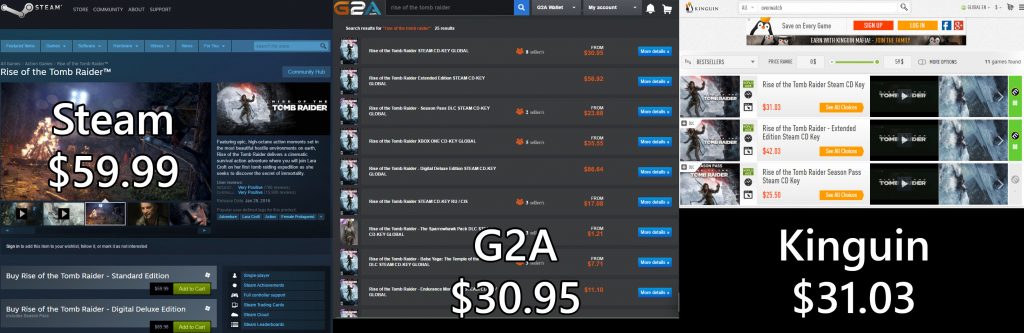
Denuvo is presented to us with a very noble goal – to tackle piracy. I think it’s safe to say that Denuvo is doing pretty well and ready to accept the fact that piracy is getting curbed entirely. So as I was calculating my “financial planning” on which game to get, I stumbled upon Kinguin and G2A. Which leads us to another segment here.
Kinguin, G2A, and every other game code marketplace
These two biggest sites look believable, but looking at the prices of games offered, it’s really sketchy. Long story short, Paul from Paul’s Hardware told the story of how he got a Windows 10 license for just $20. Surprisingly great price actually, considering that Windows 10 costs $119 for Home edition. After a few months Paul pointed out that his Windows 10 license has marked as invalid. He did have Buyer Protection on his purchase of that code too, but I’m not sure how the whole story went down.
Next up is Reddit user /u/superqas, which said that he bought two codes but it just doesn’t work. Again he have Buyer Protection for both codes, but no exact story of how it went down.
Bought two windows keys from Kinguin, and they don't work! Kinguin won't respond.
byu/superqas inwindows
When it comes to games however, there are a lot of sketchy game code activation methods as well. Most of them are region-specific, some are Steam Gifts, and some are Nvidia’s free game code with every purchase of their GPU.
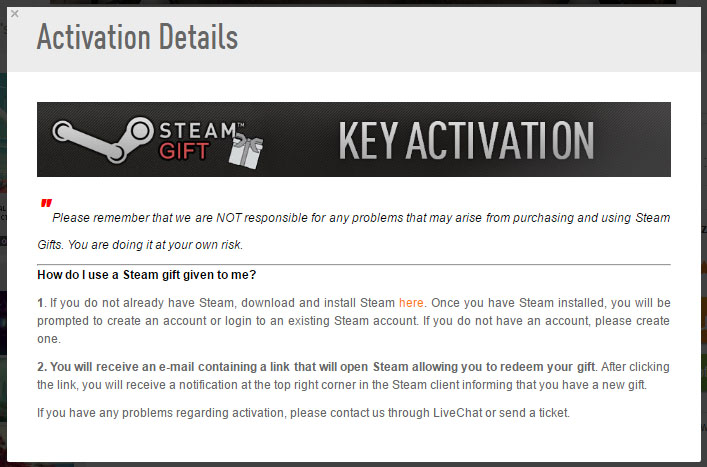
Another Reddit user /u/flodumalawi says his game code was listed as a Steam Voucher, but turned out to be an Nvidia game code.
[Help Needed]Steam Voucher Kinguin
byu/flodumalawi inpcmasterrace
Buyers actually get to enjoy the game after activation – but not for long. EuroGamer pointed out that Ubisoft is well aware of this situation, and has deactivated game keys bought from G2A or Kinguin altogether. Ubisoft claims that these keys are “fraudulent”, and just deactivated these games without any notice.
Devolver Digital, a video game label, came out to Twitter and said this:
Devolver Digital games purchased on @G2A_com are not legitimate, not guaranteed, and not supported. We are actively canceling those keys.
— Devolver Digital (@devolverdigital) May 14, 2014
G2A actually responded to this tweet and got roasted by Devolver Digital instantly. G2A claimed that their “multilingual 24/7 support takes care of all of these issues”, but Devolver Digital said that they bought the game key themselves, and G2A’s support didn’t do anything about it. Ever since response, G2A has been ignoring this issue entirely.
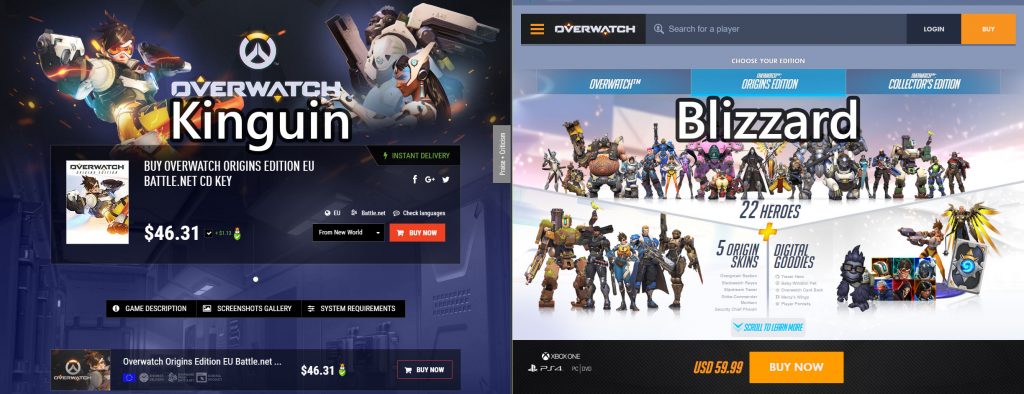
UPDATE: This is new – Kinguin offers Overwatch game keys here at https://www.kinguin.net/overwatch for only USD $46.31 cheapest. Not sure if it can be activated globally, but damn, Blizzard themselves are selling at USD $59.99 and there’s no legit discount. Not even during BlizzCon 2016.
How does all tie together?
We first should look at how marketplaces like G2A and Kinguin functions first. They’re just a platform for sellers to sell unredeemed game codes that they don’t want. Fair enough. However, some sellers are outright committing crime through platforms like G2A and Kinguin.
tinyBuild, and indie game developer, called G2A out and explained how they’re actually hurting their game sales. tinyBuild’s CEO, Alex Nichiporchik, talked to a G2A merchant and this is what he got:
The problem is that this business model is fundamentally flawed and facilitates a black market economy. I’ve spoken to a merchant on G2A about how he’s making $3-4k a month, and he outlined the core business model:
- Get ahold of a database of stolen credit cards on the darkweb
- Go to a bundle/3rd party key reseller and buy a ton of game keys
- Put them up onto G2A and sell them at half the retail price
Then, the Nichiporchik pointed out that with the sales figures obtained, G2A made transactions worth around ~$200k USD. That’s insane. Nichiporchik says, their payment provider shut them down because of the enormous number of chargebacks from rejected credit cards. That means these fraudulent game codes are traced through this system.
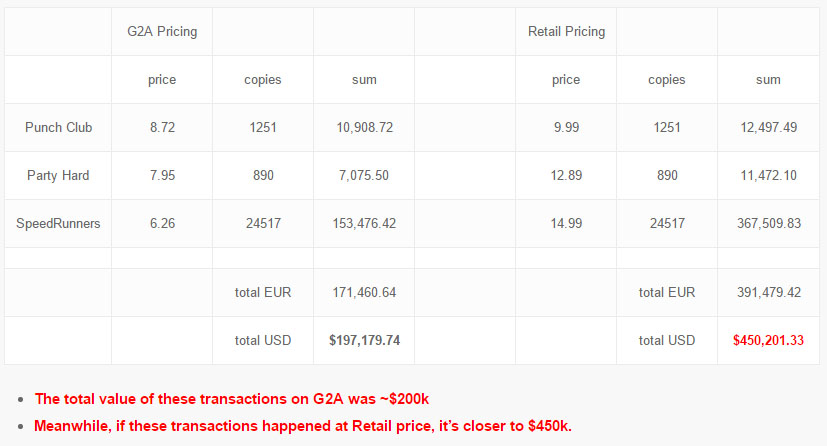
Hey – no wonder Ubisoft and Devolver Digital is deactivating game codes sold via G2A and Kinguin! Instead of taking a more direct route of piracy, they’ve turned a big round and obtained it illegally with other people’s credit cards! However, G2A customers fucked Ubisoft as their games are not working now. In the end, Ubisoft did reactivate those game keys, and they lost a bunch of money. Is this any better than piracy? Money is robbed in bright daylight, and they’re in traceable amounts too. What if this happens to an indie game developer who just developed a critically-acclaimed game?
And let’s not forget that G2A and Kinguin actually already knew that the game codes have a high chance of being fraudulent to begin with. Else, why would they want to offer an option like Buyer Protection? There is no checking or regulation if the game code is legitimate or not. These marketplaces just let them sell in their own accord. If you’re afraid that these codes are fake (high chance that it is, by the way), then pay for the Buyer Protection. But oh wait – As pointed out earlier, their service line doesn’t work. Bummer!
What about Denuvo?
Let’s see. We have a lot of AAA-title games which are using Denuvo’s anti-temper system. It worked extremely well! Rise of The Tomb Raider only got bypassed and cracked recently. That game is really old too! As game piracy is now in hiatus, they turn to the next best thing – game codes under market price. In a way, Denuvo actually helped fuel the virality and sales of marketplaces like G2A and Kinguin.
Even if it’s just a few dollars under the retail price, many people will make the jump and get game codes via these marketplaces. I mean, who doesn’t have low-priced stuff? Better yet, we don’t even have to wait for Steam Sales!
This video by LevelCapGaming documented the entire controversy really well here. Check it out.
Wrap up
In my point of view, marketplaces like Kinguin and G2A provides a platform to monetize fraudulent game codes instantly, and they aren’t even fulfilling their responsibilities as a marketplace platform. This is why such marketplaces are now dubbed as grey markets instead.
They’re no better than piracy too. Denuvo helped out and solved one problem, but created another big problem. Pirated copies of the game aren’t counted as “fraudulent” sales and there are no chargebacks involved – unlike “fraudulent” game codes.
BIG UPDATE: G2A is back with another controversy!
With the recent news that broke out, one game developer have set out and said that it’s better to pirate their games than to buy it from G2A. This entire post still holds true even after many years, which goes to show that the scummy actions of G2A are still running rampant.
For the full video summary of the ongoing debacle, here’s the video here.
In short, the game developer would rather want players to pirate their game than to buy through G2A because it costs them manhours to answer the calls of all invalidated keys that was bought via stolen credit cards.
After that, G2A sent out emails to big media around the world to publish the good word about G2A without disclosing that they are advertorials (paid, sponsored content) to help mitigate the dark clouds looming above G2A right now. Shady business practices and zero ethics – G2A is now under fire again.
Like our Facebook Page here at NasiLemakTech.com for more news and in-depth reviews! Also, join our Facebook Group for insightful information and memes!
Subscribe to our YouTube channel too!