



















Malaysia’s shift towards hybrid work has made meetings more important than ever, but many organisations are losing valuable time to unnecessary discussions, technical problems and unclear outcomes. According to Jabra’s Cost of Bad Meetings study, these issues are costing companies more than US$130 million annually in lost productivity.
Jabra describes this growing problem as meeting debt – the time, energy and focus employees lose through poorly organised meetings. While these losses rarely appear on company balance sheets, they accumulate over time and affect how effectively teams work.
This is particularly relevant in Malaysia, where hybrid work is becoming increasingly established. Since 1 August 2026, eligible civil servants have been working remotely two days a week under the government’s hybrid work policy, while many private-sector organisations have already adopted similar arrangements.
Whether employees are meeting in a Kuala Lumpur boardroom or joining remotely from home, meetings have become a central part of workplace collaboration. Unfortunately, they’re also becoming a significant source of lost productivity.
Where Productivity Gets Lost
Jabra’s research found that employees spend an average of eight hours a week in meetings, equivalent to an entire working day. However, 58% of that time is considered unnecessary, potentially adding up to an entire working month of lost productivity per employee annually.
The problems often continue after meetings end. Around 66% of workers regularly leave meetings without clear action items, while 59% need follow-up meetings to clarify what was discussed. Another 59% end up doing additional work to resolve the confusion.
In other words, one poorly organised meeting can easily lead to more meetings, lengthy email exchanges and duplicated work.
Meeting Room Technology Is Still a Problem
Technology failures are another major contributor to meeting debt, particularly in hybrid workplaces.
According to Jabra, 75% of hybrid meetings experience at least one technical issue, ranging from poor microphone quality and failed video connections to lengthy room setup processes. Each failure costs nearly 11 minutes per hybrid meeting, adding up to approximately three working days of lost productivity per employee annually.
Larger meeting rooms tend to face even greater challenges, losing 30% more time to technical failures than smaller rooms. Microphone problems also become more common as more people join a discussion.
This creates an uncomfortable situation where some of the most important business discussions, particularly those taking place in boardrooms, are also more likely to be disrupted by technical problems.
Bad Meetings Are Affecting Employee Wellbeing
Beyond productivity, poorly managed meetings are also affecting how employees feel about their work.
Jabra found that 87% of workers experience some level of dread about meetings, with the feeling becoming more pronounced as their calendars fill up. Employees who already expect a meeting to go badly are also more likely to leave without clear next steps.
Meeting fatigue is another concern. Around 42% of workers reach their energy limit within two hours of back-to-back meetings, increasing to 83% within four hours.
This means employees can already be mentally exhausted before lunch, despite still having much of their working day ahead.
Remote Employees Risk Being Left Out
The impact of poor meeting practices isn’t experienced equally across the workforce.
Around half of remote participants say they have been forgotten, talked over or excluded from discussions. Women appear to face additional challenges, with 59% reporting that they are excluded from side conversations when participating remotely.
Women also report worse experiences than men when it comes to being talked over, hearing conversations in the room and identifying who is speaking.
Seniority plays a role as well, with individual contributors more likely than C-suite executives to be overlooked during meetings.
As hybrid work becomes more common, organisations need to ensure remote participants have the same opportunities to contribute as colleagues physically present in the room. Otherwise, poor meeting technology and practices can become barriers to workplace inclusion.
AI Meeting Tools Aren’t a Complete Solution
AI is increasingly being considered as a way to improve meeting productivity, particularly through transcription, automated summaries and other meeting assistance features.
Jabra found that three in four workers have tried AI meeting tools, although fewer than one in three use them regularly. Accuracy and trust remain the main barriers to wider adoption.
The challenge is that AI tools depend on the quality of the meetings they support. Poor audio quality can result in inaccurate transcripts, while discussions without clear decisions are unlikely to produce useful summaries.
AI can make an effective meeting more productive, but it cannot replace proper planning, clear communication or reliable meeting room equipment.
Organisations Need to Rethink How They Meet
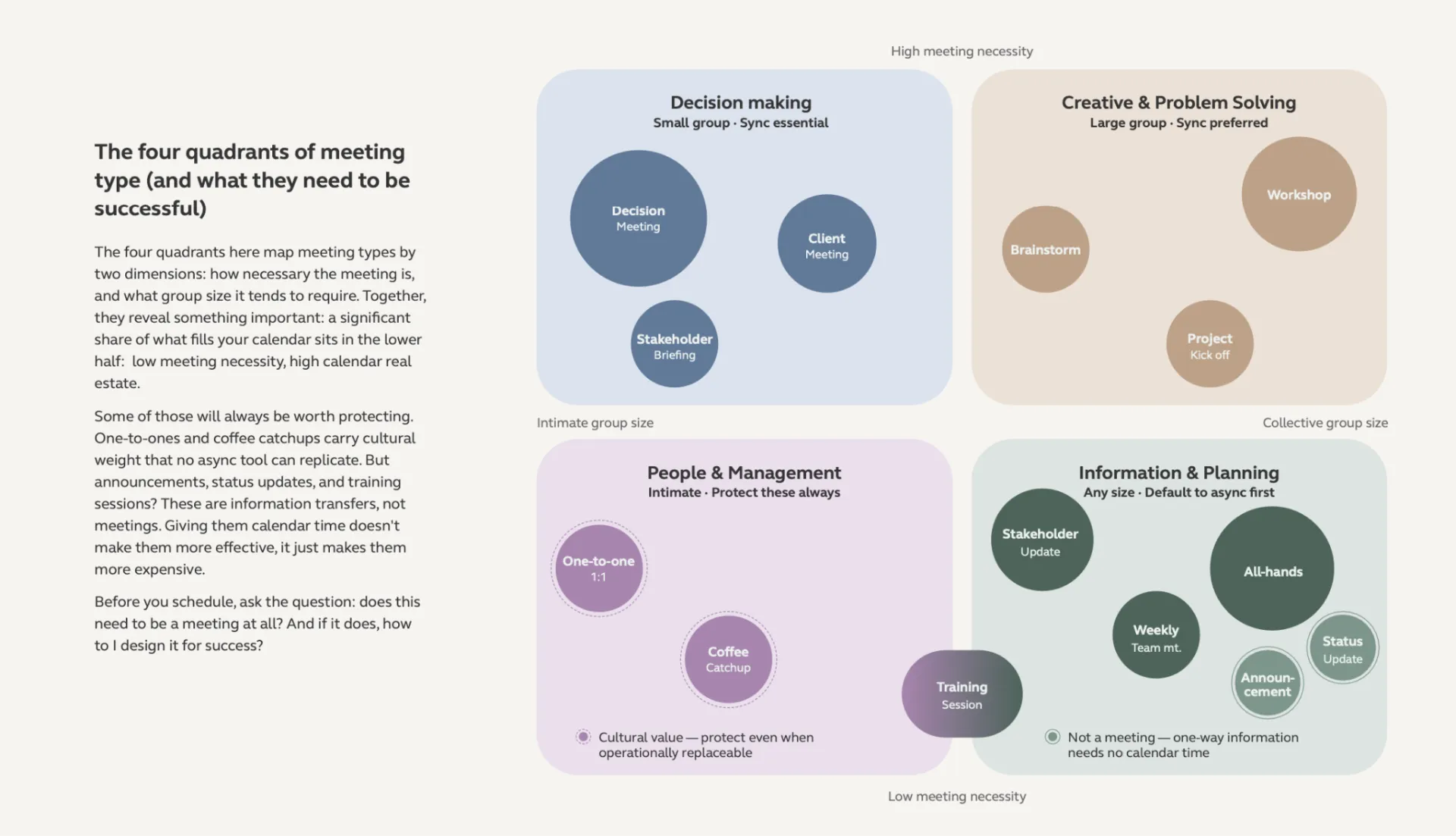
Jabra’s research suggests that organisations should approach meetings differently depending on their purpose.
Decision-making meetings should involve smaller groups, clear agendas and pre-reading materials shared in advance. Creative and problem-solving sessions, meanwhile, benefit from dedicated facilitators, defined objectives and properly prepared equipment.
One-to-one meetings and informal catch-ups should also be protected, as they help build workplace relationships and trust in ways that digital communication alone cannot fully replace.
For announcements, routine updates and general information sharing, organisations should consider alternatives such as emails, shared documents and short recorded updates instead of automatically scheduling another meeting.
Ultimately, reducing meeting debt doesn’t necessarily require more technology or additional investment. It starts with reconsidering whether a meeting is necessary in the first place and ensuring that every meeting has a clear purpose and outcome.
Like our Facebook Page here at NasiLemakTech.com for more news and in-depth reviews! Also, join our Facebook Group for insightful information and memes!
Subscribe to our YouTube channel too!