

















Batteries may look similar on the outside, but their chemistry, voltage, charging requirements, and performance can differ considerably. These differences matter in everyday devices such as remote controls, toys, household lights, and portable electronics. Choosing the wrong battery type can lead to disappointing performance, unnecessary replacements, or compatibility problems that could have been avoided by checking the manufacturer’s instructions.
Rechargeable batteries have also changed over the years. Traditional alkaline batteries, rechargeable nickel-metal hydride (NiMH) cells, and rechargeable 1.5V lithium batteries each have their own strengths and limitations. Understanding these differences helps consumers make informed decisions without assuming that one technology is always the best choice.
All AA Batteries Deliver the Same Voltage
AA describes a battery’s physical size, not a guarantee that every AA battery delivers the same voltage. Standard alkaline AA batteries typically have a nominal voltage of 1.5V, while rechargeable NiMH AA batteries typically provide 1.2V. Some rechargeable lithium AA batteries use built-in electronics to provide a regulated 1.5V output.
This difference can affect devices that rely on particular voltage levels. A product designed to work across a broad voltage range may perform well with either alkaline or NiMH batteries, while another may show a low-battery warning earlier with a 1.2V cell. Checking the device’s requirements is more reliable than choosing batteries based on their size alone.
Why Battery Chemistry Matters
Battery chemistry affects how voltage changes during use. An alkaline battery’s voltage generally falls as it discharges, while a regulated 1.5V lithium battery can maintain its output for much of its usable capacity before its protection electronics stop supplying power. NiMH batteries have their own discharge characteristics, which may suit many compatible devices.
Capacity ratings also need careful interpretation. The amount of energy a battery delivers depends on factors such as the device’s power demand, operating temperature, and discharge conditions. Two batteries with the same physical size or similar advertised capacity may not provide identical runtime in every device.
Rechargeables Make a Flashlight Look Dim
The idea that rechargeable batteries always produce weaker light is misleading. A light’s output depends on its electronics, battery characteristics, and design. A 1.2V NiMH cell may behave differently from a 1.5V alkaline battery in a device designed around a particular voltage range, but that does not mean rechargeable batteries are inherently less effective.
Some lights work well with NiMH batteries, while others have specific voltage requirements. A light may reduce its output or indicate low battery power earlier with a battery type that does not match its design. The correct comparison is between compatible batteries under similar operating conditions, not simply between rechargeable and disposable options.
What to Check When Light Output Drops
A weaker beam does not always mean that the battery chemistry is unsuitable. Depleted cells, dirty contacts, loose battery covers, or a problem with the light itself can also affect performance. Checking the battery compartment and following the manufacturer’s troubleshooting instructions can help identify the cause.
A flashlight should be evaluated together with its supported battery type, voltage, output settings, and published runtime. Someone exploring the available flashlight designs should check the supported battery types, output settings, and runtime information for the specific model. This makes it easier to choose a light that performs consistently with the batteries available.
Lithium AAs Are a Safety Risk
Lithium batteries require appropriate handling, but it is inaccurate to treat every lithium battery as inherently unsafe. Their safety depends on the chemistry, construction, protection systems, and conditions in which they are used. Rechargeable lithium-ion batteries store considerable energy in a compact space, making suitable charging equipment and proper handling important.
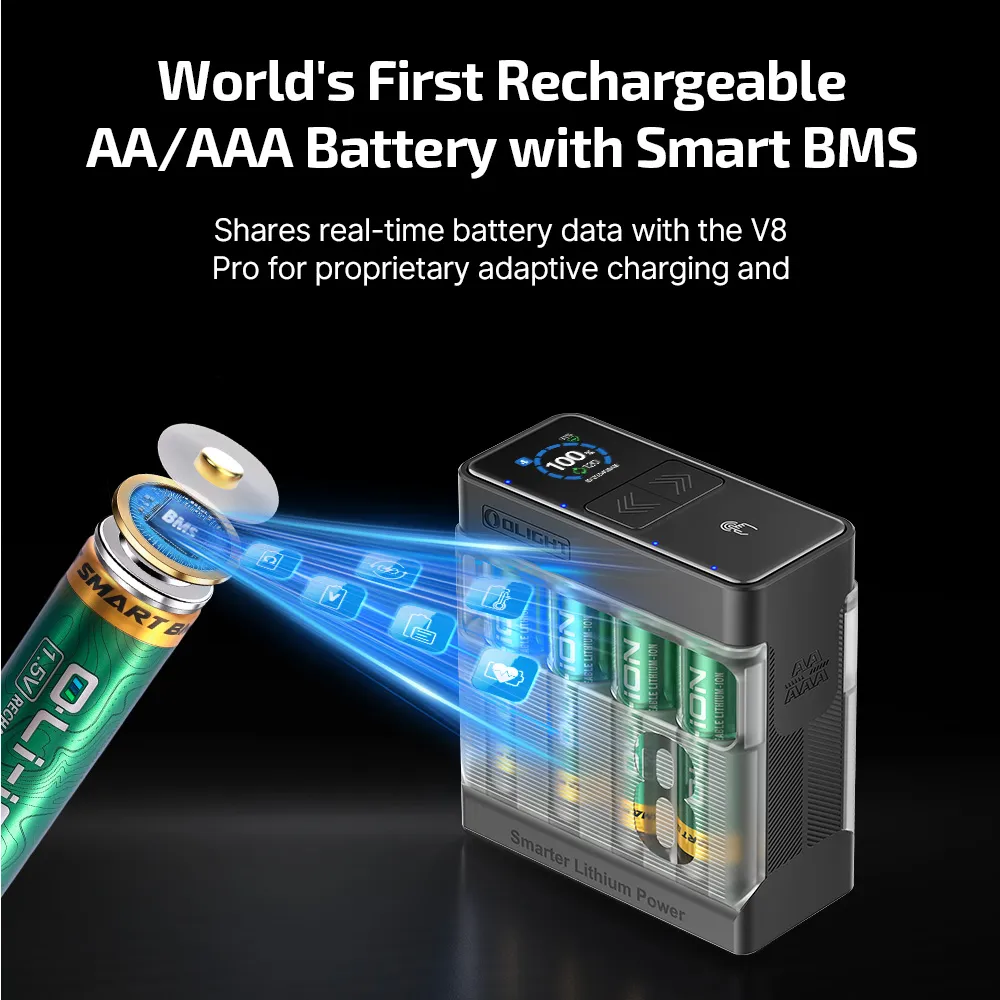
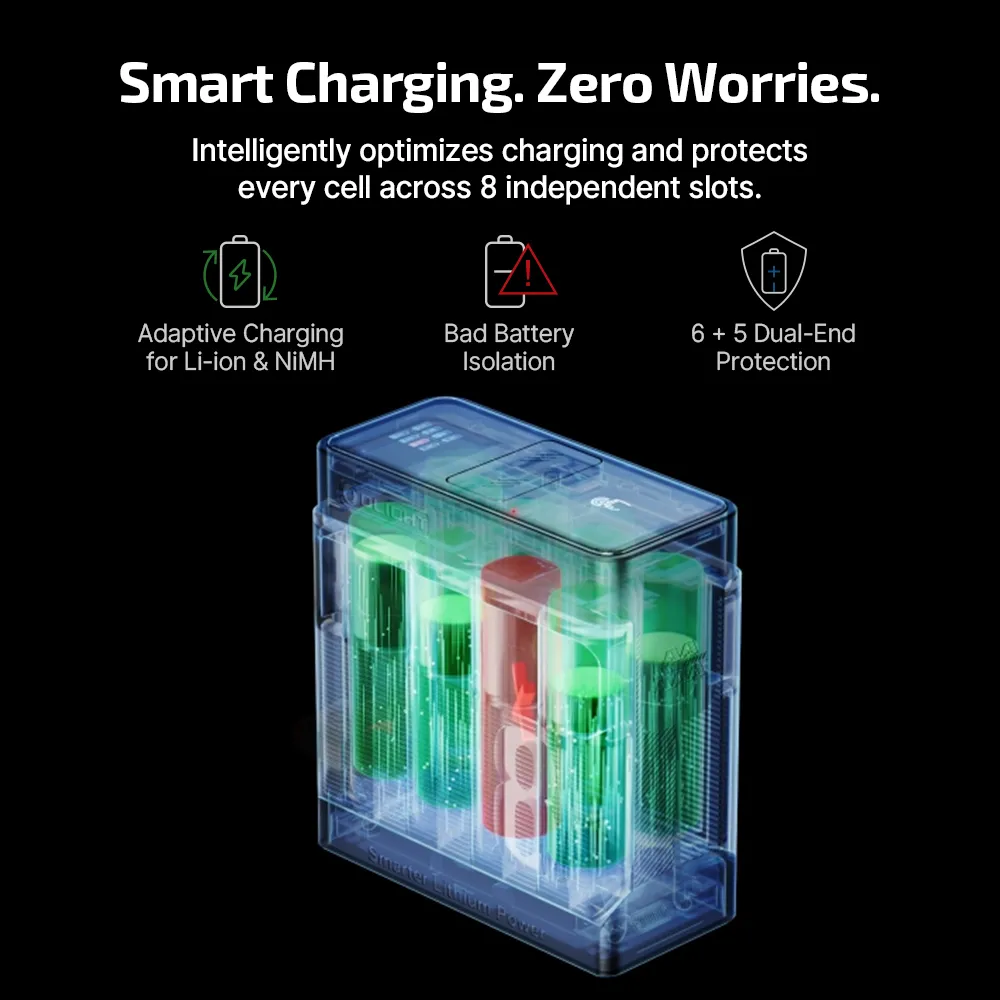
Rechargeable 1.5V lithium AA batteries are different from conventional 1.2V NiMH cells. Some models contain internal electronics that regulate output and manage battery operation. According to the supplied product brief, Olight OLi-ion batteries feature Smart BMS technology and a 6+5 dual-terminal protection design. The precise functions of these features should be confirmed in the manufacturer’s technical documentation.
Safe Handling and Charging Practices
Always use compatible charging equipment and inspect batteries before use. Stop using any cell that appears damaged, swollen, or unusually hot. Disposable alkaline batteries should never be recharged, and different battery chemistries should not be mixed in one device unless its instructions explicitly permit that arrangement.
Storage deserves equal attention. Keep loose batteries away from coins, keys, and other metal objects that could connect their terminals. Store them in a cool, dry location away from children and pets. Built-in protection features can help manage certain risks, but they do not eliminate the need to follow the manufacturer’s instructions.
Cold Weather Kills Every Battery Equally
Cold temperatures can reduce battery performance, but the effects vary with chemistry, battery condition, discharge rate, and device requirements. Chemical reactions generally slow as temperatures fall, which can reduce the power available at a given moment. Some batteries may temporarily provide less usable capacity in cold conditions and recover some performance after returning to a suitable temperature.
Alkaline and NiMH batteries can both experience reduced performance in cold weather. Lithium-based batteries also have operating limits, and their ability to discharge or accept a charge depends on their design. It is therefore inaccurate to assume that every lithium battery works in every cold environment or that all other battery types fail at the same temperature.
Understanding Temperature Ratings
The supplied OLi-ion brief states that these batteries are usable at temperatures as low as -20°C. Before relying on that figure, check the official documentation to confirm the exact operating range and whether it applies to discharging, charging, or storage. These conditions are not interchangeable: a battery that can supply power in cold weather may still need to return to an approved temperature before charging.
For winter activities, keep spare batteries protected from moisture and follow the manufacturer’s temperature guidance. Do not warm a cold battery with direct heat or place it near an open flame. If a device behaves differently in winter, consult its instructions before assuming that the battery has permanently lost capacity.
You Can’t Know a Battery’s Health
Battery performance often changes gradually rather than failing all at once. Rechargeable cells can lose capacity after repeated charge and discharge cycles, meaning they may continue to power a device but provide less runtime than they did when new. Recognising these changes can help users replace unsuitable batteries before they become a recurring problem.
Simple observations can reveal possible issues. A battery that repeatedly runs out sooner than similar cells, becomes unusually warm, or fails a compatible charger’s checks may need further attention. However, appearance alone cannot reveal its complete condition. A cell may look normal even when its capacity has declined, and a single voltage reading does not tell the whole story.
How Battery Health Information Helps
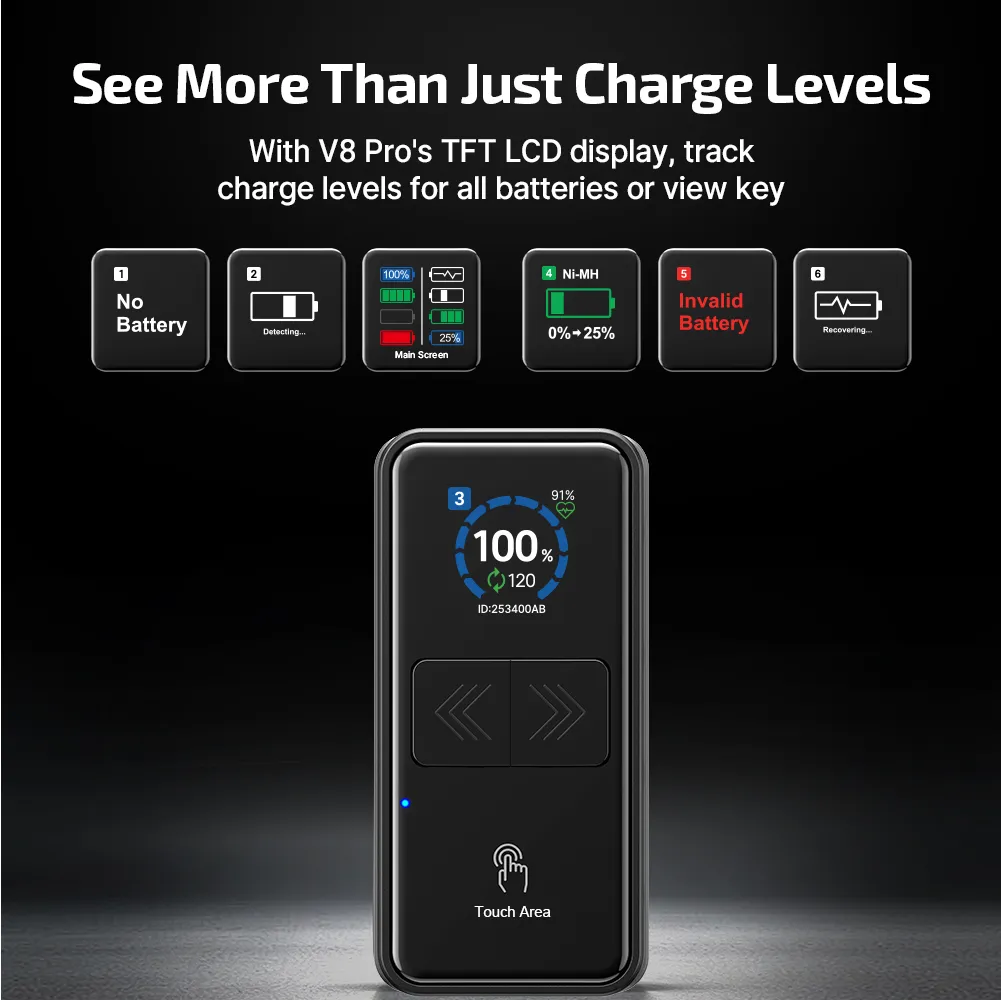
The Ostation V8 Pro is described in the supplied brief as having a full-colour screen that displays battery health and cycle count. These details can help users compare rechargeable batteries and identify cells that may no longer perform as expected. The displayed information should still be interpreted according to the manufacturer’s guidance rather than treated as a complete guarantee of future performance.
Battery cycle count is useful context, but it does not tell the entire story. Storage conditions, charging practices, temperature, and usage patterns can all affect battery life. If a charger identifies a cell as faulty, follow the recommended procedure instead of returning it to everyday use without checking the cause.
Picking Cells for an AA-Powered EDC Flashlight
Choosing batteries for everyday carry equipment starts with understanding the device’s requirements. Some lights use built-in rechargeable batteries, while others accept replaceable AA or AAA cells. Even among models that use the same battery size, supported chemistries and voltage ranges may differ, so compatibility should always be checked before purchasing replacement cells.
Battery choice also depends on routine. Someone who uses a light briefly each day may prioritise convenient charging and long-term value, while a person who keeps a light for occasional emergencies may want to consider storage requirements and the availability of replacements. Neither rechargeable nor disposable batteries are automatically the right answer for every situation.
Matching Battery Type to Your Routine
An edc flashlight may use a built-in rechargeable battery or a replaceable battery system, depending on the model. Before selecting alkaline, NiMH, or regulated 1.5V lithium cells, check the manufacturer’s stated compatibility and voltage requirements. This prevents the assumption that any battery that fits physically will work properly.
Rechargeable cells can reduce disposable battery use when a device is used frequently. However, the overall value depends on the battery and charger costs, usage frequency, and usable service life. Keep charged and depleted cells separate, store spares safely, and follow the manufacturer’s instructions for the specific light.
Where V8, V8 Pro and OLi-ion Fit In
The Ostation V8 series brings battery charging and organisation into one system. According to the supplied brief, the OLi-ion AA and AAA batteries provide a regulated 1.5V output and have a listed 2A output specification. Voltage and current describe different electrical properties, so buyers should consult the official documentation to understand precisely how the 2A figure applies to the battery or charging system.
The brief also lists Smart BMS technology and a 6+5 dual-terminal protection design for OLi-ion batteries. These features form part of the product’s stated battery-management and protection approach, but users should not treat them as a reason to ignore charging instructions. The official manual remains the appropriate reference for supported batteries, operating conditions, and safe handling.
Choosing Between V8 and V8 Pro
The V8 Pro is described in the brief as offering battery information through a full-colour screen and compatibility with NiMH batteries from other brands. This may suit households that already own compatible rechargeable AA and AAA cells and want a more organised way to charge and monitor them. Users should confirm the exact model’s compatibility list before inserting batteries, especially when charging different chemistries.
The best battery choice is the one that matches the device, the environment, and the user’s needs. Understanding voltage, chemistry, temperature limits, and battery health makes it easier to avoid common mistakes and get more consistent results from everyday electronics.
Like our Facebook Page here at NasiLemakTech.com for more news and in-depth reviews! Also, join our Facebook Group for insightful information and memes!
Subscribe to our YouTube channel too!