














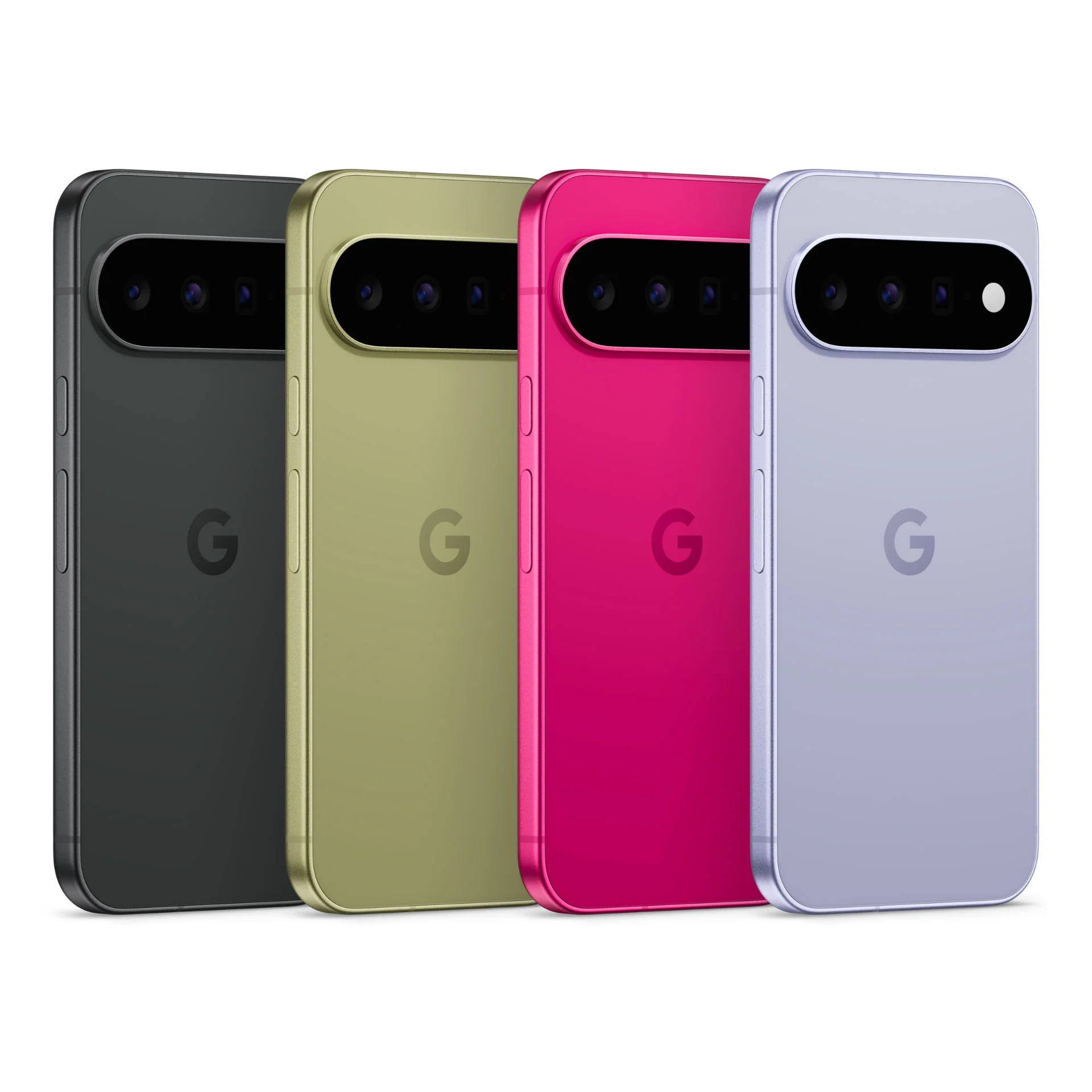
So, the new Google Pixel 11 lineup has been revealed, and we have a total of 3 standard candy bar models of the base, Pro, and Pro XL alongside the Pixel 11 Pro Fold.
All of them runs the new Google Tensor G6 chip paired with a Titan M3 security coprocessor. Across the board, the phones share the same authentication options, USB Type-C 3.2 port, stereo speakers with three microphones and Spatial Audio, Bluetooth v6, NFC, Google Cast, dual band GNSS, Thread networking, and a matching set of safety features including Satellite SOS, Emergency SOS, Crisis Alerts, Car Crash Detection, and Android Earthquake Alerts.
All three also get seven years of OS, security, and Pixel Drop updates, use Corning Gorilla Glass Victus 2 cover glass with a spacecraft-grade aluminum frame, carry IP68 dust and water resistance, and ship with a 1-meter USB-C to USB-C cable made from materials certified as free of PFAS. Storage across the range uses Zoned UFS for faster performance, and all three support the same Gemini Intelligence suite, including Gemini Nano, Gemini Live, Gemini apps, and Magic Cue, alongside features like Circle to Search and Call Assist.
Now for the differences.
The Pixel 11 keeps things comparatively modest, with a 6.3-inch Actua display at 422 PPI and a 60-120Hz refresh rate, a 4985mAh battery with 55 percent charging in about 30 minutes using a 30W charger, and 12GB of RAM paired with 256GB or 512GB of storage. Its rear camera system consists of a 48MP wide sensor, a 13MP ultrawide, and a 10.8MP telephoto lens offering 5x optical zoom and Super Zoom up to 30x, backed by a 10.5MP front camera. Video tops out at 4K recording, and the phone comes finished in Corning Gorilla Glass Victus 2 with a polished back and satin finish across Frost, Pistachio, Hibiscus, and Obsidian colorways. Connectivity runs on Wi-Fi 6E, one step behind its siblings.
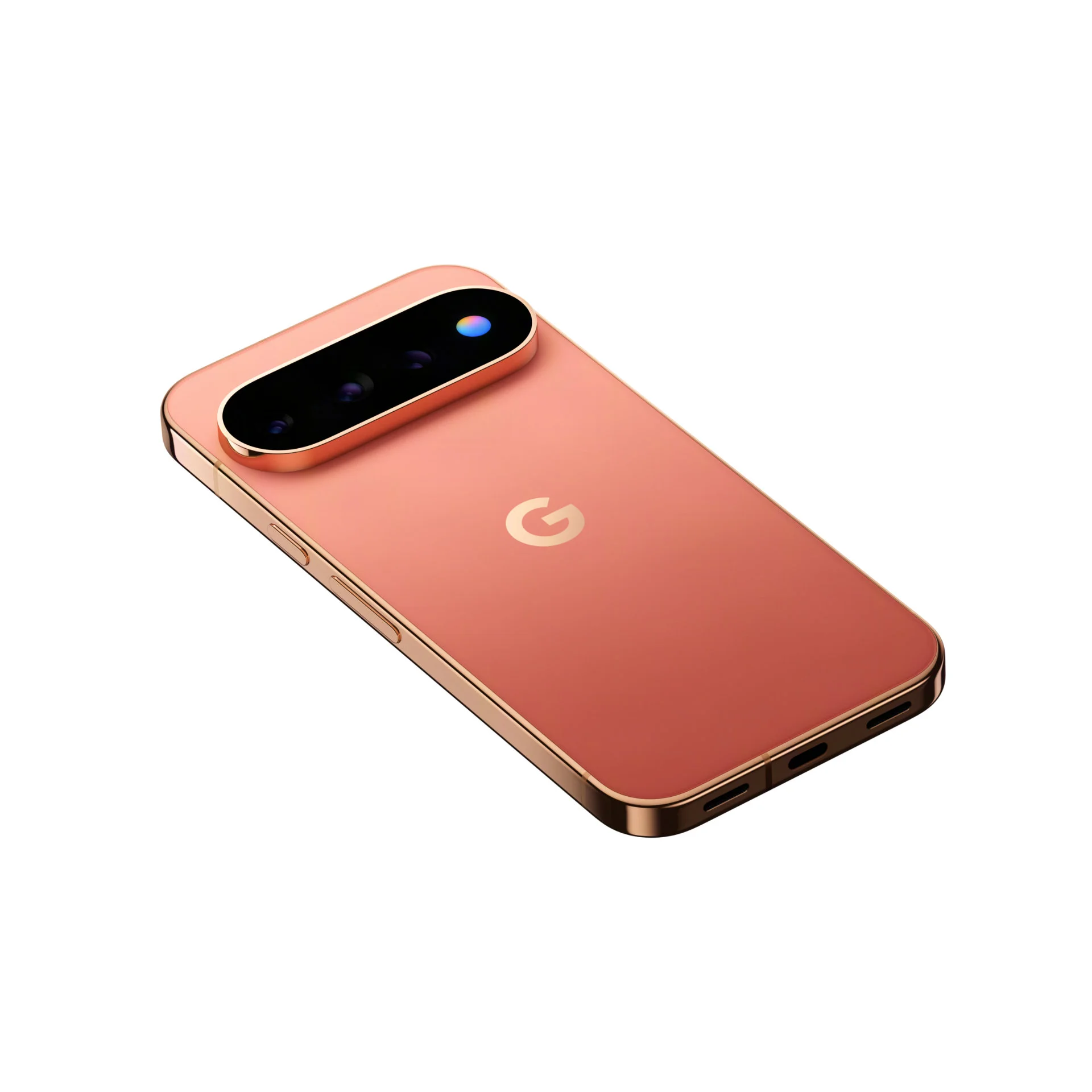
The Pixel 11 Pro moves up to a 6.3-inch Super Actua display at 495 PPI with a wider 1-120Hz refresh range and higher peak brightness, a 4850mAh battery, and a choice of 12GB or 16GB of RAM with storage options up to 1TB. Its camera array steps up significantly too, pairing a 50MP wide sensor with a 48MP ultrawide and a 48MP telephoto lens capable of 5x optical zoom and Pro Zoom up to 120x, along with a much larger 42MP front camera. Video recording extends to 8K, and the phone adds Wi-Fi 7 along with an Ultra-Wideband chip for more precise spatial orientation, features the standard Pixel 11 doesn’t get. It’s finished with a silky matte back in Canyon, Olive, Fog, and matte Obsidian colorways.
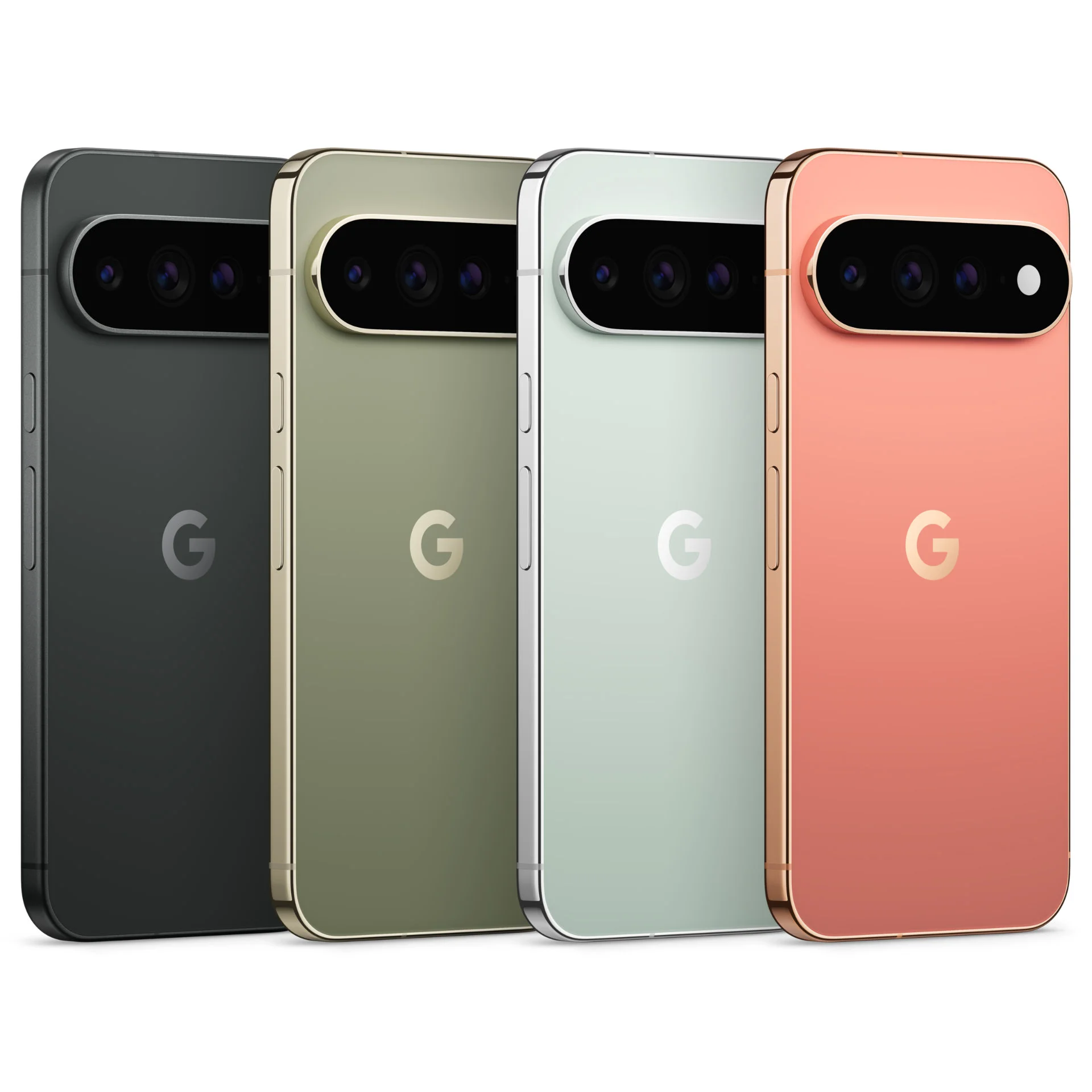
The Pixel 11 Pro XL carries the same core Pro-tier camera system, chip, and connectivity as the 11 Pro, but scales things up further with a larger 6.8-inch Super Actua display at 486 PPI, a bigger 5115mAh battery supporting faster 75 percent charging in about 30 minutes with a 45W charger, and a larger overall footprint at 6.4 by 3.0 by 0.3 inches. It shares the 11 Pro’s color options, camera specs, video capabilities, and connectivity features, differing mainly in size, battery capacity, and charging speed.
The foldable lineup also has a new entry which is the Pixel 11 Pro Fold that comes with a 6.5-inch Super Actua external display and an 8-inch Super Actua Flex internal display, both running at up to 120Hz and supporting HDR with full 24-bit color depth for 16 million colors. The external screen runs 1080 x 2342 resolution at 399 PPI behind ultra-durable glass ceramic cover glass, while the internal display steps up to 2076 x 2152 at 372 PPI under Ultra Thin Glass, with both panels reaching up to 2400 nits in HDR and up to 3600 nits at peak brightness. The hinge itself uses multi-alloy steel with an aerospace-grade high-strength aluminum alloy cover.
It runs on the Google Tensor G6 chip paired with a Titan M3 security coprocessor, with 16GB of RAM and storage configurations of up to 1TB, and the 4750mAh battery is rated for more than 24 hours of use, supports fast charging up to 50 percent in about 30 minutes with a 30W USB-C PPS charger, and also supports Pixelsnap wireless charging up to 25W.
On cameras, the rear system includes a 48MP wide sensor, a 10.5MP ultrawide with autofocus, and a 10.8MP telephoto lens offering 5x optical zoom and Super Zoom up to 30x, backed by multi-zone laser autofocus, a spectral and flicker sensor, and optical plus electronic stabilization on the wide and telephoto lenses. The front camera and inner camera are both 10MP Dual PD sensors with 87-degree fields of view. Video recording tops out at 4K on both the rear and front cameras, with support for HEVC, AVC, AV1, and VP9 formats, along with features like Video Boost, Night Sight Video, Cinematic Pan, and slo-mo up to 240 FPS.
Being a foldable, the device includes some features unique to its form factor, including Dual Screen Preview, Rear Camera Selfie and Rear Camera Selfie Video, tabletop mode for hands-free shots, Instant View, and Made You Look. HiLight is also built in, designed to surface useful information without requiring the user to look at the screen directly.
Durability comes from the same ultra-durable glass ceramic cover glass on the front, paired with a composite matte back with a satin finish spacecraft-grade aluminum frame, IP68 dust and water resistance, and a fingerprint-resistant coating. The device launches with Android 17 and is set to receive seven years of OS, security, and Pixel Drop updates.
For wearables, the Pixel Watch 5 is the latest model that comes with sizes of 41mm and 45mm, and runs Wear OS 7.0 on a Qualcomm Snapdragon W5 Gen 2 Accelerated chip paired with a Cortex-M55 co-processor, and both offering 64GB of eMMC flash storage. The housing on each is made from 100 percent recycled aluminum, and both use an Actua 360 display with custom 3D Corning Gorilla Glass 5, a 320ppi AMOLED LTPO panel with DCI-P3 color, peak brightness up to 3000 nits, a 1 nit minimum for always-on display, and a responsive 1 to 60Hz refresh rate.
Battery-wise, the 45mm uses a 465mAh battery rated for up to 40 hours with AoD, while the 41mm has a 332mAh battery rated for up to 30 hours. Both charge via the same Quick Charge Dock and can be fully charged in around 50 minutes in average.
Connectivity is consistent across both sizes, including 4G LTE and UMTS, Bluetooth 6.0, Wi-Fi 802.11a/b/g/n/ac/ax across 2.4GHz and 5GHz bands, NFC, Ultra-Wideband, and satellite SOS communication, with the Japan market substituting FeliCa support in place of satellite SOS. GPS is dual-frequency in both models, supporting GPS, Galileo, and Glonass in the US, with Beidou and QZSS added for the rest of the world.
Sensor packages are identical across both sizes, including a compass, altimeter, red and infrared SpO2 sensors, multipurpose electrical sensors compatible with the ECG app, a multi-path optical heart rate sensor, 3-axis accelerometer, gyroscope, ambient light sensor, an electrical sensor for skin conductance tracking, a far-field skin temperature sensor, barometer, and magnetometer. Both also share the same interaction features, including touchless one-handed gestures, a side button, haptic crown, and Gen 3 premium haptics, along with a built-in microphone and speaker. Durability specs match too, with both rated 5 ATM and IP68 alongside the same Gorilla Glass 5 covering.
The 45mm will be offered in Matte Black, Polished Silver, and Satin Pyrite finishes, while the 41mm shares that plus a hampagne Gold option with a Canyon Active Band.
Lastly, Google will be shipping its own tracker module too, the Pixel Tag. It comes in this 28mm by 46.1mm by 5.4mm size and is made from a mix of polycarbonate and metal. It carries an IP67 rating under the IEC 60529 standard, meaning it can handle dust exposure and survive submersion in up to 1 metre of water for up to 30 minutes under specified test conditions.
On connectivity, the Pixel Tag supports Bluetooth Channel Sounding for basic tracking and uses Ultra Wideband for Precision Finding. Bluetooth Channel Sounding needs a compatible device running Android 16 or later with Bluetooth 6.0, while Precision Finding requires an Android phone with Ultra Wideband support, offering a range of up to 50 metres from the paired device. Basic tracking works without Ultra Wideband, but having compatible hardware makes it easier to pinpoint the tag’s exact location nearby.
A user-replaceable CR2032 coin cell powers the thing for more than a year, and the built-in speaker can help users locate it by sound, along with an accelerometer as its only sensor, keeping the overall hardware fairly simple.
On the software side, the Pixel Tag is listed as compatible with Android 9 or later, though its more advanced features carry higher requirements, Android 16 and Bluetooth 6.0 for Channel Sounding, and Ultra Wideband support for Precision Finding, meaning broader compatibility exists for basic use but full functionality depends on the phone’s specific hardware and software.
|
Device |
Price |
Availability |
Pre-orders |
On-shelf Date |
| Pixel 11 | From RM3,999 | CelcomDigi, Maxis, Urban Republic, Senheng, Shopee (Online only), U Mobile, Thundermatch | August 12 |
August 20 |
|
Pixel 11 Pro |
From RM4,999 |
|||
|
Pixel 11 Pro XL |
From RM5,999 |
|||
|
Pixel 11 Pro Fold |
From RM7,999 |
CelcomDigi, Maxis, Urban Republic, Senheng, Shopee (Online only), U Mobile, Thundermatch *Olive is exclusively available only on Google Store |
||
|
Pixel Watch 5 (41 mm) |
From RM1,799 |
CelcomDigi (Online only), Maxis (Online only), Urban Republic (Online only), Senheng (Online only), Shopee (Online only), U Mobile (Online only), Thundermatch (Online only) |
||
|
Pixel Watch 5 (45 mm) |
From RM1,999 |
|||
|
Pixel Tag |
– |
Coming Soon in November |
11 November |
Like our Facebook Page here at NasiLemakTech.com for more news and in-depth reviews! Also, join our Facebook Group for insightful information and memes!
Subscribe to our YouTube channel too!