
















On the 9th of April 2013, we covered the Asus Fonepad release which is a phablet that uses the Intel Atom Z2420 processor – a single-core that runs on 1.2GHz.
A quick recap on what we have already said before – number of cores doesn’t mean anything if the kernel (the main communicator between the software and the hardware) isn’t optimized. What more is that the apps you use must have the capabilities built-in to fully utilize the power that the processor offers to really get the most out of it. If not, it’s all wasted – and takes a great toll on your battery life too. Of course, you might say “a battery with an extremely large capacity will solve it” and I’ll say “sure, go on”. It’ll take you forever to charge it from 0% to 100%, and depletion rate will be the same.
This post will be a little heavier on jargon, so bear with me.
If you didn’t know how tiny the Intel Atom processor is, here it is! Best of all, this is made purely in Penang, Malaysia.

The size of the old Malaysian 20 cent coin is about 23.5 mm in diameter and you can easily put that processor die on that coin with a lot of extra space around the edges! Though, how does it performs? That’s the question everyone is asking and Asus did a full benchmark on the Intel Atom processor.
Check out the slides by Asus/Intel below!


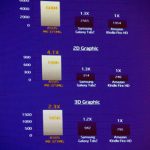








As shown in the slides, Intel is making the processors cheap enough so that developing countries can enjoy the perks of having a smartphone without compromising much on the performance side.
The other technical side? Well, an engineering student will tell you that the smaller the transistor size, the better it gets. More specifically, :
- Better efficiency
- Less heat
- More transistors in the same volume (I don’t say)
It however, doesn’t much affect the price as the technology gets better, the processor die size doesn’t really change – they just get stuffed with more transistors, making the clock speed (the GHz) more. Intel also is very inspired by Moore’s Law to drive its work forward – also known as the “overall-processing-power-for-computers-will-double-every-two-years law“. Amazingly the law is still being obeyed until today since it first published in 19th April 1965.
The Intel Atom Z2420 is built on a 32nm (nanometer) size transistors which translates to a fairly large size compared to its biggest rival, the Qualcomm Snapdragon which is already on the 28nm mark. Intel however already made 22nm 3D transistors for its desktop and laptop processors and I think they just need to bridge the gap between both technologies and integrate them well enough, they can overtake the competitors with just a snap of the finger.
In conclusion – still, what does it mean for us all?
Expect more devices and more choices on devices since there are more processors available in the market available for manufacturers to use now. Prices will probably drop, since the market will also be denser but if and only if the processors are made use of. One last thing for sure, Intel will bend some of the preconceptions you have about how processor power is calculated. With Android’s open platform, any processors can just hop in and join the fun!
Like our Facebook Page here at NasiLemakTech.com for more news and in-depth reviews! Also, join our Facebook Group for insightful information and memes!
Subscribe to our YouTube channel too!