




















Know what’s AMD Naples? Well, I’m quite sure that most of us here have at least heard of the name. It’s AMD’s codename for their new server processor. AMD promises two things with their Naples lineup – the first one is innovation, and the second one is choice.
Just like its Ryzen cousin, AMD Naples is built to “disrupt the status-quo and scale across the cloud datacenter and traditional on-premise server configurations”. The new AMD server processor exceeds today’s top competitive offering on critical parameters, with 45% more cores, 60% more input/output capacity (I/O), and 122% more memory bandwidth.
AMD’s new Naples datacenter processor has a few new features here too:
- A highly scalable, 32-core System on Chip (SoC) design, with support for two high-performance threads per core
- Industry-leading memory bandwidth, with 8-channels of memory per “Naples” device. In a 2-socket server, support for up to 32 DIMMS of DDR4 on 16 memory channels, delivering up to 4 terabytes of total memory capacity.
- The processor is a complete SoC with fully integrated, high-speed I/O supporting 128 lanes of PCIe 3, negating the need for a separate chip-set
- A highly-optimized cache structure for high-performance, energy efficient compute
- AMD Infinity Fabric coherent interconnect for two “Naples” CPUs in a 2-socket system
- Dedicated security hardware
Now, the most important thing here is the performance. AMD claims that they’ve improved the architecture so much, that it outperforms what Intel has to offer now. This is their setup for the test.
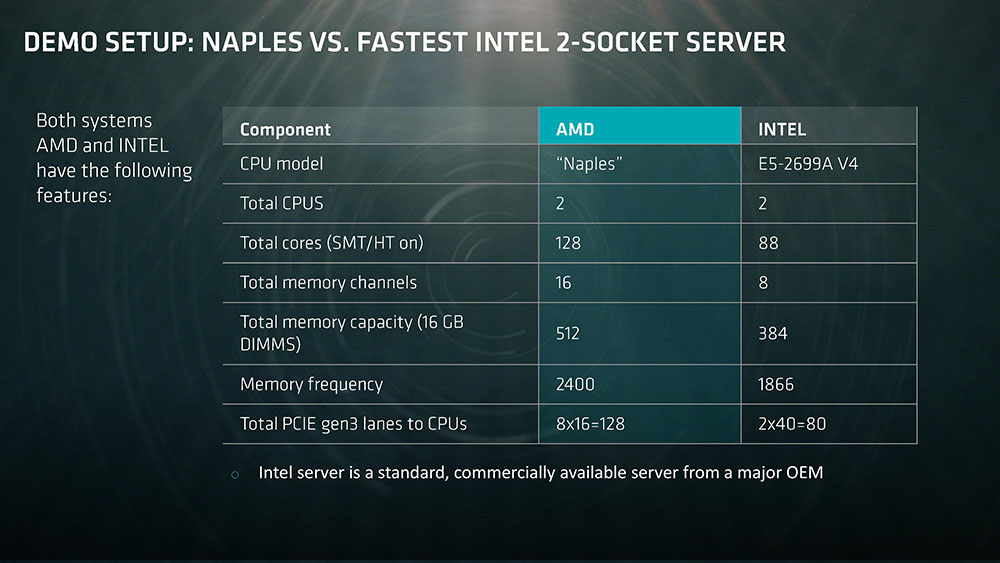
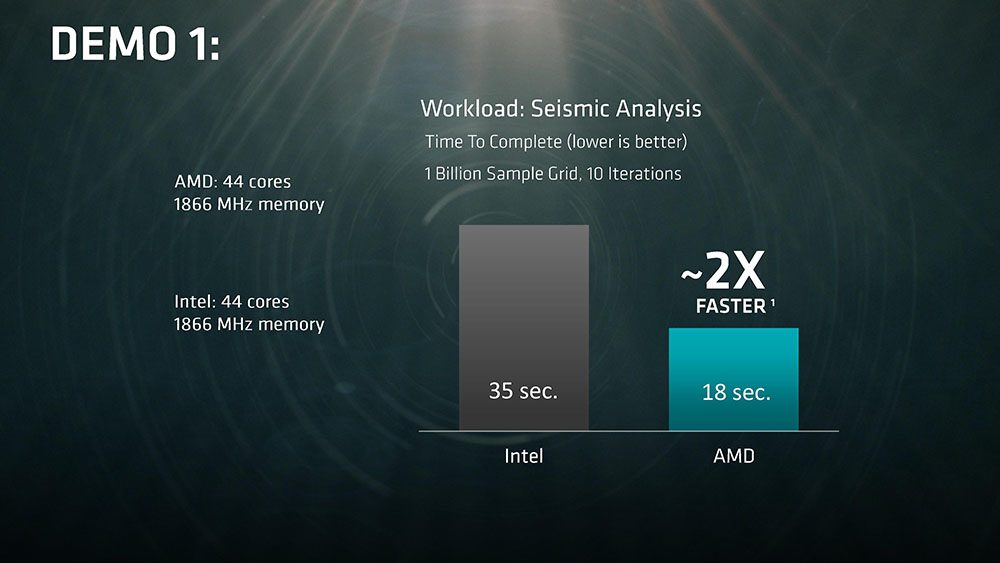
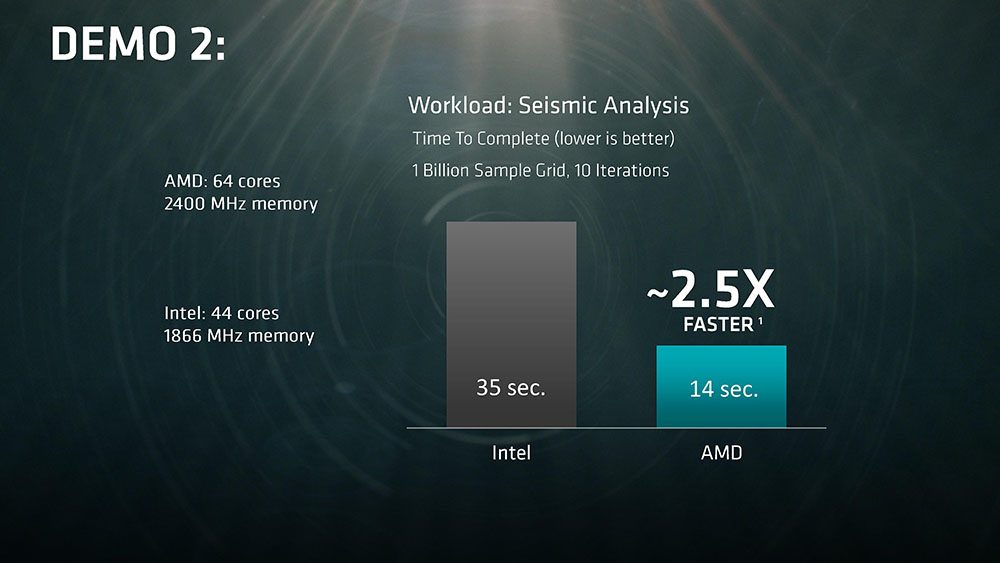
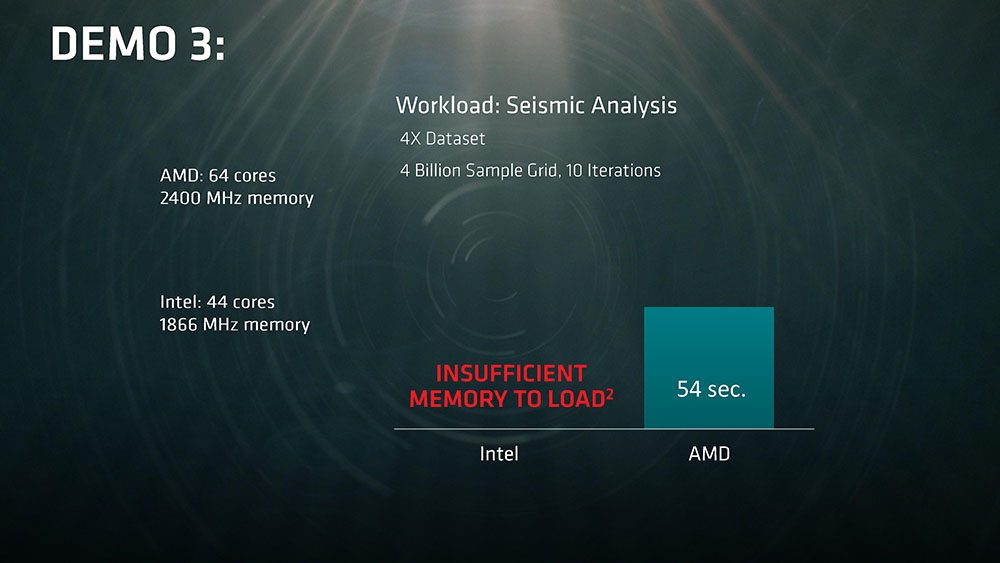
As for the test they’re doing, it involves a lot of heavy computational power and iterations of 3D wave equations (trust me, I’ve done simple 2D wave equations by hand and it’s already a nightmare), with a large sample grid. They’ve done a total of 3 different tests, which can be compared in the graphs below.
Then there’s also another additional feature for using AMD Naples-based datacenter processor and AMD Radeon graphics – and they’re calling it Radeon Instinct.
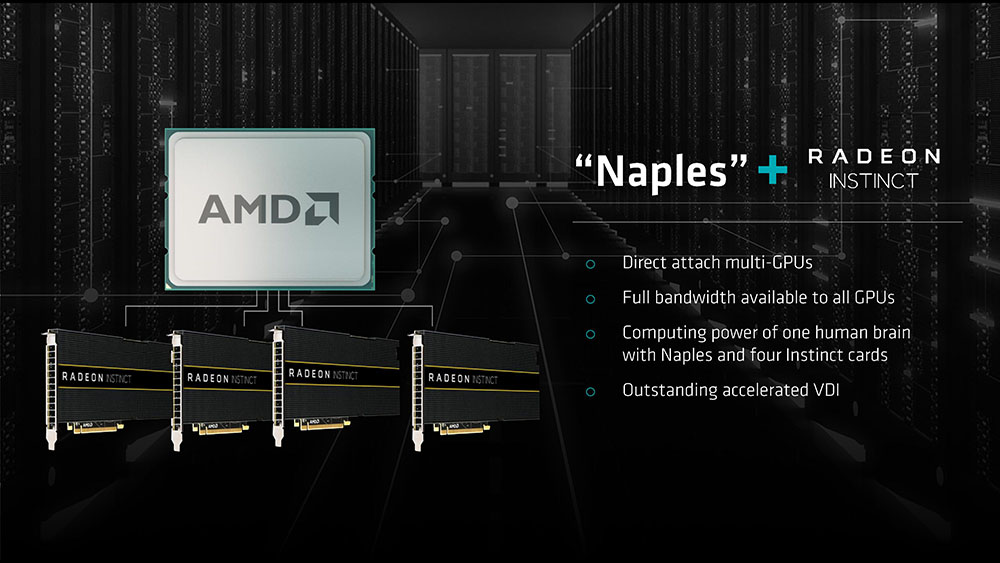
As for its availability, AMD promises it to be at Q2 2017 – which might coincide with AMD’s Ryzen 5 consumer desktop processors too. Price? No one knows.
Like our Facebook Page here at NasiLemakTech.com for more news and in-depth reviews! Also, join our Facebook Group for insightful information and memes!
Subscribe to our YouTube channel too!