













Xiaomi really got the entire world hyped up for the release of this flagship smartphone. It is so serious in the mobile photography category that some might say this is a camera with phone capabilities. And there are many things that I want to share with you about this phone. So, in this video – we’ll take a look at the Xiaomi 14 Ultra only. We’ll leave the comparison of the Xiaomi 14 with the Samsung Galaxy S24 Ultra in a future video. Please subscribe so you don’t miss out on that.
We also have the photography kit with us – but we’ll talk about it in another video since there are quite a lot of things that I want to go through. It has quite a lot of features built-in.
We’ll be going through our usual 8 points and we’ll get started with the design first.
Design
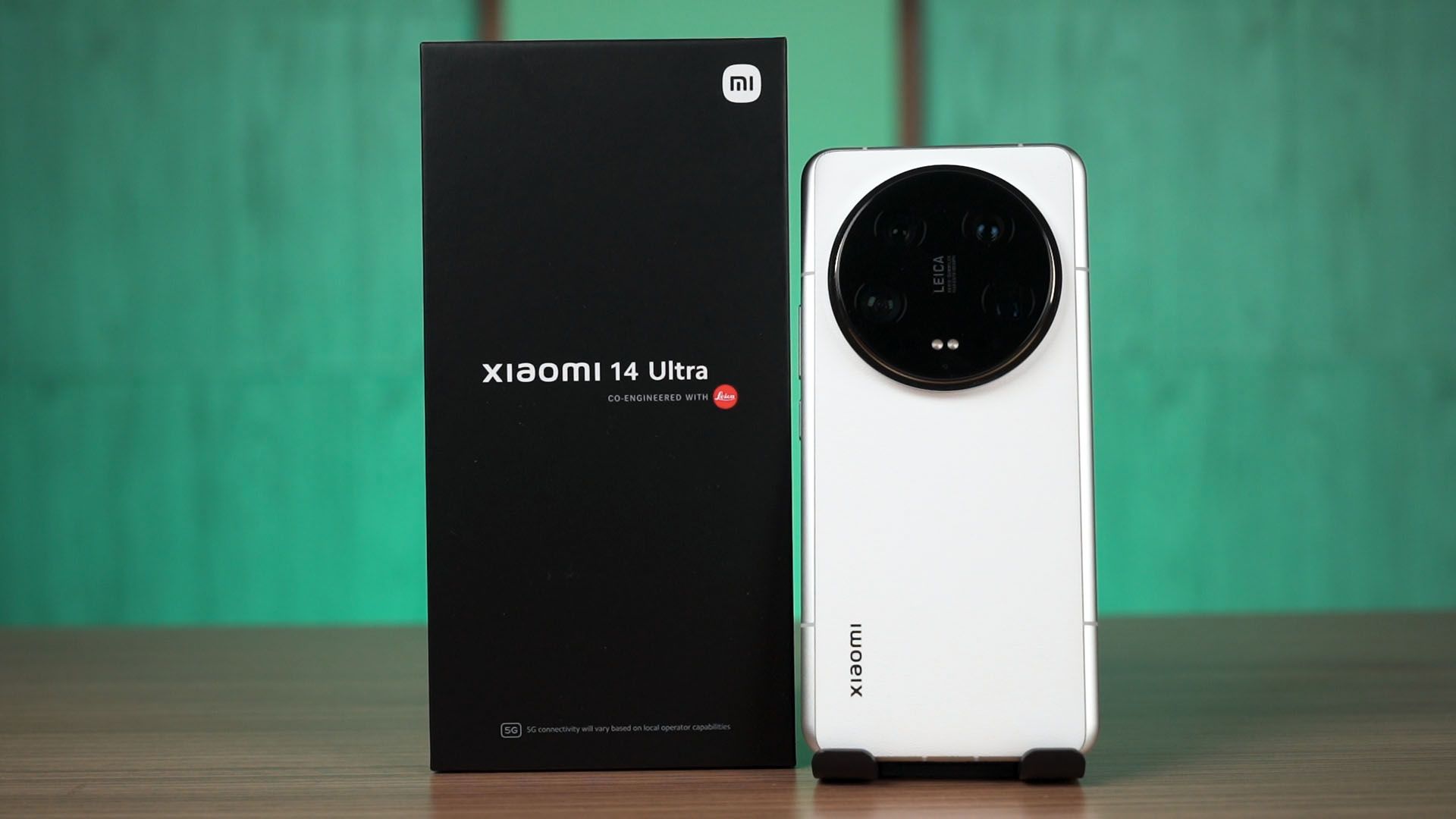
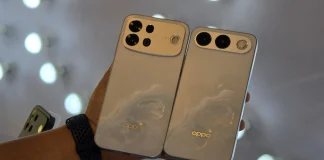
Okay, one of the most iconic aspect of the Xiaomi 14 Ultra is obviously going to be the design. Just a single glance and you can immediately tell that it is the Xiaomi 14 Ultra. Even if you don’t know that this is a Xiaomi phone, you’d be curious about the cameras. Why is it so big and why does it look like a washing machine?
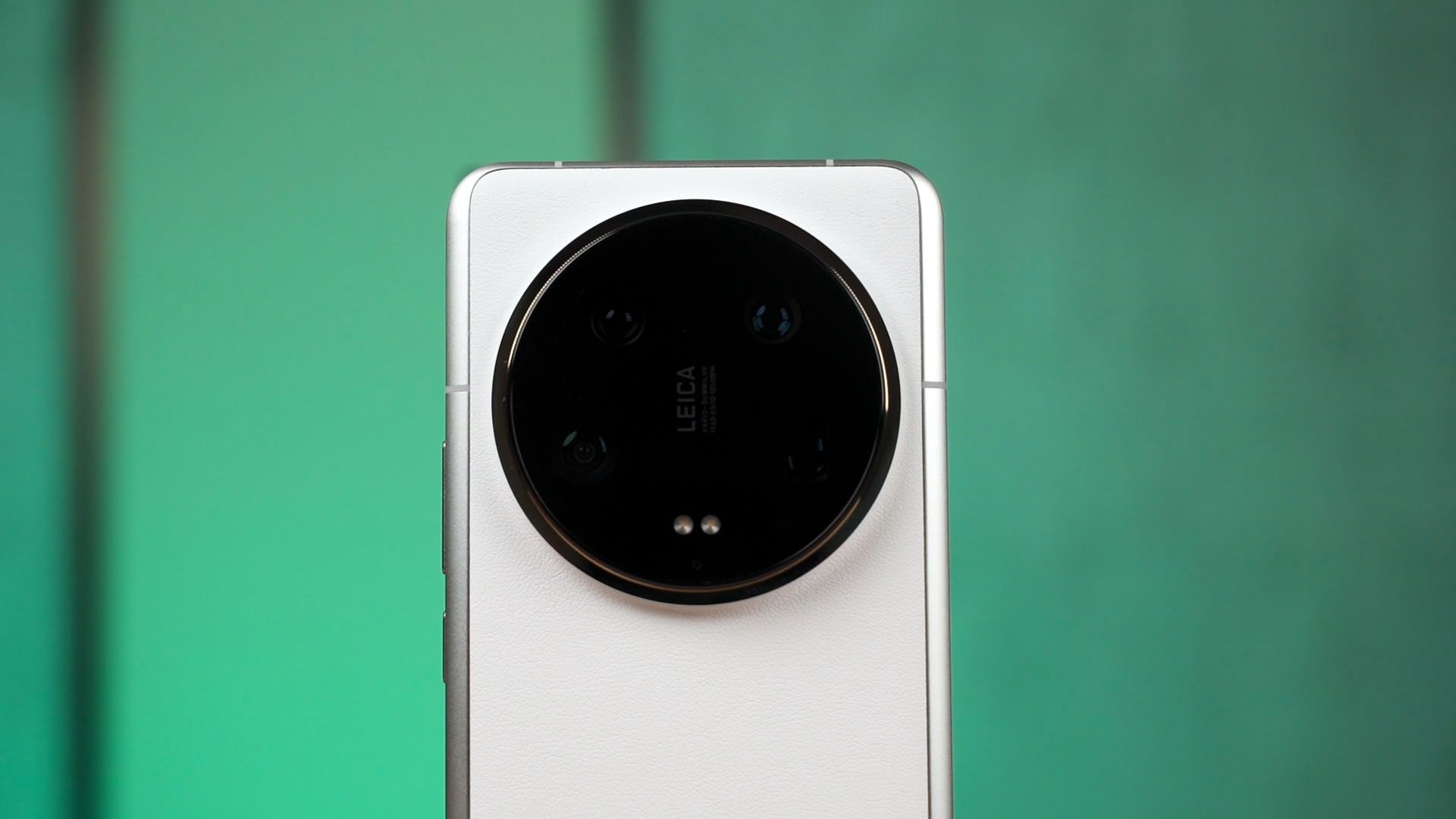
The back of the phone is also wrapped in a vegan leather material that is actually very nice to touch and hold, though it does get dirty easily but it can be wiped clean. If white is not your cup of tea, then it is also available in black color.
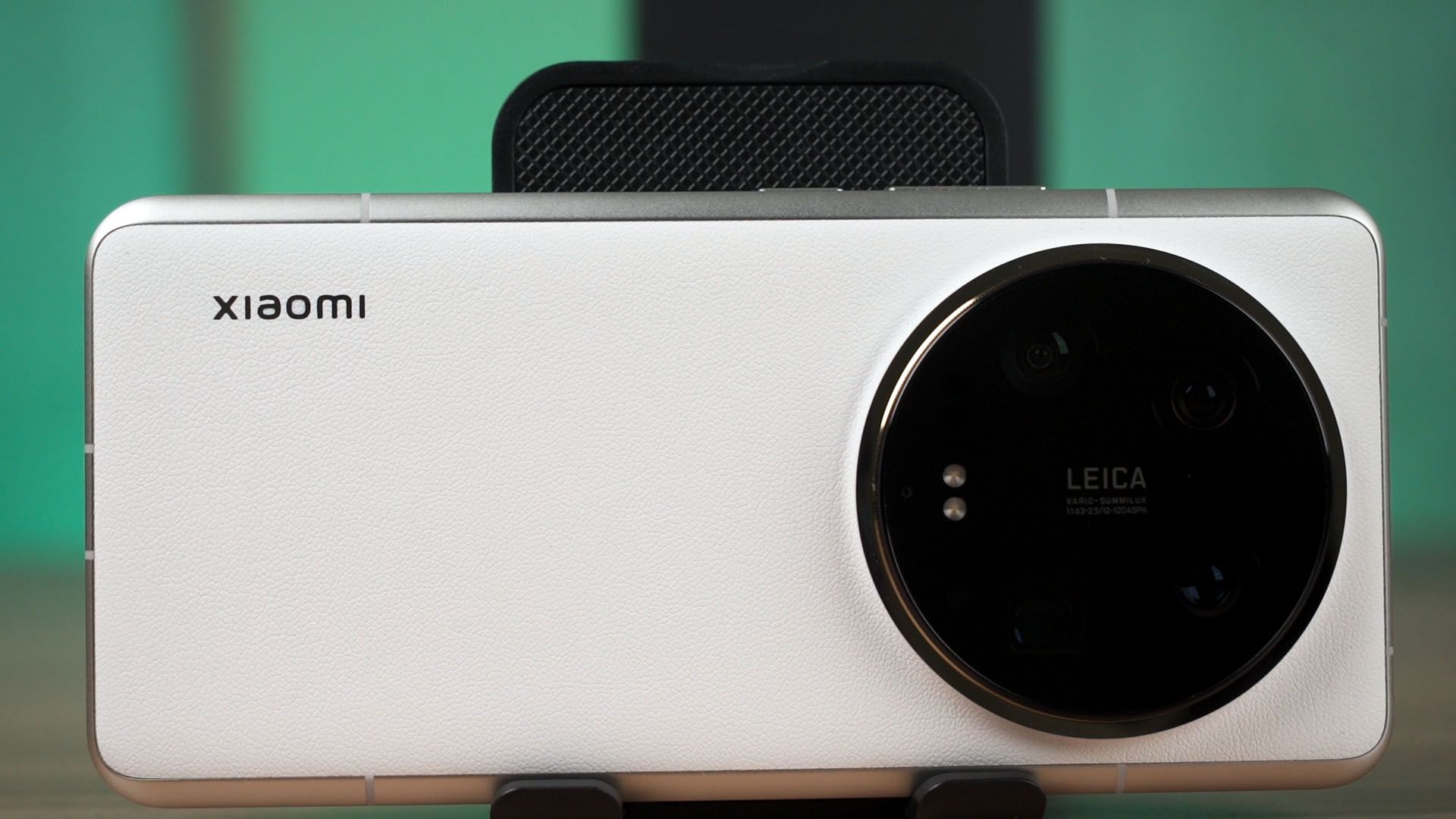
One thing I realized that it’s kinda weird is how the frame of the phone actually extends to the back of the phone. I personally would’ve prefer more of the vegan leather material to extend to the frame instead. Perhaps this design provides more structural rigidity – I can’t be sure about that since I’m not doing any bend tests.
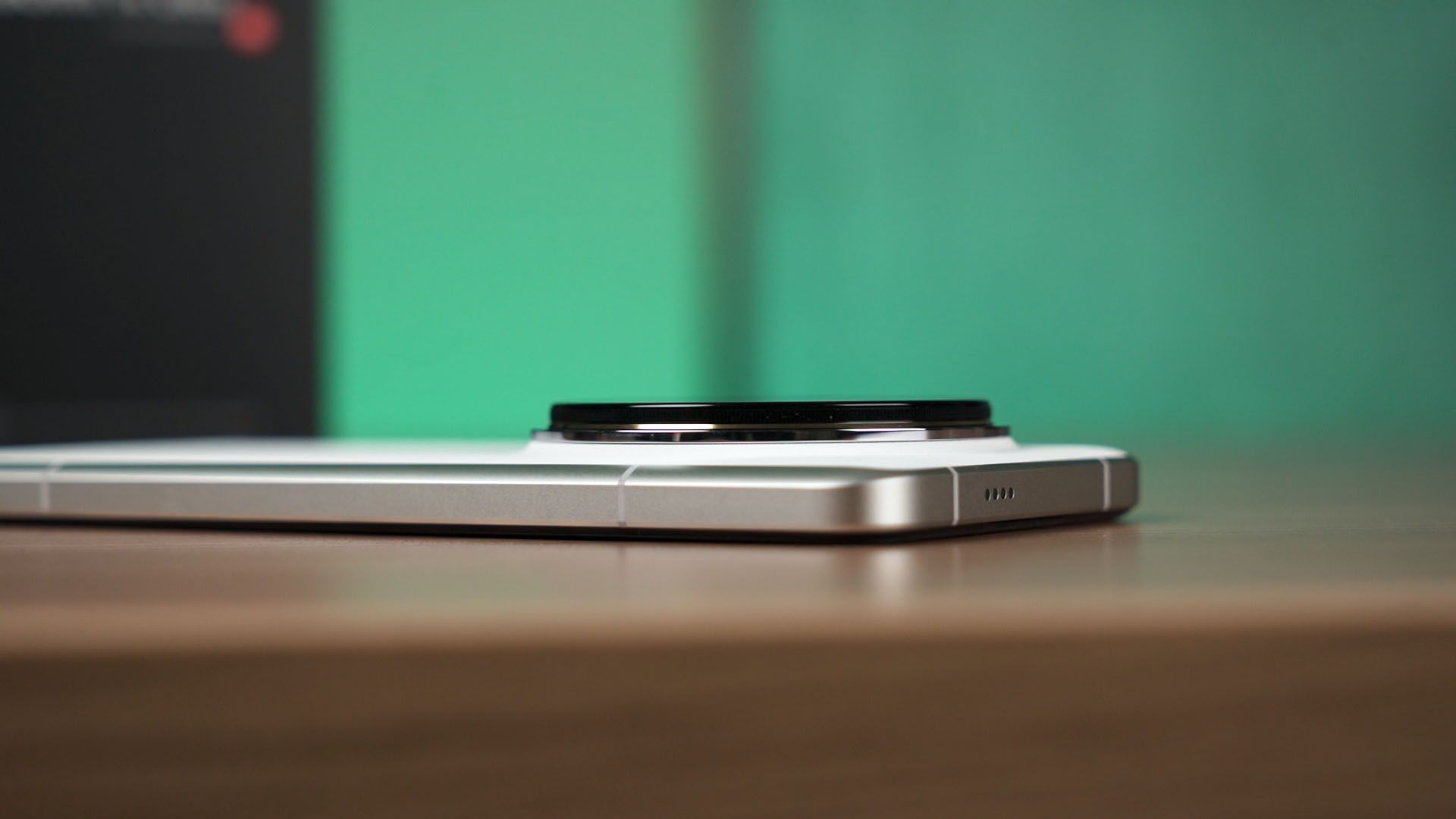
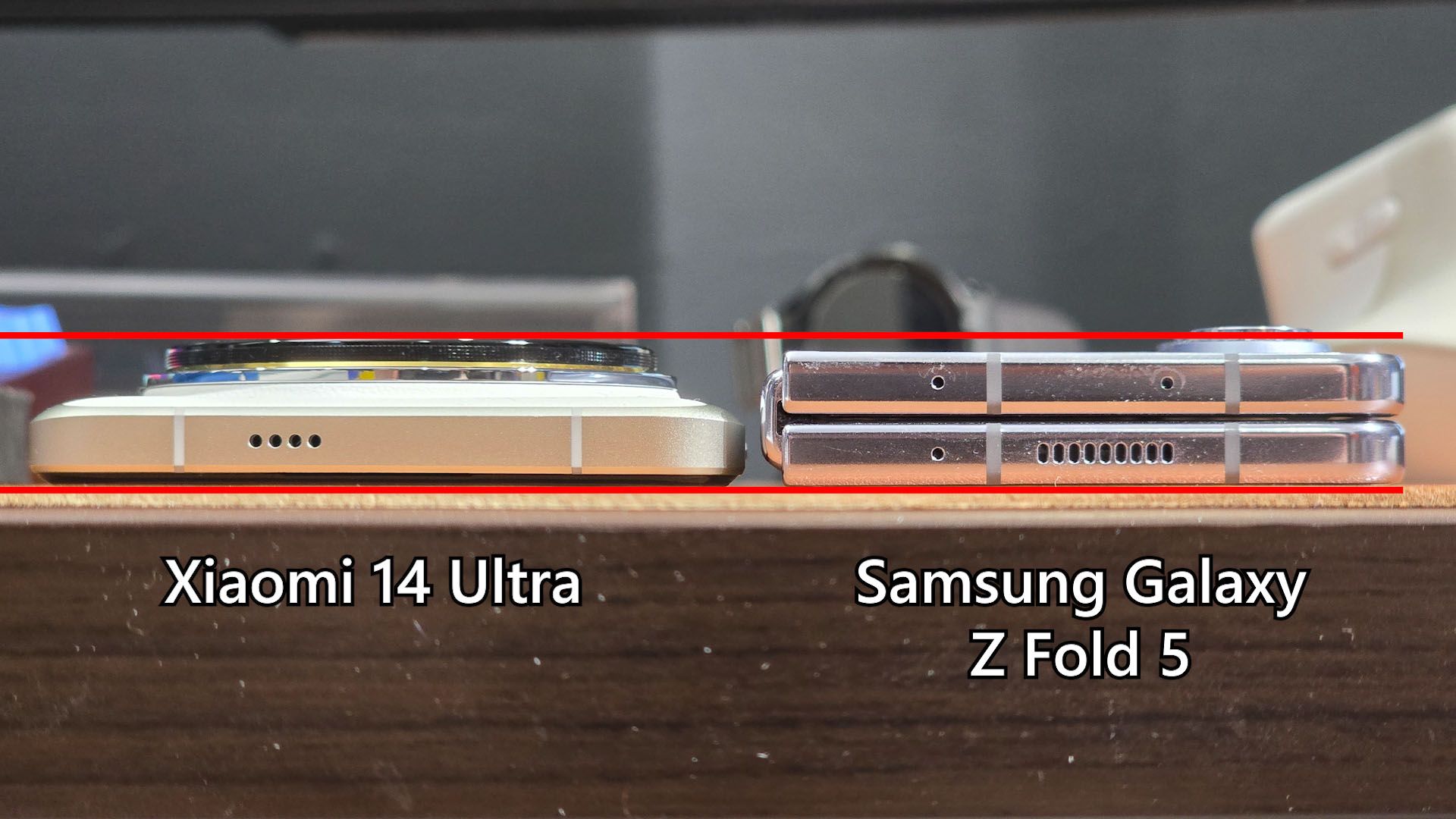
Back to the camera bump a while – I will once again vow that we should start measuring the thickness of a phone with the camera bump included. That’s because this phone’s camera bump covers such a large area and it’s even thicker than the Z Fold 5 when it’s folded. I simply can’t ignore this because once we put the phone in our pockets, we can definitely feel that thickness.
Cameras
And since we’re here, let’s now talk about the cameras. Having such a thick camera bump is actually because of the main camera’s 1-inch sensor with f/1.63 aperture. It needs a lot of Z-height and we can’t cheat physics to make it thin. That main camera’s aperture is also variable, down to f/4.0. All of the camera sensors are 50MP with varying sizes, as shown on the screen.
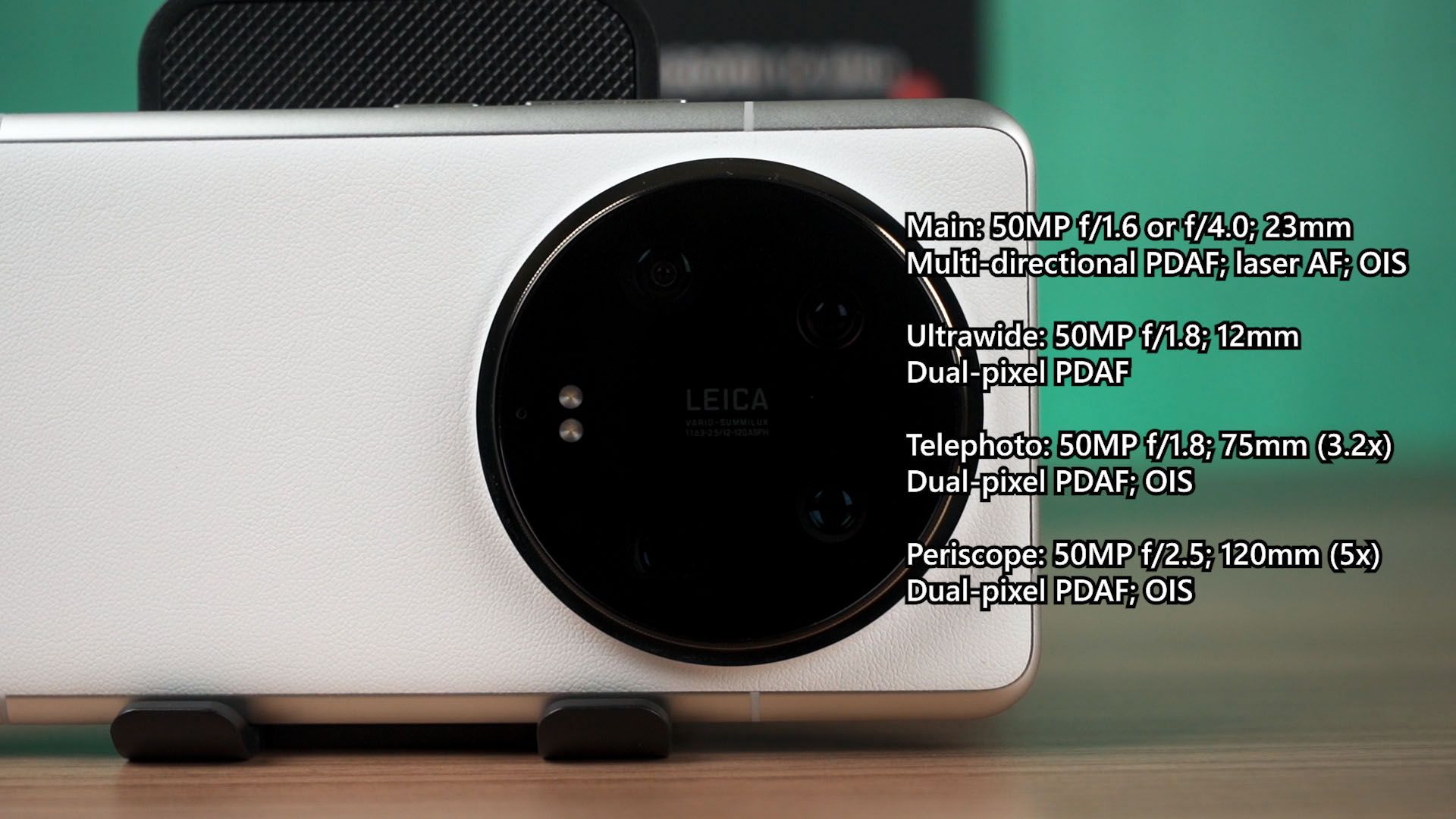
To have a look at all the pictures and videos taken with the Xiaomi 14 Ultra, watch our video at the top of this review.
And as a reminder – we’ll return to talk about this when we compare it with the Galaxy S24 Ultra – because I have captured all the pictures and videos using this phone too. Here’s a teaser for you – hardware does not dictate the final result.
Screen
We’ll now move on and talk about the screen. We have a 6.73-inch OLED screen with 3200×1440 pixels and goes up to 120Hz refresh rate. Testing it in its default display settings but tuned to 1440p resolution, our colorimeter reports that it can only cover 92% of sRGB and 71% of DCI-P3 color gamuts… while having only 1085 nits at its maximum.
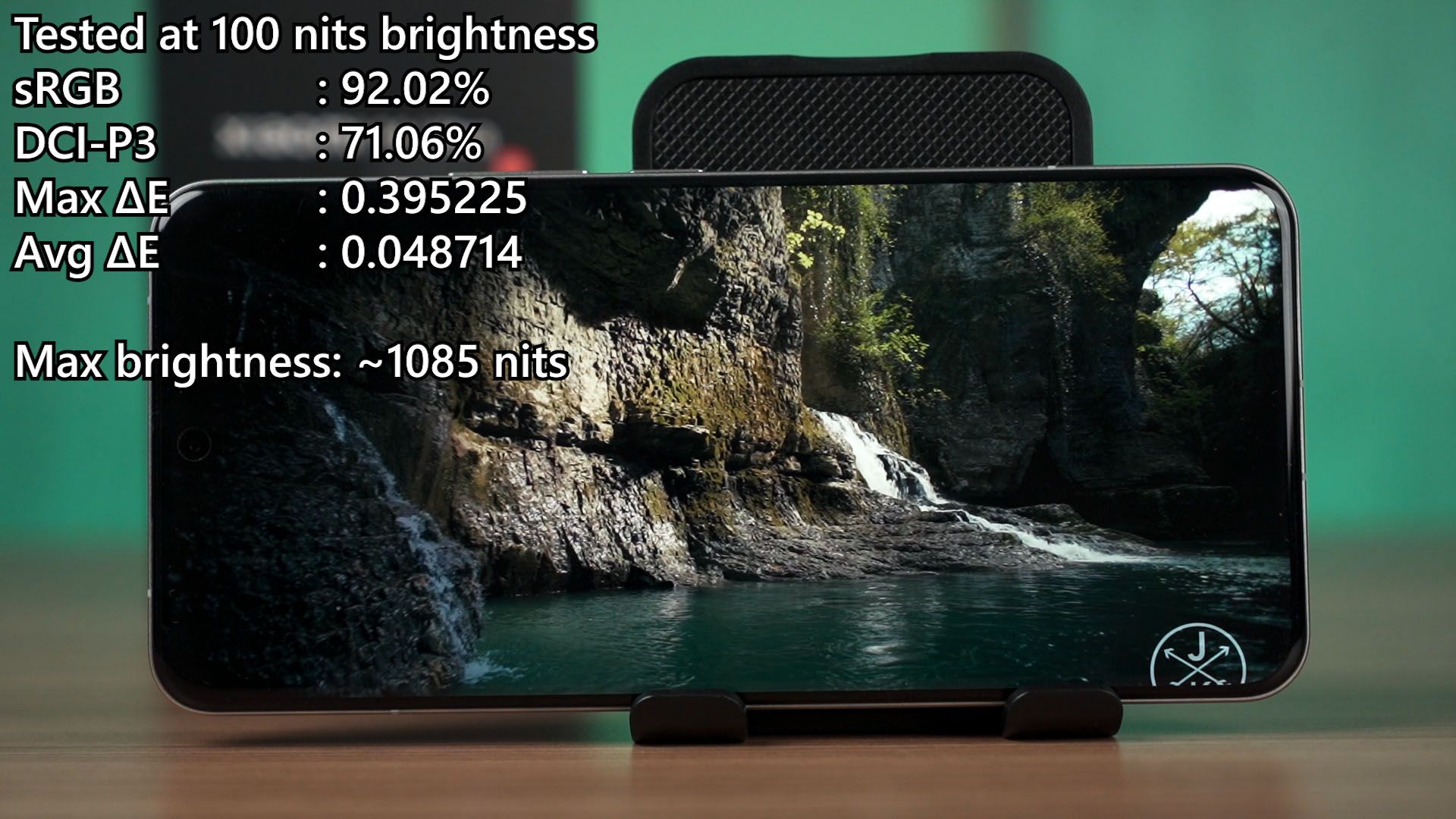
But… this is because the phone defaults to the “Original Color PRO” color scheme. If we change it to the “saturated” color scheme, we can get 99.88% sRGB and 99.12% DCI-P3 color gamut coverage. Nice!

Performance
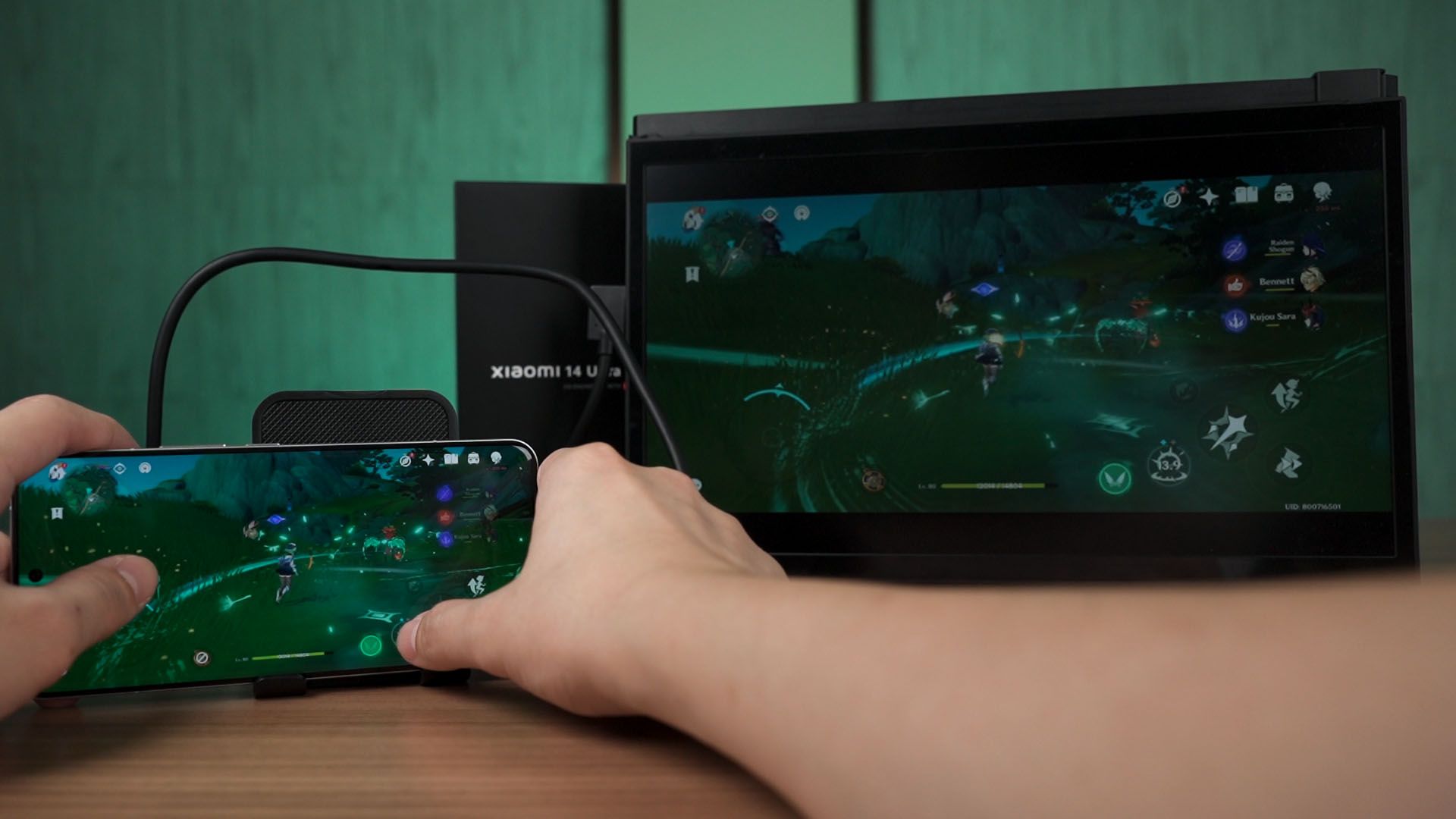
So then, how’s the performance of the snapdragon 8 Gen 3 in the Xiaomi 14 Ultra? In terms of day-to-day usage, definitely not an issue – but when it comes to games, this is where things get interesting. When we started playing Genshin Impact in our gaming test – the Xiaomi 14 Ultra performs great.
Then, thermal throttling kicks in and we’re getting less than 40fps. It doesn’t stutter, but it the frame rate is definitely lower than other Snapdragon 8 Gen 3 phones when it thermal throttled. My theory is that the huge and thick camera bump acts like a thermal insulator and affected its heat dissipation and that PU leather material might also be another factor.
I mean, as a comparison, it performs worse than the small Xiaomi 14 by quite a lot.
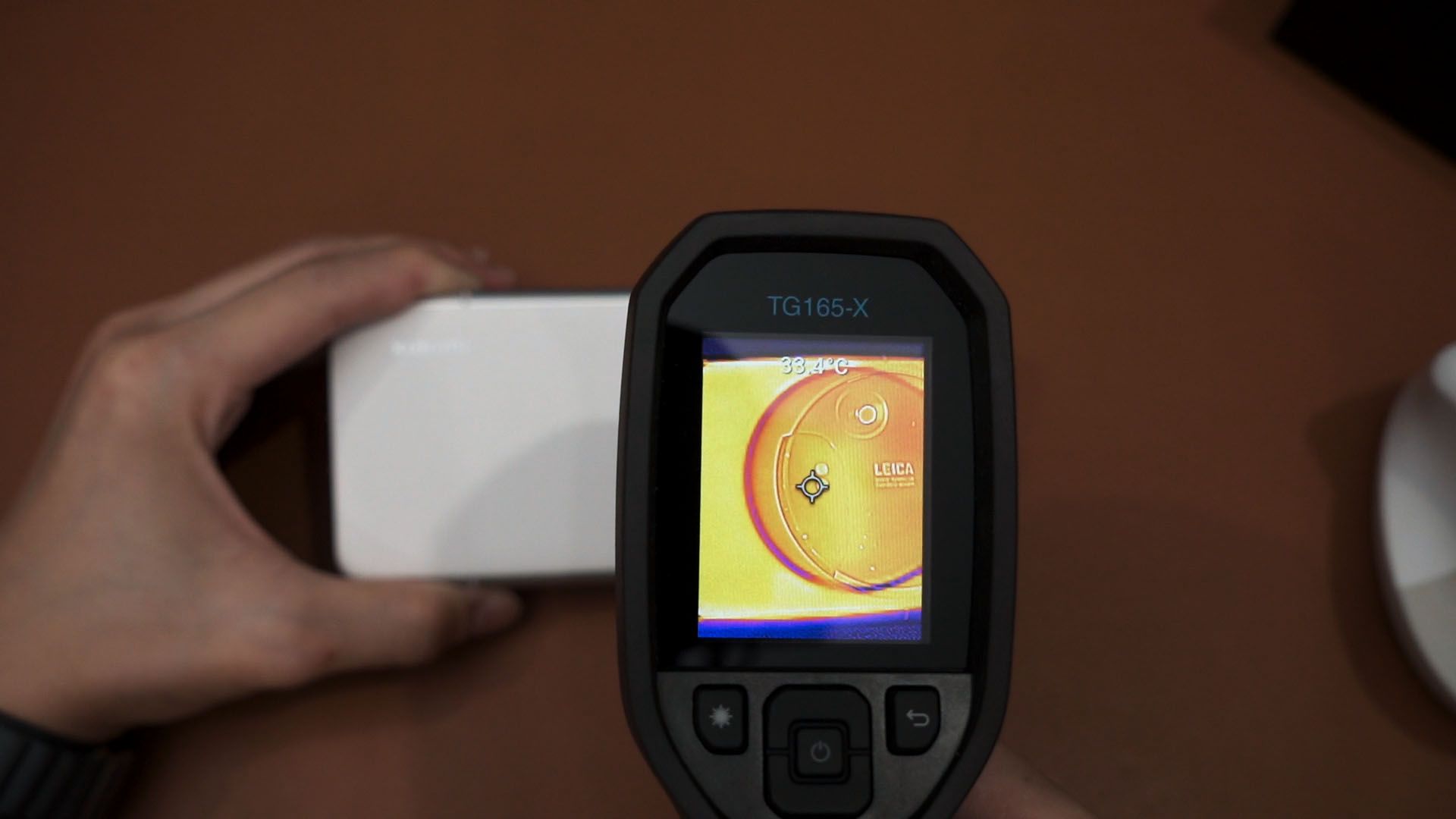
When we jumped over to CarX Street – things get even more interesting. The game can suddenly become a slideshow and drop down to about like 10fps. I eventually found out that this phone has a hard thermal limit at 45°C. Once it reaches 45.1°C, it throttles hard. Once it’s below 45°C, it’ll perform great again. That’s thermal throttling.
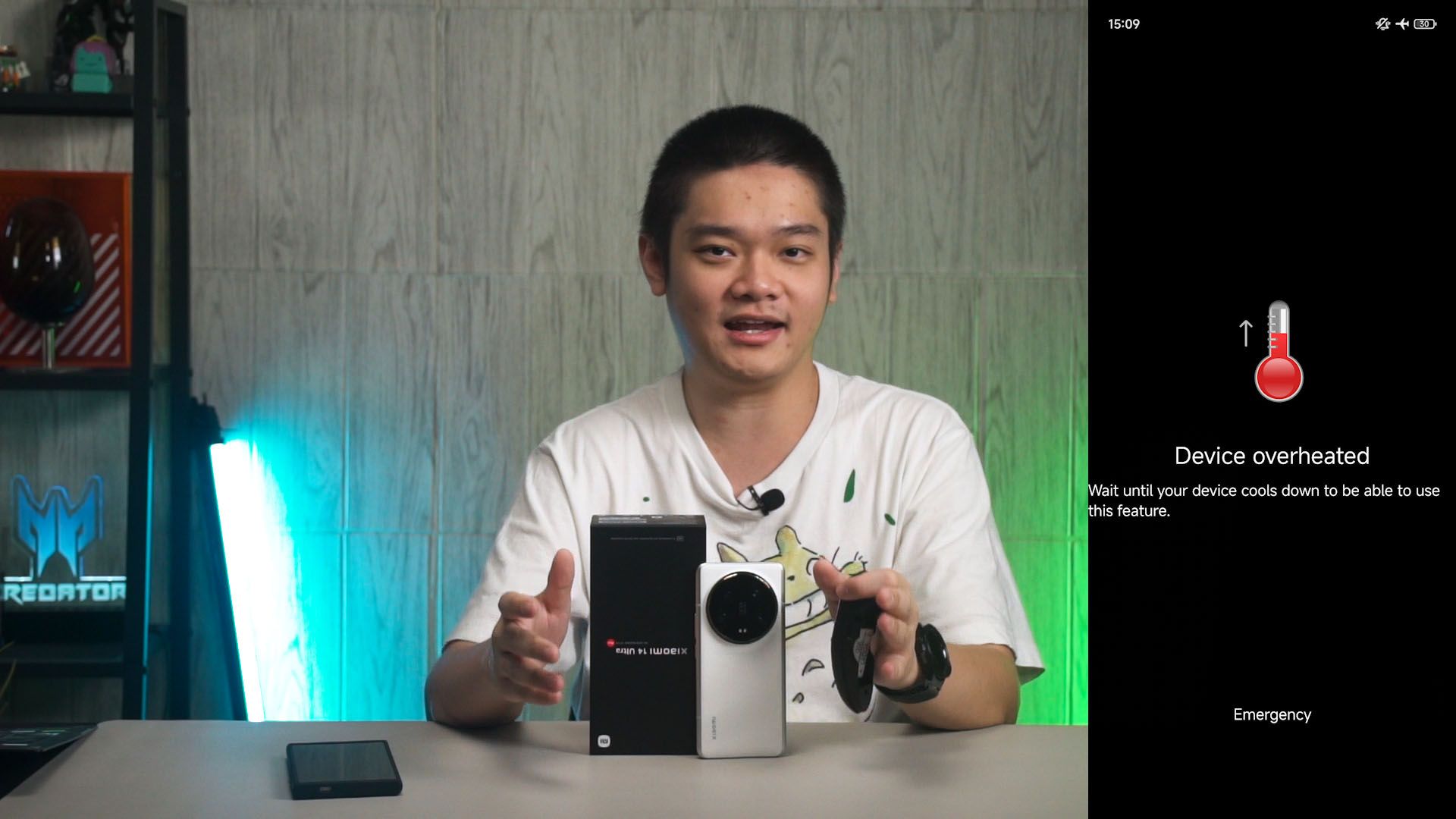
I tried to run the 3DMark Wild Life Extreme and Solar Bay Stress Tests but all of them failed to complete the test and the app just crashed. I tried at least 10 times and the same thing happens over and over again – and I presume that’s because the phone overheated halfway through. The highest temperature that I could record is 55°C in these synthetic benchmarks.
Now, I know many people aren’t buying this phone to play games, but hey – it’s an Android smartphone at the end of the day and I expect it to do what other phones are capable of.
Software
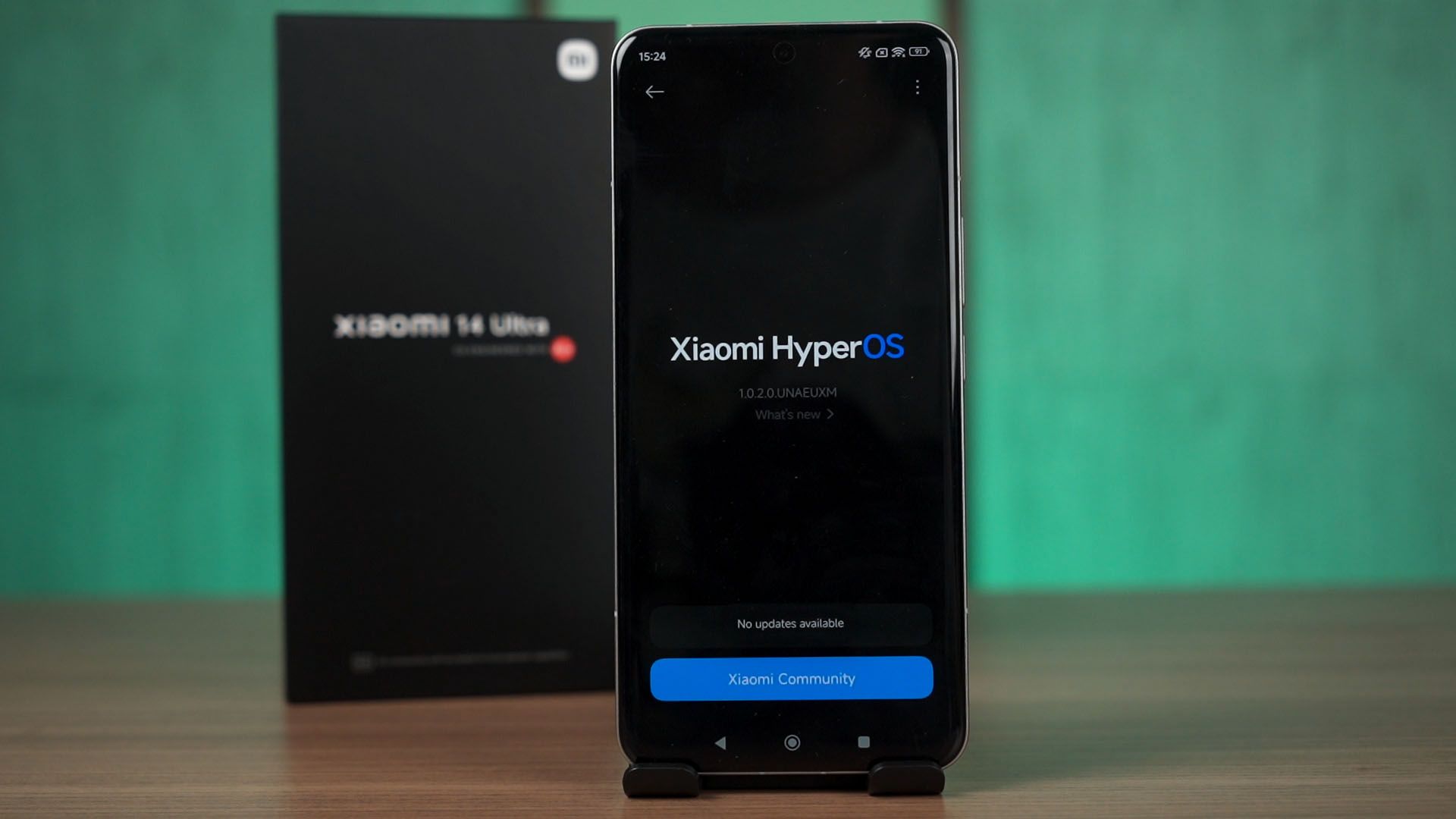
Now, the software is pretty straightforward here. Please do watch our review of the Xiaomi 14 because everything we said there applies here too. As a quick recap, the HyperOS system is pretty much a rebranded MIUI and has a few facelifts here and there. Overall, looks and feels the same like before, but there is one big issue that I think is related to the software.
Battery life
You see, the battery life of this phone is not good. We have tested a few phones with the Snapdragon 8 Gen 3 with a 5,000mAh battery at this point. From what we’ve tested before – this phone should last somewhere around 15 hours in our standardized battery life test since other phones got that result.
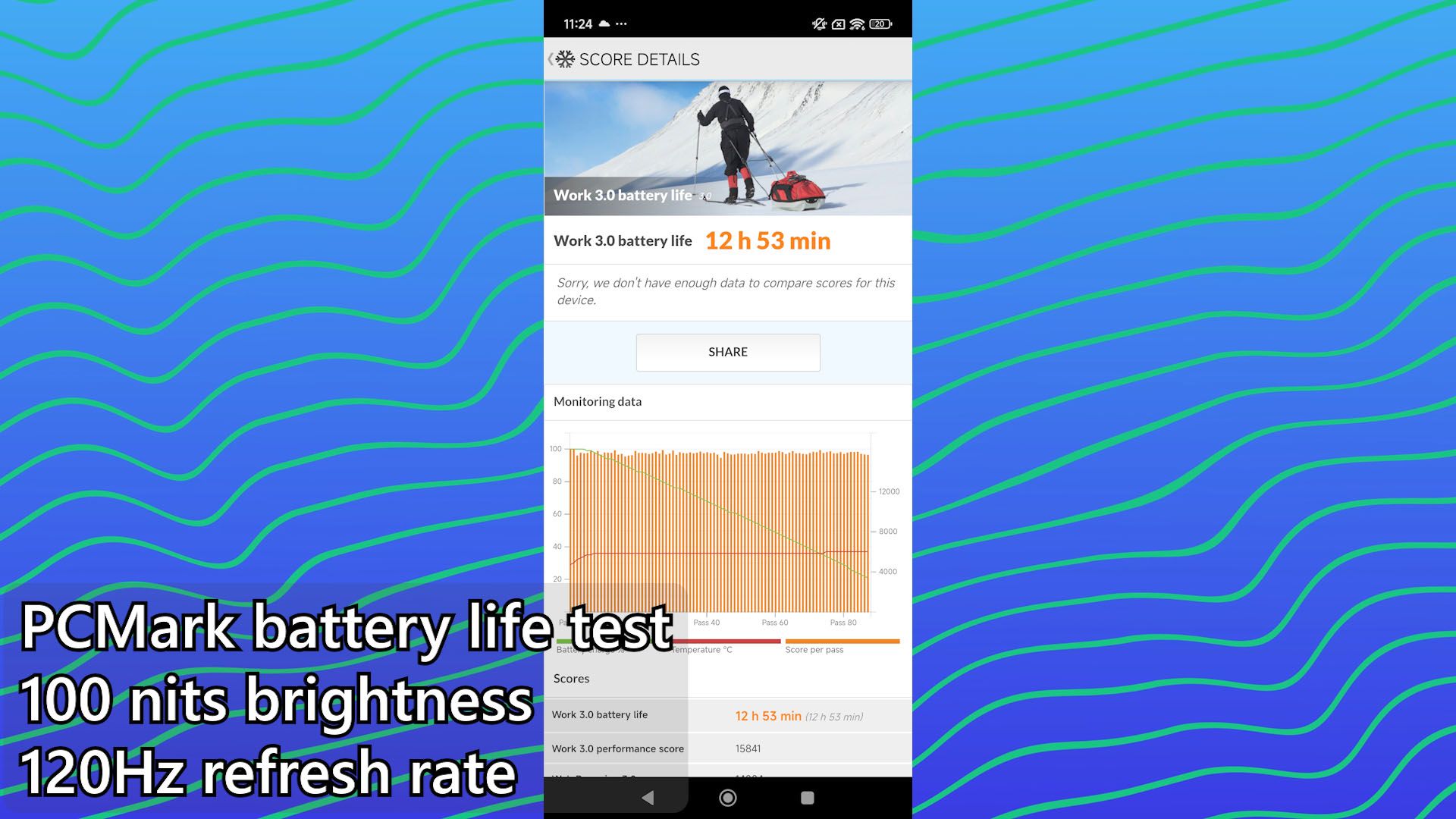
But I only got 12 hours and 53 minutes. That’s a lot lower than what we’re supposed to get. I thought something was wrong.
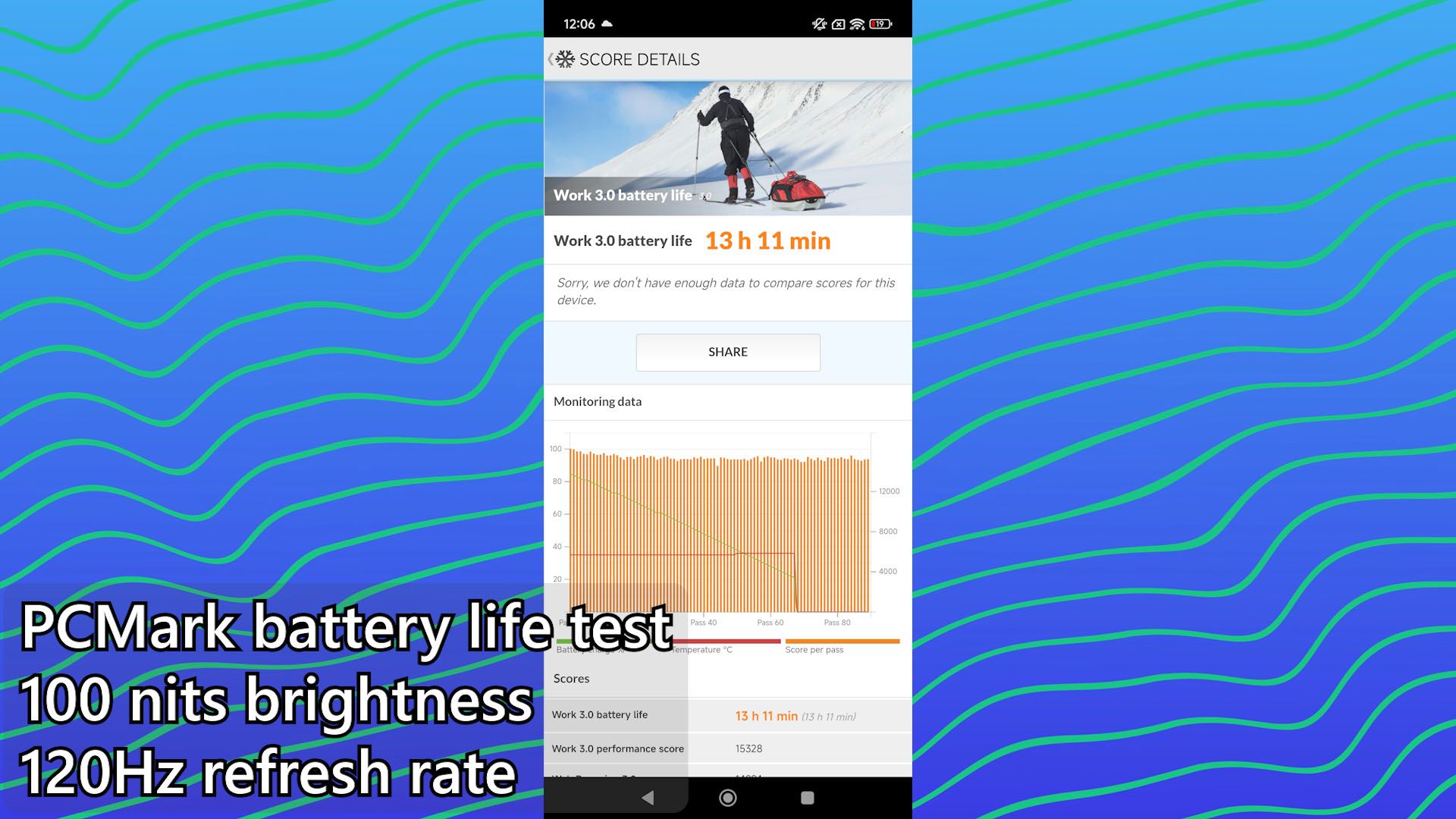
So I redid the test and got only 13 hours and 11 minutes. Still much lower compared to other phones with the same chipset and the same battery capacity.
There is another thing that I want to highlight – for some unknown reason, the global version of the Xiaomi 14 Ultra has a smaller battery capacity compared to the China variant. No idea why or how, but there is a difference.
Charging speed
Okay, charging speed. It has a 90W charger in the box – and if you want to ask why Xiaomi didn’t include a 120W charger instead, that’s because countries with 110V power source won’t be able to output 120W. So, to create a truly “global” version of the phone, this 90W charger can be used with mains ranging from 100V to 240V.
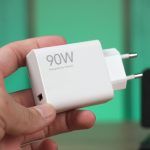
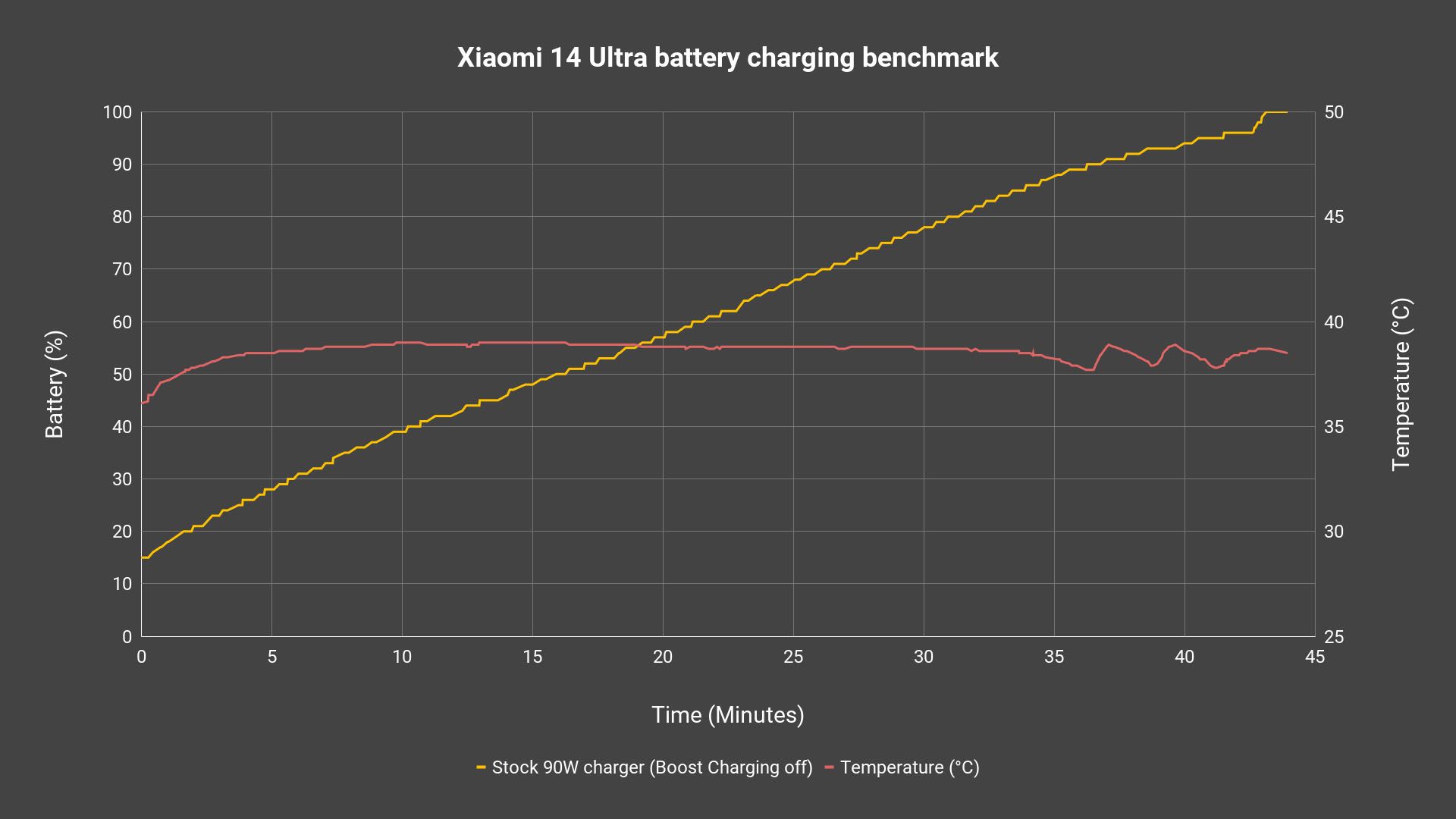
By using everything in default, it can charge the phone from 15% to completion in just about 43-ish minutes, but that’s with Boost Charging turned off.
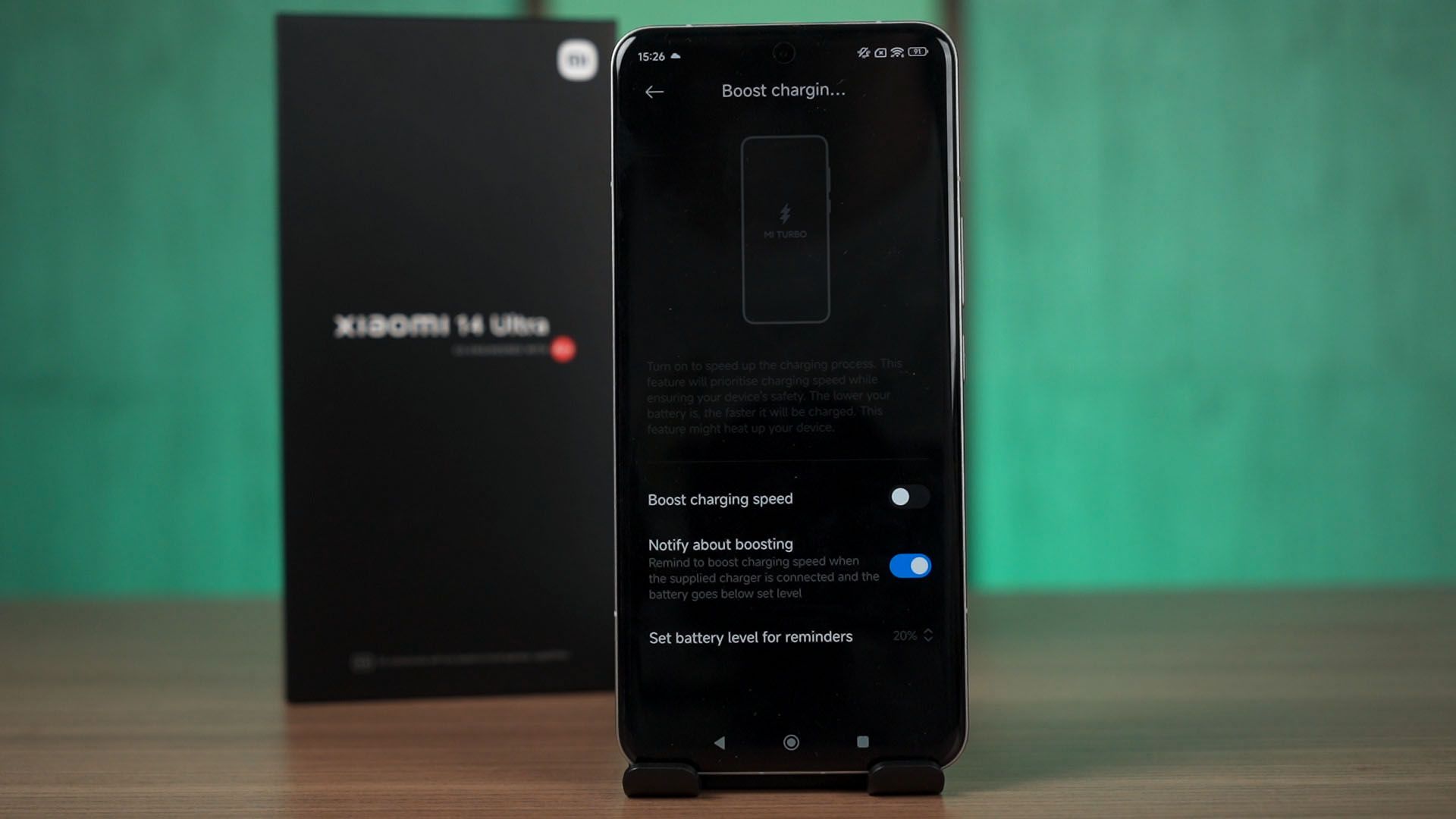
We’ll have to go into the settings menu and find this option to truly maximize the charging speed – but that’ll also cause the phone to heat up a lot – as stated in this warning here.
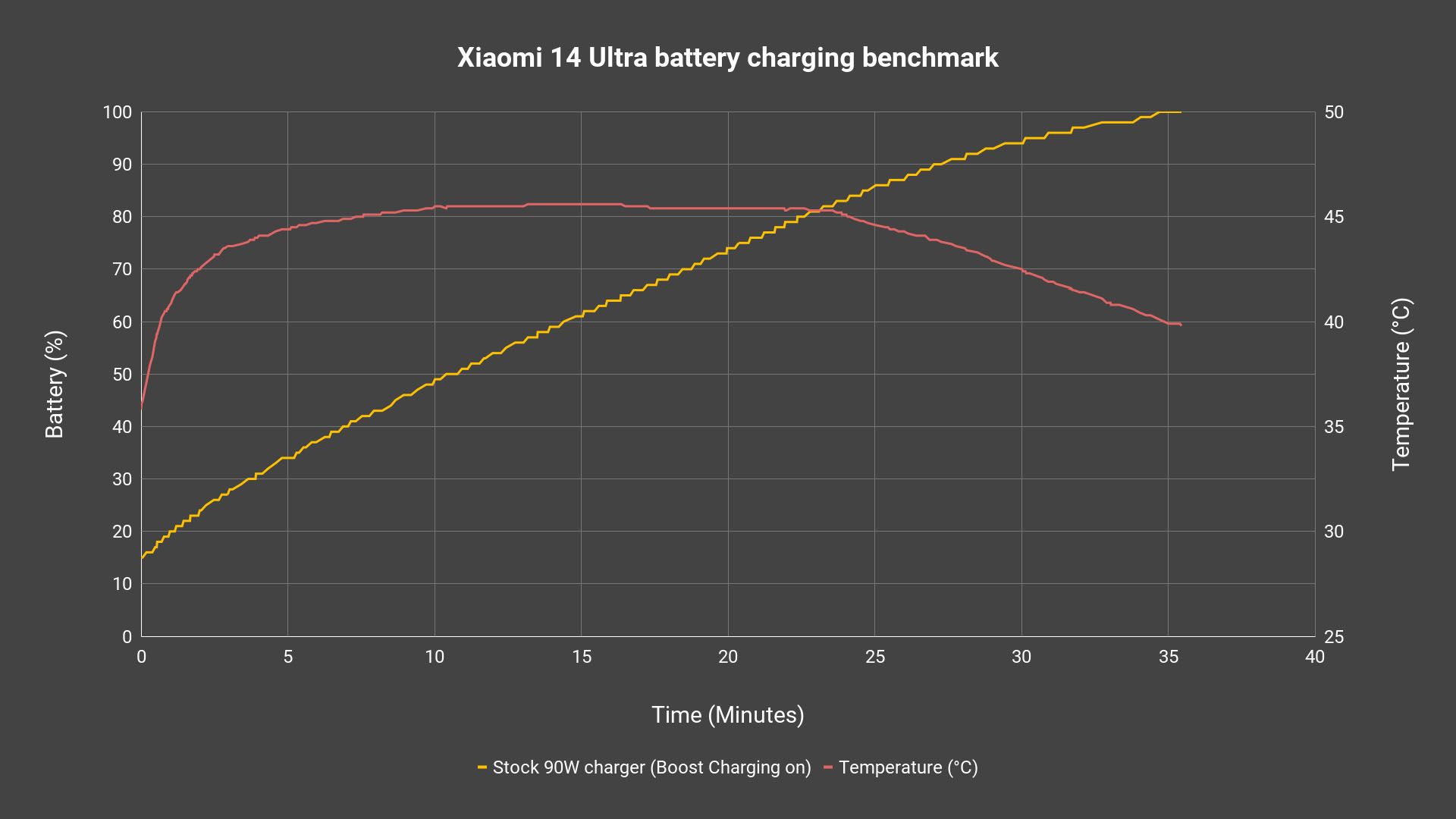
Once enabled, it’ll take only around 35 minutes to complete charging. But even though it says 100%, the voltage level of the battery isn’t exactly “full”, but it’s pretty close. And as we can see, the temperature is super high – higher than 45°C for most of the time.
Remember, it’s not healthy to heat up the battery constantly, and Xiaomi knows this. That’s why the Boost Charging option is disabled by default.
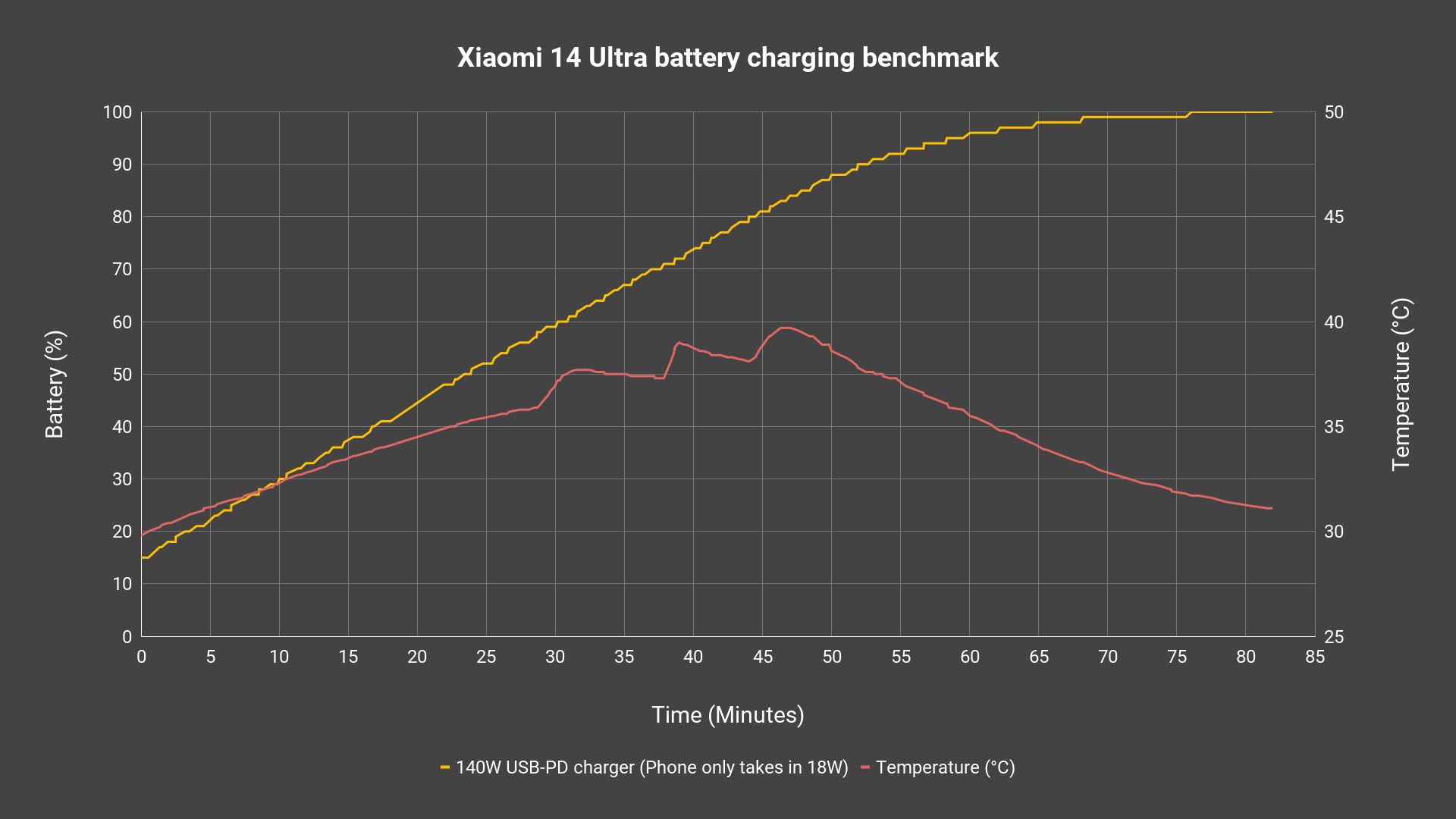
Then, connecting this phone to a USB-PD charger means that we’ll only get around 18W of power, which is disappointing but expected since Xiaomi is using their own proprietary fast charging standard. It’ll take around 80 minutes if we want to charge it this way.
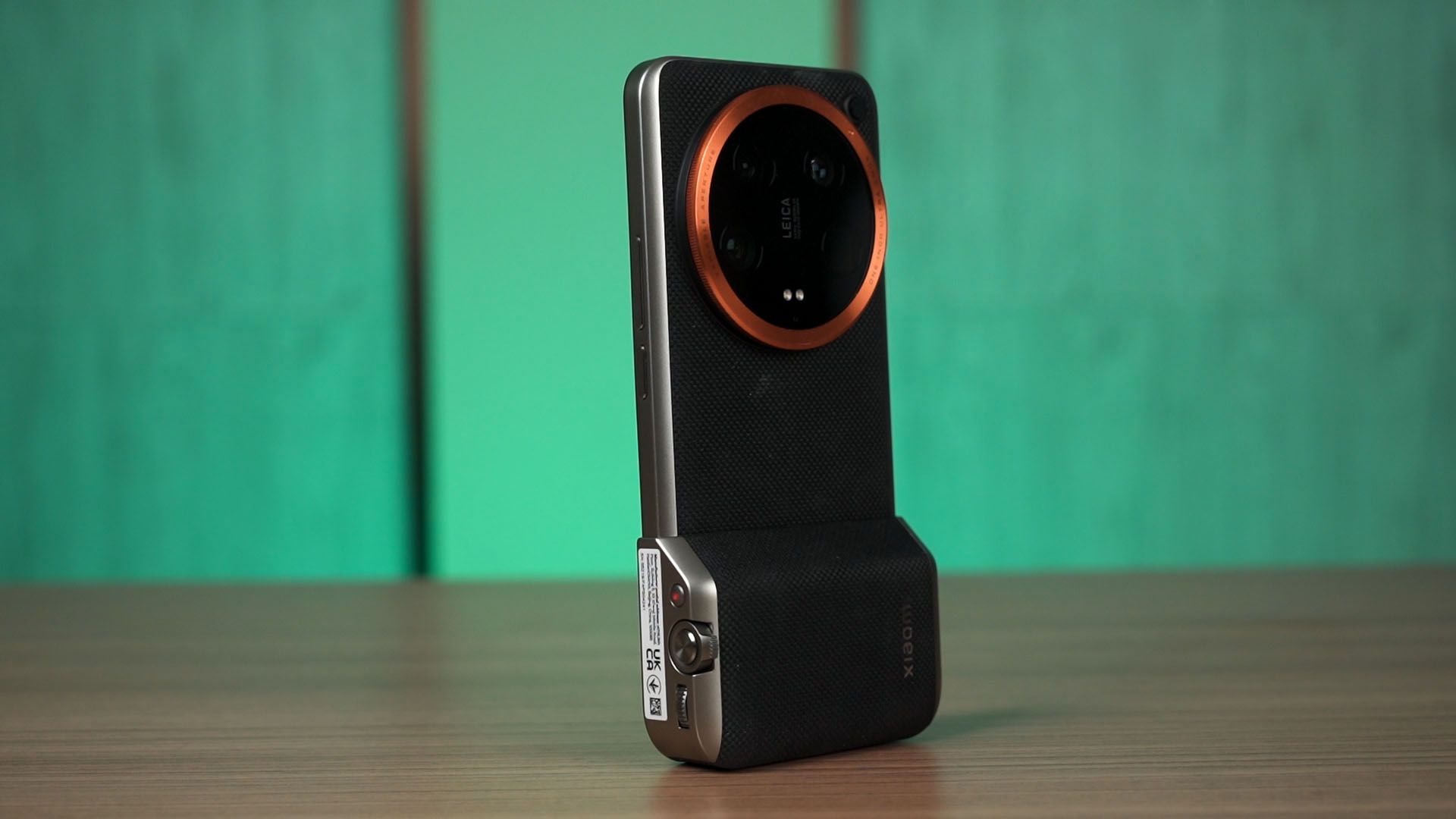
We can also charge via the photography kit but that’s a topic for another day.
Few more things to mention
And a few more things to mention before ending this review – the Xiaomi 14 Ultra has a USB 3 port at the bottom and transferring files out of the phone is really quick.
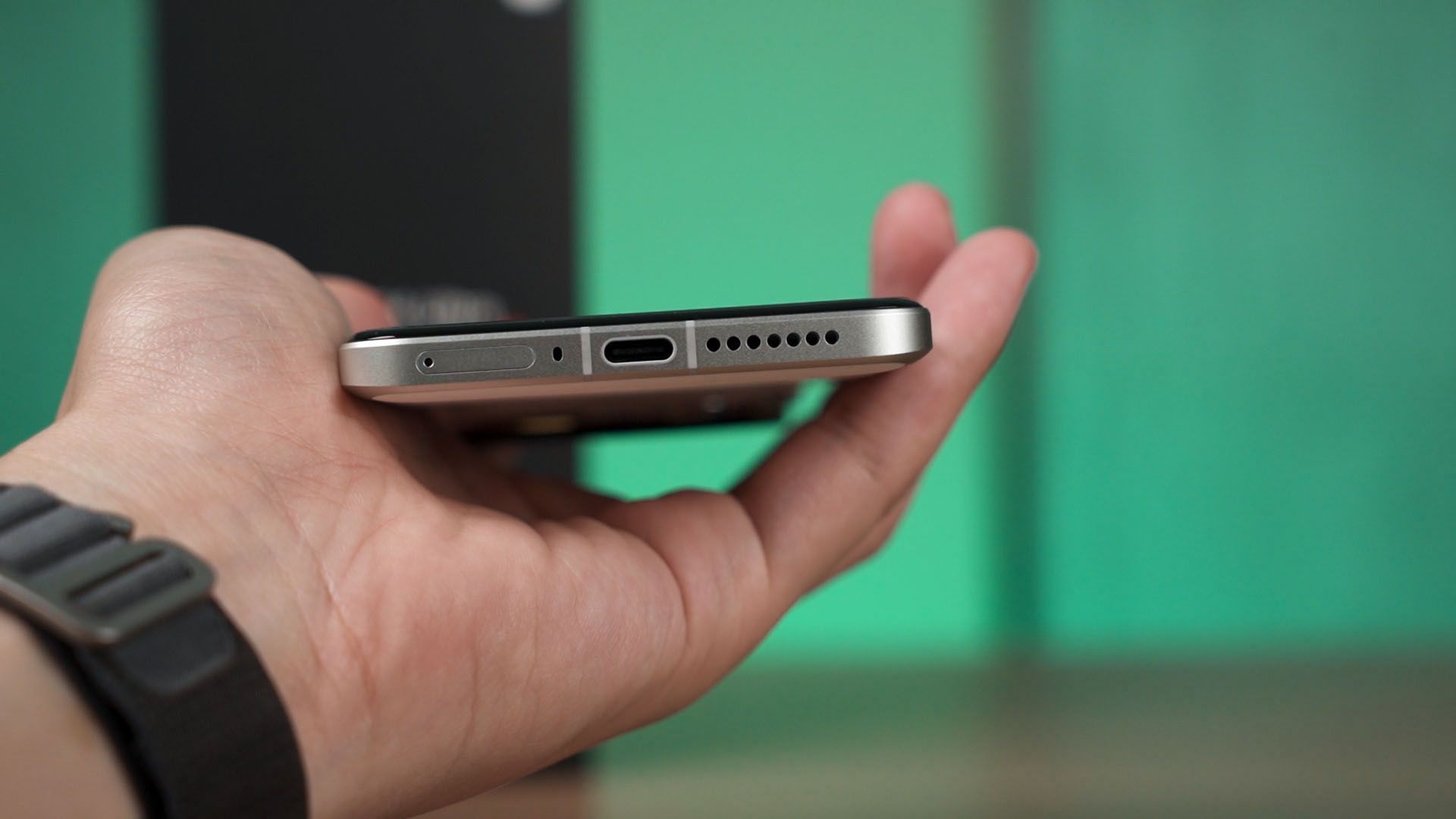
It can also output display via its USB-C port. However, since it doesn’t have any desktop mode like Samsung DeX, it merely mirrors the display.
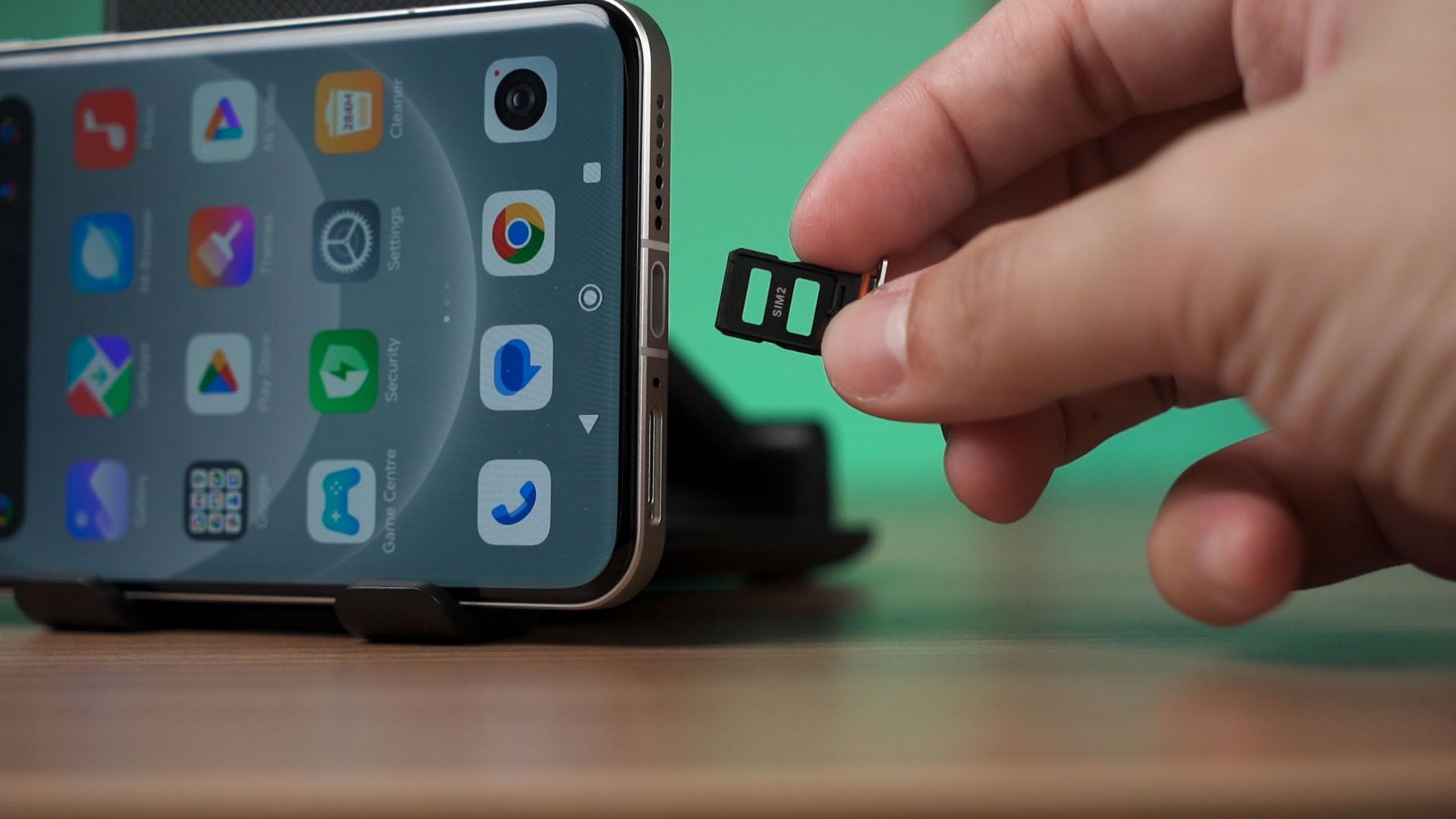
And like any other modern phones, it does have dual SIM card slots but it does not have microSD card slot or an audio jack.
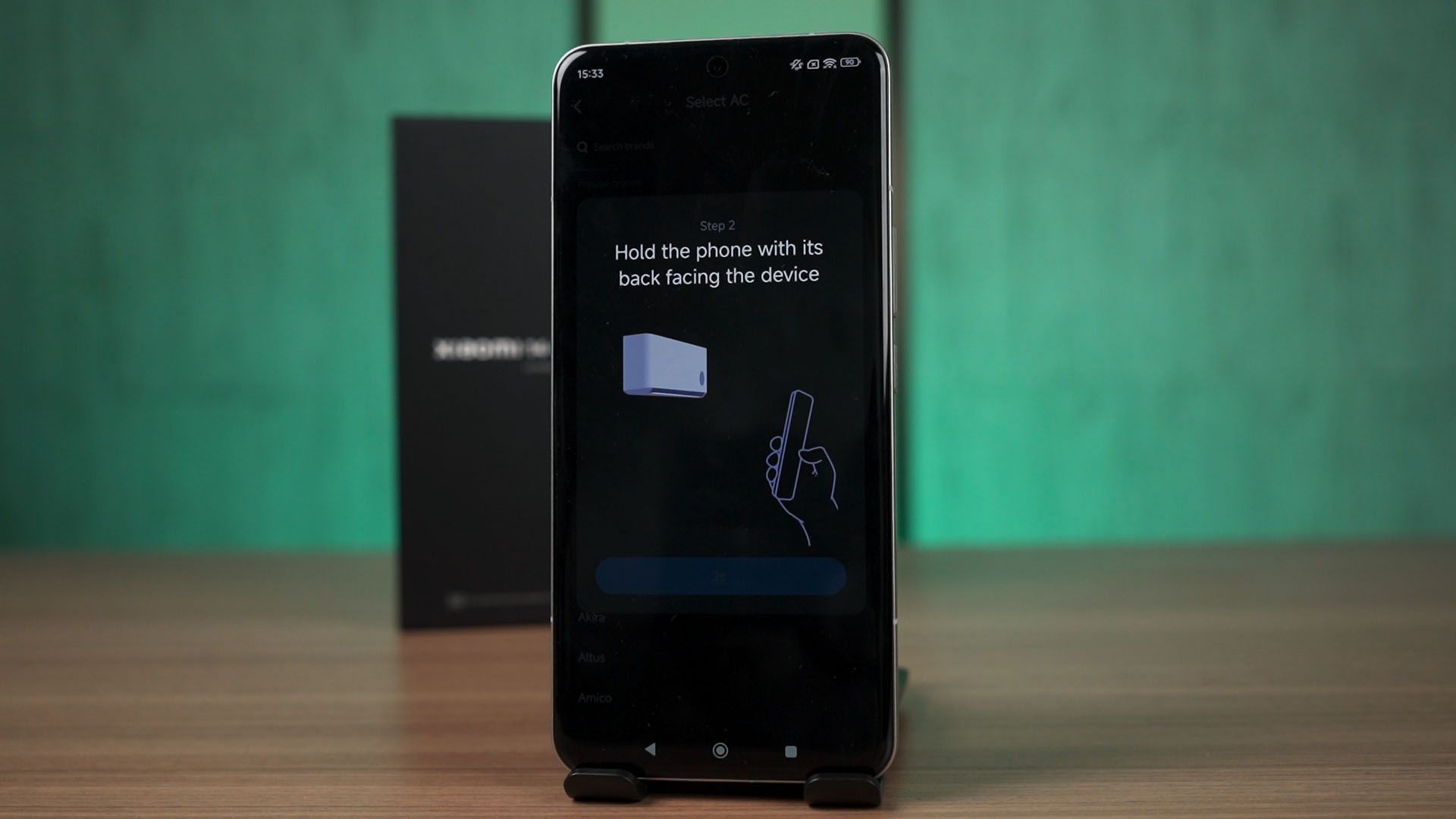
The IR blaster though, is now integrated into the laser autofocus system at the back of the phone – so aim the camera to your appliances if you want to use the remote control.
Let’s not forget that this phone is also rated for IP68 – which is fantastic.
Will you buy the Xiaomi 14 Ultra?
And that concludes our very long review of the Xiaomi 14 Ultra. What do you think about this phone? Is it good? Will you buy it? If not, then let us know why and what will you get instead.
I do think that the Xiaomi 14 Ultra needs a lot more optimization – particularly software. The operating system seems buggy and caused the battery drain issue, and the cameras are still not up to expectations. I mean, this phone has the hardware but I do think it’s just not utilized properly.
Where to buy? (Affiliate links)
Like our Facebook Page here at NasiLemakTech.com for more news and in-depth reviews! Also, join our Facebook Group for insightful information and memes!
Subscribe to our YouTube channel too!

I tested with a few device info apps. It keep saying the phone has 5.3k battery.
Tested with a few device apps and it detect the phone has 5.3k battery capacity. Don’t know why.
Either way, the battery life still sucks though