
















Google Threat Intelligence Group’s latest AI Threat Tracker, published on November 16, says adversaries are now deploying autonomous multi-agent frameworks, fully automated exploitation pipelines, and schemes to monetize stolen AI access, calling it a critical inflection point.
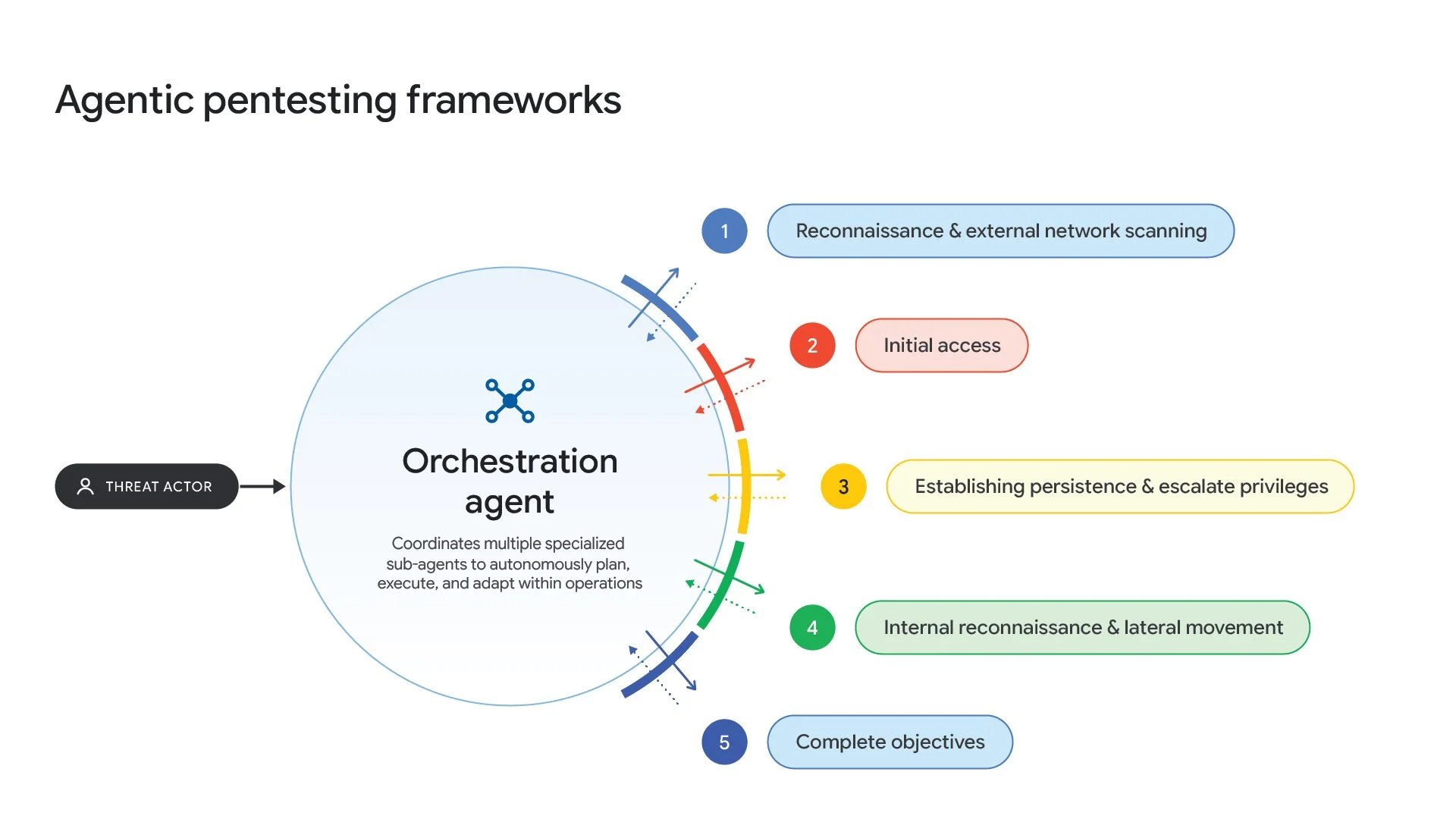
The biggest shift is in how intrusions run. Threat actors are abusing open-source agentic pentesting tools such as ARTEX, CAIRN, CyberStrikeAI, HexStrike AI, and PentAGI to chain attack steps at machine speed. Google saw CAIRN used against targets that included the US aerospace sector, and between late August and early October it tracked an actor using a customized platform built on PentAGI to scan a wide range of organizations in Asia. The mechanics still rely on stolen credentials and unpatched systems, but the speed and scale are new, and for now these tools trade stealth for velocity, leaving forensic traces that defenders can catch.
Exploitation is getting automated too. For the first time, Google found attackers running vulnerability discovery and exploitation with no human in the loop, via an exposed server hosting a framework called exploit_agent. It compares code before and after patches, drafts exploits, and fires them off automatically. Overall disclosures and exploits nearly doubled between January and August 2026, and zero-day exploitation, which averaged 8 a month in 2025, hit 11 a month in 2026 before spiking to 22 in August. The flood of LLM-written proof-of-concept code, much of it broken, has also created extra verification work for defenders.
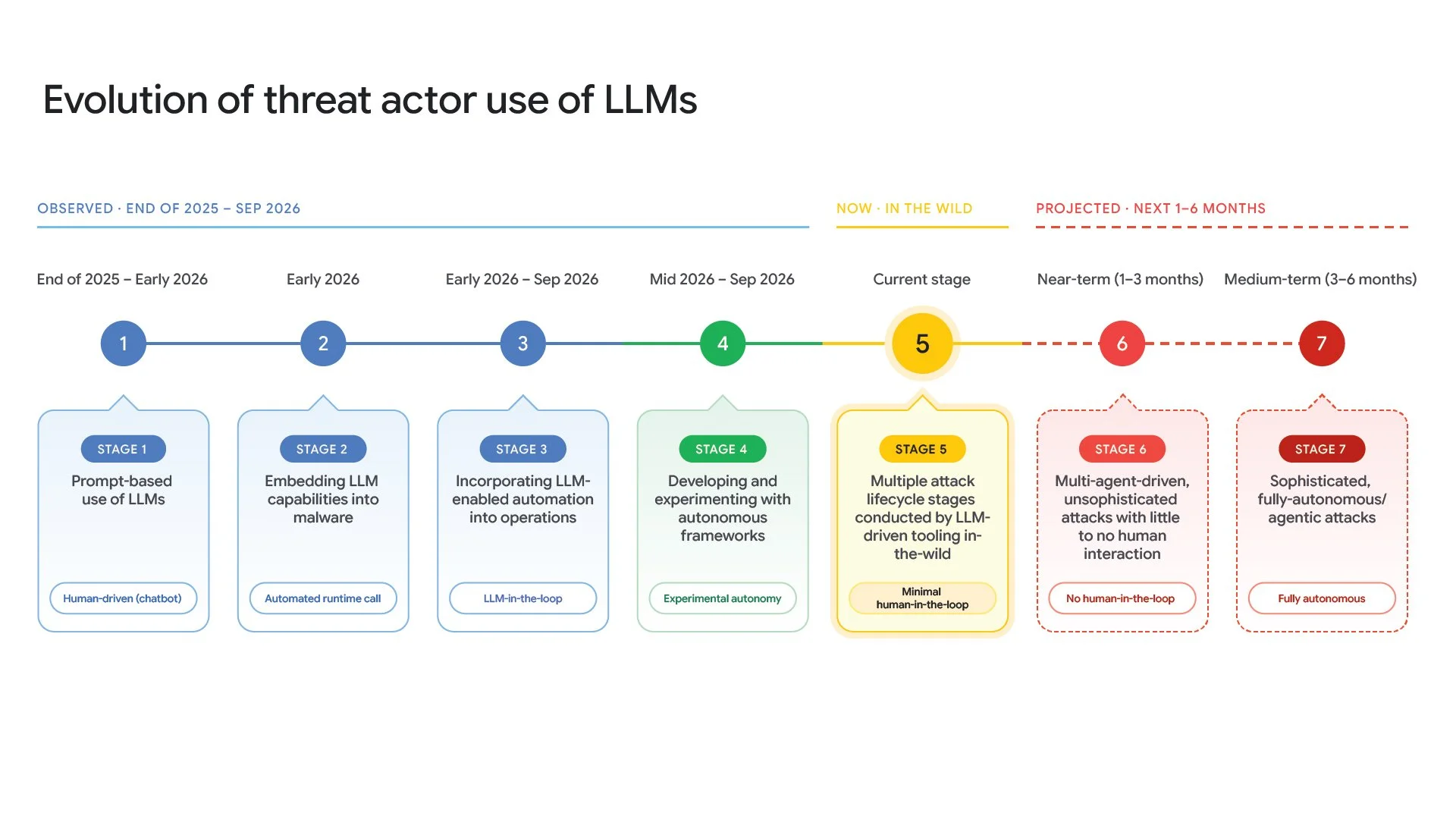
Meanwhile, information operations now use LLMs routinely. Google describes one commercial platform designed to manage over 100,000 accounts, with cloud phone farms and automated account aging to look organic, and prompts that add typos and slang to fake personas.
And with AI API access and token availability becoming some of the best resources in the consumer space, stealing them is actually lucrative. In LLMJacking, attackers hijack cloud environments and run up charges, with single-day bills above $100,000 and one case reaching $1 million. Underground storefronts called LLM Mixers resell that access at $0.10 to $25 per million tokens.
State-backed actors are adapting too. A suspected North Korean cluster targeting crypto firms modified a repository’s .claude/settings.json file so a backdoor would download whenever someone launched Claude Code, and PRC-linked groups are abusing LLM file-hosting backends to stage and exfiltrate data.
Google says it is responding by disabling abusive accounts, hardening Gemini, and offering enterprises Google AI Threat Defense. Its newest model, Gemini 4 Carbon, has layered safeguards against exploit development, while vetted defenders can get advanced cyber capabilities through the Fairwind Program.
Like our Facebook Page here at NasiLemakTech.com for more news and in-depth reviews! Also, join our Facebook Group for insightful information and memes!
Subscribe to our YouTube channel too!