















Over the past few months, OPPO has been pretty silent with their smartphone releases. For some reason, the OPPO R11 was not brought to the Malaysian market – and never will be. Then, I looked at the RM1.2k market segment of smartphones and realized – last year, there was the OPPO F1s that we’ve reviewed here. It’s a decent phone at that price. A little more than a year later, the new OPPO F5 was announced. Just how well does the brand new OPPO F5 perform, and is it worth your price?
Let’s dive into our in-depth review and find out.
Unboxing


When it comes to the box design, the OPPO F5 is no different from the F1s or the R9s that we reviewed here. It has a sleeve with graphics of the OPPO F5 printed on it, and can the slid out easily to reveal the box.

Once the lid is opened, the OPPO F5 can be seen. Nothing out of the ordinary when it comes to packaging design.

Underneath the smartphone itself is the accessories box. As usual, OPPO included a hard shell case for the OPPO F5 too.

Let’s not forget that OPPO told us that the OPPO F5 comes with a pre-installed sheet of tempered glass. You can have your device protected when you get it out of the box!

Digging out all of the accessories reveal that the OPPO F5 does indeed have all the basics covered. Though, the earphones that they give is still the crappy old school ones from back in the 00’s – just like what they had in the OPPO F1s. Come on OPPO, it’s been a year. At least give us a basic pair of in-ear monitors.
[nextpage title=”Design”]
When it comes to the design of the OPPO F5, it’s quite different from the original F1s. Generally, materials used to make these two smartphones are similar, if not the same.

In many ways, OPPO reused the same chassis too. The position for all the buttons are still the same – even the SIM/microSD card tray location is the same too.

At the bottom of the OPPO F5, it’s a little different from the F1s and more similar to the R9s, though still using micro USB at this point in time.

One thing to note is the camera bump at the back is seriously huge. The hard shell casing that’s included with the OPPO F5 does help to flatten out the bump, but that’ll increase the chunkiness of the phone.

Near the camera is where the slightly oval shaped fingerprint scanner is found. The antenna lines accentuate the geometrical curves of the OPPO F5.

Speaking of the hard shell case, it has a very rough texture on both the inside and outside of the case. So rough that I can lose my fingerprints if I brush them enough times. This does provide even more grip for the user and minimize scratches from dust or salt that gets in between the phone’s back and the case.
It’s also very lightweight, actually. Weighing in at just 153 grams overall without the case.

[nextpage title=”Connectivity”]
In terms of connectivity, I was surprised that the OPPO F5 actually supports 5GHz network and have the same SIM/microSD card tray as the F1s!

Now, having the same SIM/microSD card tray as the F1s is good – because I praise the F1s for its dedicated SIM1/SIM2/microSD slots. All of them are independent of each other, and there is no SIM/microSD combo slot like what we’ve seen on many other smartphones out there.

I want to highlight a little on how OTG works on the OPPO F5. Particularly on how OPPO’s new firmware, ColorOS 3.2, handles OTG and developer mode. OTG now works on a timeout system, where you’ll have to manually enable OTG before plugging in anything into the micro USB port. If OTG is left enabled but unused for 10 minutes, it’ll automatically disable OTG. There’s no way to overwrite this “security” feature as of the time of writing this review.
Not sure why OPPO did this.
[nextpage title=”Display”]
When it comes to the display, 2017 has been a crazy year for those “FullView displays” where they have a rectangular 18:9 display (empirically it’s 2:1). To be honest, this little change to the screen definitely changes the entire user experience – if done right.


For some reason, the screen feels a little underwhelming when it comes to vividness. It’s a tad washed out, but nothing too drastic. I do wish that OPPO would include color profile tuner in the settings menu so that this can be an easy fix – but alas, they did not.

One thing worth mentioning here is that there is a tempered glass pre-installed on the OPPO F5, according to OPPO themselves.
The overall 18:9 experience is quite similar to what we had with the Galaxy S8+ and Note8 that we’ve reviewed here, though without the vividness of a Super AMOLED screen. With that said, the 6-inch LTPS TFT screen with 2160×1080 resolution gets the job done.
One thing to note here is that the touch screen does feel a little sluggish at times, and with the entire OPPO F5’s ColorOS 3.2 being gesture-based, it’s frustrating to use sometimes.
[nextpage title=”Camera”]
Oh, the camera. As the OPPO F5 is meant to be the successor of the F1s from yesteryear, it’s selfie-focused too. OPPO also tout that the brand new F5 has this AI Beauty Selfie Camera, which is essentially enhanced beauty mode. OPPO says that it can now do facial detection with more than 200 positioning spots, so it can accurately draw out your face and beautify it through algorithms more accurately.

Here are the specs for the OPPO F5’s cameras.
- Rear-facing camera
- 16MP with f/1.8; PDAF
- Selfie camera
- 20MP with f/2.0
Seems pretty simple, no? It’s quite unusual to not see dual-camera smartphones these days, actually. Let’s take a few shots and see how it really performs.
Rear-facing camera
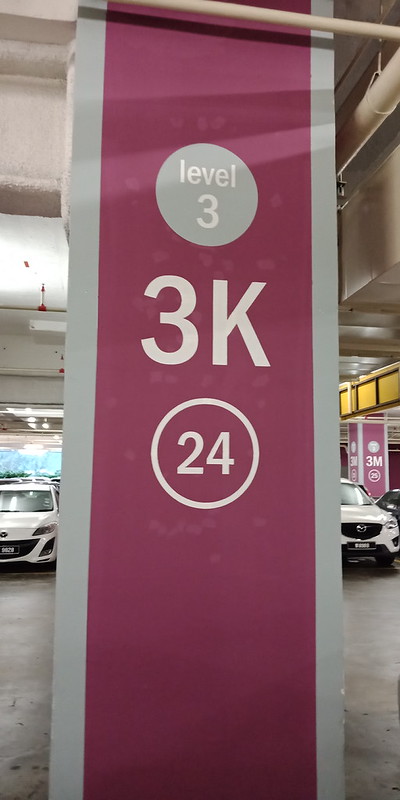
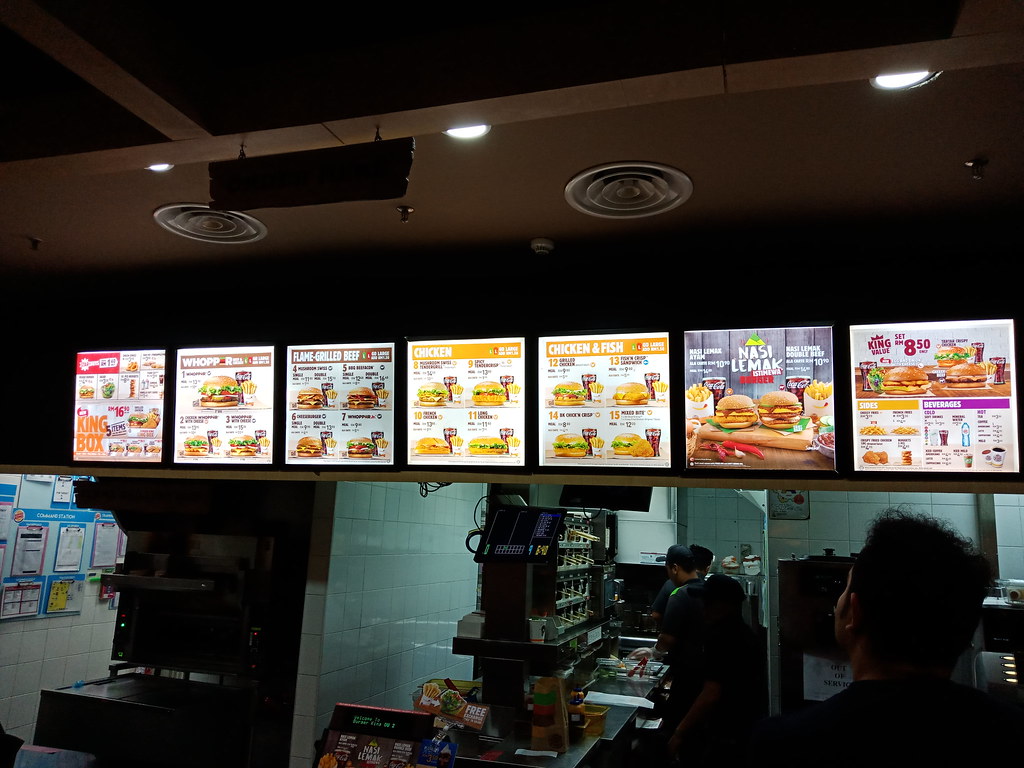
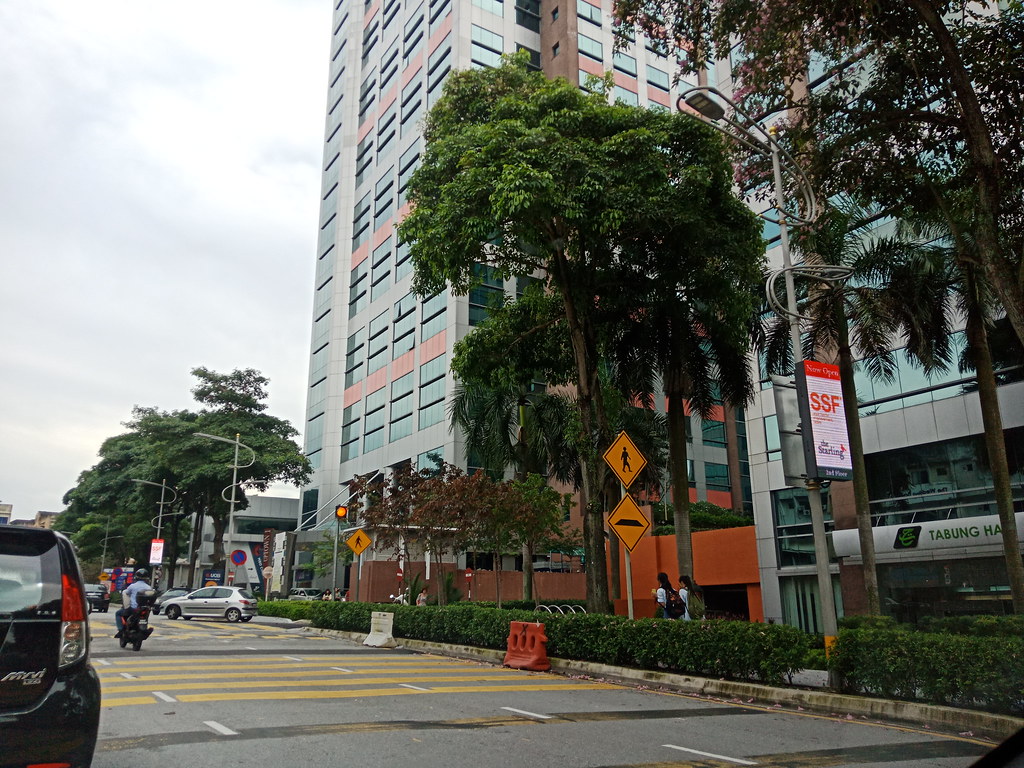

The overall quality of the rear-camera is actually not bad. In terms of colors, they’re vivid enough outdoors but is a little washed out indoors. Just a tad, but noticeable. As for sharpness however, this is where OPPO could improve a little.
Selfie camera


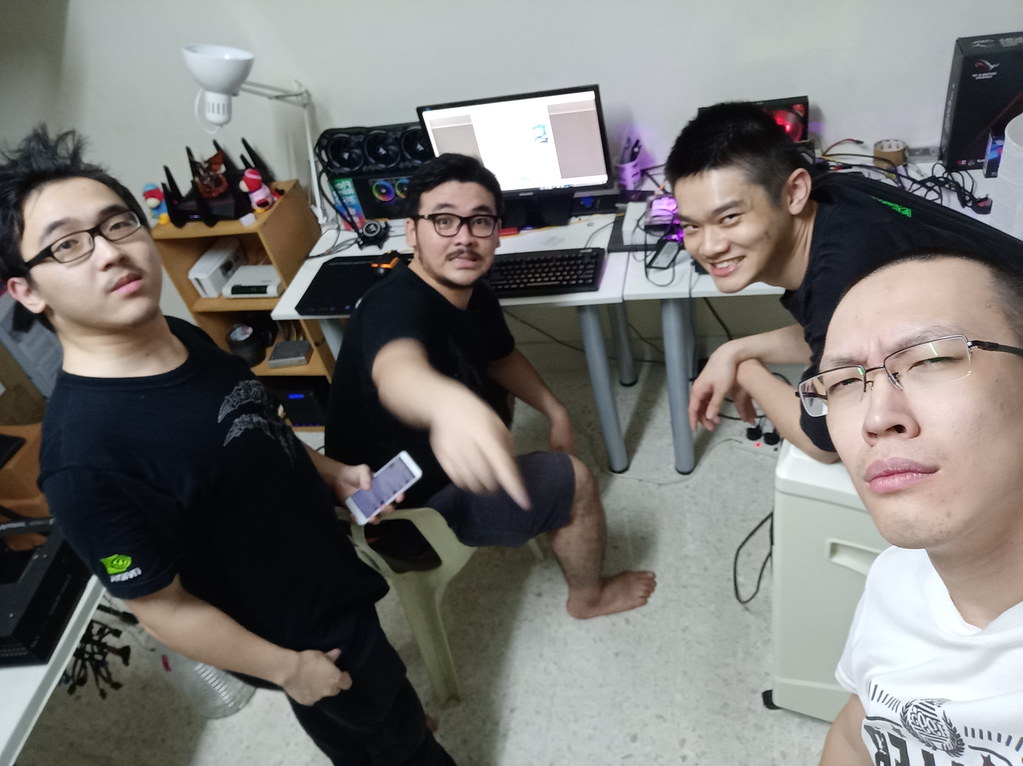
Here comes the selfie camera – what OPPO has been touting for the F5. I’d say that there’s actually a “sweet spot” when it comes to how sharp the selfie will look. That’s unfortunate, since the OPPO F5 uses a fixed focus lens for selfie.
Quality-wise, it looks good, actually. Just that the beautification is a little intense and can indeed make the whole picture look washed out.
Camera UI
Another thing here is the camera UI. For some reason, OPPO thought it’s ideal to copy their interface as well. That leads to unfamiliarity towards Android users. The lack of options here will definitely make Android users question where are all the options.

Also, there’s time-lapse selfie??? I don’t see a point right here, but mostly for convenience, I guess. It’s either you take time-lapse with the rear-facing camera or the selfie camera. Of course, there’s a variation in quality, too.
[nextpage title=”Software”]
Like we’ve mentioned earlier, the OPPO F5’s brand new software, the ColorOS 3.2, is just not something that I like to use personally. It’s a blatant copy of iPhone’s user experience!
It’s entirely gesture-based, where the quick settings menu is now swiped up from below, revealing the iOS-like user interface. For some reason, OPPO thinks it’s a great idea to remove the quick settings menu from the notifications bar.

Another thing is that the responsiveness of these gestures. They aren’t particularly enjoyable to be used, per se. You can technically customize the quick settings menu to suit what you want, but can’t change the position of it. Most of all, thanks to Android’s convoluted ecosystem and openness, customizing the iOS-like menus make things a little offsetting for many Android users.
The entire settings menu is iOS-like as well. The nested menus here didn’t help to declutter the options that are scattered throughout. I do think that the search option within the settings menu here is useful – if you know what you’re looking for.
[nextpage title=”Performance”]
When it comes to performance, the OPPO F5 is nothing spectacular. It’s pretty much around the expected performance when it comes to this price point.
Let’s take a look at the full list of specs.
- 6-inch IPS LCD display, 2160×1080 resolution
- MediaTek Helio P23 chipset with 2.5GHz MT6763T octa-core processor
- 4GB RAM
- 32GB storage
- 3,200mAh battery

For Epic Citadel, I’d say that the performance is quite terrible. At 37.3 FPS, it can’t really run many of the more demanding games smoothly or consistently.

As for the Vellamo test, the scores it obtained is nearby to what the OPPO R9s with its Snapdragon 625 has gotten, but the F5 feels slower than the R9s. The overall software optimization does play a big role here too, which is why benchmark scores aren’t the setting stone of how a phone performs.
Also, the OPPO F5 uses an eMMC 5.1 storage chip – which is common for phones of this price.
[nextpage title=”Battery & charger”]
The OPPO F5 had a tiny when it comes to battery. It now has a 3,200mAh battery, which is supposed to last you about a day’s use – if used cautiously.

In our battery benchmark, it has quite a significant increase in terms of longevity despite the extra pixels that it has to juice up. For all I can say, it’s either the chipset or the CPU governor here that’s doing the magic.

Charger
However, when it comes to the charger, the OPPO F5 comes with a basic charger only. Though the body is smaller than its predecessor’s, the power rating is still the same. Rated at 5V 2A, it’s a standard charger in today’s smartphone world.
I’m not sure why OPPO didn’t include their signature VOOC into the OPPO F5.
 It took about 2 hours to fully charge the OPPO F5 – which isn’t that bad, since it’s a basic 5V 2A charger after all.
[nextpage title=”Wrapping up the OPPO F5 review”]
Purely comparing with its predecessor alone, the OPPO F5 is indeed a worthy successor. However, when compared with other smartphones in the market, then it’s a different story. The OPPO F5 comes neck and neck with the Huawei Nova 2i’s specs and price. It’s a tough market to win.

Priced at RM1,298 RM1,099 now the OPPO F5 tries to re-enter the market that was once dominated by the F1s. Unfortunately, it’s now crowded with many other selfie-centric smartphones in the market, too. With the upcoming OPPO F5 6GB RAM variant this 6th December, will OPPO reclaim a part of its former glory?
- Pros
- 18:9 display
- Battery is surprisingly good
- Independent SIM1/SIM2/microSD card slots
- Price is good
- Cons
- Screen quality is sub-par
- Software is a blatant copy of iPhone
- Camera UI is not intuitive
Like our Facebook Page here at NasiLemakTech.com for more news and in-depth reviews! Also, join our Facebook Group for insightful information and memes!
Subscribe to our YouTube channel too!